
Write something
5h •
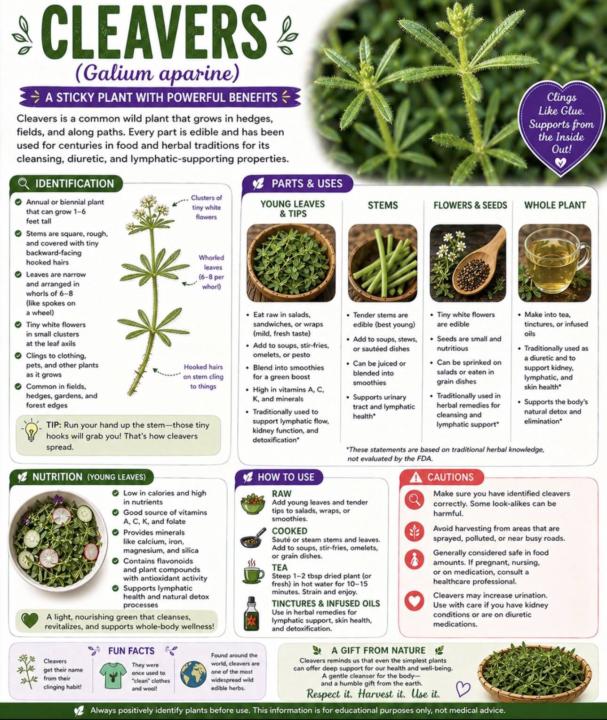
Cleavers
Another Winter herb. Any anyone got any of these growing? When I liked in the UK we used to call it goose grass.
0
0
2d •
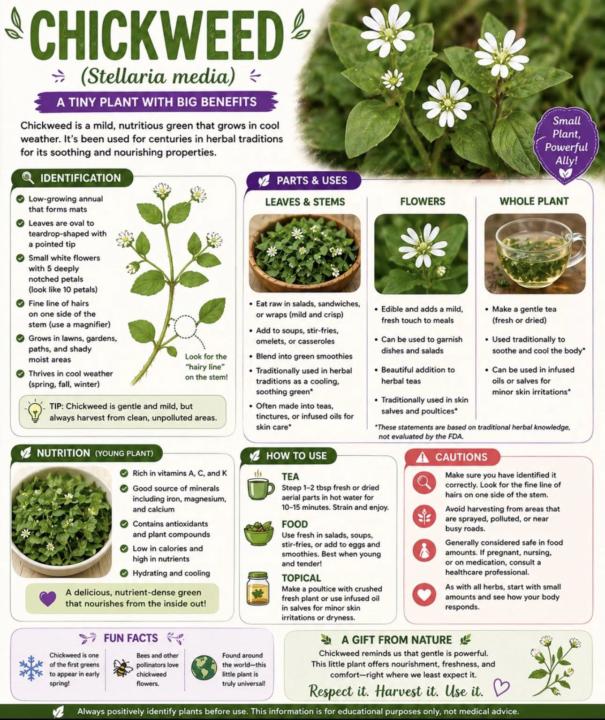
Chickweed Season
Its chickweed season here in Australia, during the winter months. I am drying as much as I can when it is not too wet. it is THE BEST anti-itch remedy, also makes a great pesto
0
0
2d •
Ancient Greek Wrinkle Cream
it only has rosewater. I love old remedy formula's, feel free to share any you find. Ingredients needed: · 1 tablespoon of organic honey · 8 tablespoons of ground beeswax · 200 ml of almond oil · Half a cup of rose water (hydrosol part of purified rose pedal liquid) Method of preparation: Put the beeswax, honey and almond oil in a bowl which you need to put on a low fire. Cook until the ingredients are completely melted. When you get homogeneous mixture, put the bowl away from the fire and wait for the mixture to cool little bit. Gradually add the rose pedal water, drop by drop. Remember to constantly stir the mixture while you add the rose pedal water. Once you add the whole rose water, transfer the resulting mixture in a glass bowl. Tightly close the bowl you are suing until the mixture is completely cooled. Usage: This cream can be used against wrinkles, for smoothing existing signs of aging but you can also use it for makeup removal.
2
0
19d •
Mini Courses
Hi all, I just put some mini courses up, all really about herb growing and all less than $10 As time allows I will keep adding more :) In Joy Louise Plant
19d •
Gotu Kola
I came across this interesting study. There are many herbs that will help clean plaque in the blood, globe artichoke, garlic and cayenne immediately come to come. This study is with Gotu Kola and Pine needles. Love it so I am sharing it Gotu kola bridges traditional wisdom and modern validation, demonstrating clinically proven capacities to restore microcirculatory integrity, enhance collagen architecture and regeneration, and refine connective tissue function. Atherosclerotic plaques are fatty build-ups in our artery walls. But more than that, they can be thought of as chronic wounds in the arterial lining, driving the entire cascade of arterial disease, from impaired flow through to heart attacks and strokes. They differ not just in size, but in structure and composition and this strongly influences their risk profile. Using high-resolution ultrasound (including grey-scale imaging), clinicians can assess plaque volume, shape, density and uniformity. On this imaging, denser, more fibrous plaques appear brighter or “white” (echogenic) and tend to be more stable. Softer, lipid-rich plaques appear darker or “black” (echolucent) and are more prone to rupture, thrombosis and embolisation, leading to hard cardiovascular events. This difference is reflected in the underlying biology. Unstable plaque is typically richer in lipids, inflammatory cells, and fragile microvessels, while more stable plaque contains more collagen and organised structure. Rather than viewing plaques as simple obstructions to blood flow, this new understanding treats them as dynamic biological lesions, where vulnerability depends on multiple interacting factors. A small presurgical study in 40 patients with advanced carotid plaques scheduled for carotid endarterectomy (a surgical procedure to remove atherosclerotic plaque from the carotid artery) compared six months of pine bark extract (150 mg/day) plus gotu kola extract (450 mg/day) against standard care. When the plaques were removed and examined, the differences were striking and consistent across multiple risk features.
1
0
1-23 of 23
powered by
skool.com/home-herbalism-natural-remedy-7169
A journey of discovery of the self and Mother Earth and her sacred healing gifts.
Suggested communities
Powered by