
10d • 💬General discussion
AFRICA'S GREATEST ASSET ISN'T UNDERGROUND IT'S UNDER 30
Every generation talks about untapped potential. Africa's is easy to see in the numbers. More than 60% of the continent's population is under the age of 25, making Africa home to the youngest population on Earth.
Today the continent is home to roughly 532 million young people aged 15 to 35, over 22% of the global youth cohort that will shape the future of work. And unlike almost everywhere else, this bulge isn't shrinking. While youth populations are declining across the rest of the world, Africa's is expected to keep growing well into the 2070s.
That scale is the headline, but it's only half the story. This is also, on average, a healthy young population one entering adulthood with more access to basic healthcare, vaccination, and nutrition than any prior African generation. Pair sheer numbers with rising health outcomes and you get something rare: a demographic dividend most of the world can no longer generate for itself.
A WORKFORCE THE WORLD WILL NEED
By 2035, more young Africans will enter the workforce each year than in the rest of the world combined. Meanwhile, aging economies China, Japan, South Korea, much of Europe are running short on workers. Historically, that kind of gap has been filled by whichever region had the labor to offer. Africa's youth population has the potential to power global growth the way China's did a generation ago.
But a young population is not automatically a productive one. A youth bulge can become either a demographic dividend or, without jobs and investment, a source of unemployment and instability, the outcome depends far more on investment than on demographics alone. The difference between the two futures is entrepreneurship: whether young Africans can build enterprises, not just search for jobs that don't yet exist in sufficient numbers.
ENTREPRENEURSHIP IS ALREADY THE DEFAULT
In much of Africa, entrepreneurship isn't an aspiration it's the norm. The continent already has the highest rate of entrepreneurship in the world, and small and medium enterprises account for roughly 80% of jobs. From mobile money agents in Nairobi to fashion brands in Lagos to logistics startups in Accra, young Africans are building the informal and formal economy simultaneously, often without the safety nets entrepreneurs elsewhere take for granted.
The gaps are just as real. Roughly three in four young people lack the digital skills needed to fully participate in Africa's increasingly digitized economy. Access to capital, mentorship, and reliable infrastructure remains uneven across the continent. Closing those gaps not motivation is the binding constraint on turning hustle into scale.
THE DIASPORA AS A BRIDGE, NOT A BYSTANDER
This is where the African diaspora becomes decisive. Diaspora communities bring capital, networks, technical skills, and market access that many young entrepreneurs on the continent can't yet reach alone. Remittances already dwarf foreign aid to the continent, but money is only the most visible contribution.
Diaspora-led venture funds, mentorship programs, and "return-and-build" founders’ people who trained or worked abroad and came home to start companies are quietly becoming one of the most effective channels for turning youth energy into durable businesses.
The strongest version of this isn't charity flowing one direction. It's a genuine exchange: diaspora professionals get access to some of the fastest-growing consumer markets and most creative problem-solvers in the world; young entrepreneurs on the ground get capital, credibility, and connections they couldn't build alone.
WHAT MOVES THE NEEDLE
Governments and institutions that want to convert this potential into growth need to focus on concrete levers: access to capital, training, and mentorship programs for entrepreneurs. Layered on top of that:
- DIGITAL SKILLS AT SCALE - closing the skills gap is as urgent as closing the funding gap.
- DIASPORA CAPITAL PIPELINES - structured, not just remittance-based, investment into youth-led ventures.
- POLICY THAT TREATS INFORMAL ENTREPRENEURS AS AN ASSET, easing the path from informal hustle to registered, scalable business.
- YOUTH VOICE IN THE ROOMS WHERE THESE POLICIES GET MADE -the people closest to the problem usually see the solution first.
Africa doesn't need to wait for its youth to become an asset. They already are one. The question is whether capital, policy, and diaspora partnership move fast enough to match the pace of the generation itself.
2
1 comment
AFRICA'S GREATEST ASSET ISN'T UNDERGROUND IT'S UNDER 30
powered by
skool.com/gold-circle-academy-1109
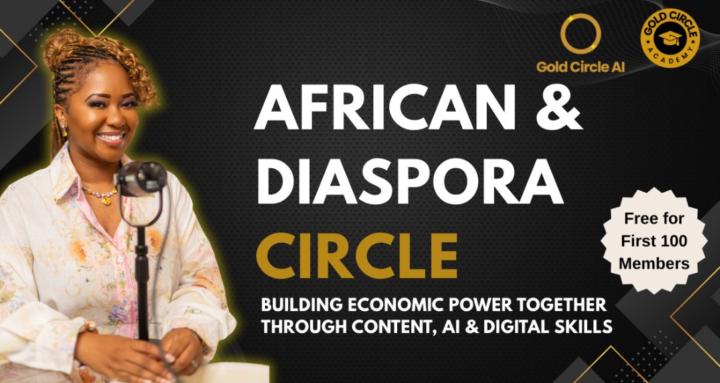
Gold Circle connects Africa and the diaspora through business, content growth and digital skills (AI).
Suggested communities
Powered by