

Sep '25 •
22€ a month for TV, Internet AND unlimited mobile?!
Is anyone here using DIGI? And do you have any feedback about the service? DIGI deals Also, anyone using Starlink? I'd like to know why people buy the static unit, when a mobile device is also available?

Jun 3 •
How's YOUR general strike day going? What not join the new foreigners' 'union'?!
If you have a dull moment today (lucky you!), might you give me a bit of feedback (and maybe support) with my new project - www.the portugalforeignersforum.com A Glaring Gap in Portugal's Civic Landscape? Foreign residents now make up over 14% of Portugal's population - more than 1.5 million people, over 1 in 10 of the national community. We contribute billions in revenue to the social system, build businesses, raise families, and invest our lives here. Yet - in good times and bad - there is no single, unifying and authoritative voice at the country's stakeholder negotiating table. Until now. Pledge support

May 31 •
Portugal has Rewritten the Rules on Who Gets to Become Portuguese
Especially for @Melinda Waddell... After a constitutional standoff, two rounds of parliamentary votes, and a decade of mounting pressure, the new Nationality Law is signed. Here's everything that's changed. (Based on a Portugal Talk Radio podcast · 31 May 2026 · 8 min read) Portugal has just rewritten the rules on who can become Portuguese. After months of political debate, a constitutional standoff, and two separate trips through parliament, President António José Seguro signed the country's new Nationality Law on the third of May this year. For tens of thousands of residents, investors, and descendants of Portuguese emigrants around the world, the question is simple: what does this mean for me? At a glance — key facts - Signed into law: 3 May 2026 President Seguro - Parliamentary vote: 1 April 2026, 152 to 64 - Residency (non-EU/non-CPLP): 10 years (was 5) - Residency (EU & CPLP nationals): 7 years (was 3–5) - In force: 19 May 2026 - published in the Diário da República 18 May 2026 - Sephardic route: Permanently closed from 4 May 2026 *The roots of the reform* Portuguese nationality law has its roots in 'Lei 37/81' - a law that has been updated several times over the decades. But the pace of change accelerated sharply in 2025, when the newly elected government, which took office in June of that year, moved quickly to overhaul the rules. The pitch was this: Portugal needed stricter, clearer conditions for citizenship - longer waiting periods, proper language testing, and tighter checks on criminal records. The government argued Portugal's rules were among the most permissive in Europe and had, in some cases, been abused. Portugal's rules were among the most permissive in Europe. The government argued they had, in some cases, been systematically abused. *A law built in three acts* What followed was anything but straightforward. Parliament approved the first version of the reform in July 2025. But in August, the Constitutional Court stepped in - striking down several provisions as unconstitutional. Judges found that rules restricting family reunification violated the constitutional right to family unity. The President sent the law back to parliament.

Nov '25 •
Strikes
A general strike has been announced by the 2 union confederations (CGTP and UGT), and will take place next month (December), on the 11th. The government says there's no reason, as the new labor law hasn't been approved. The unions say they have to strike, because the government said they won't change their proposal.
Mar '23 •
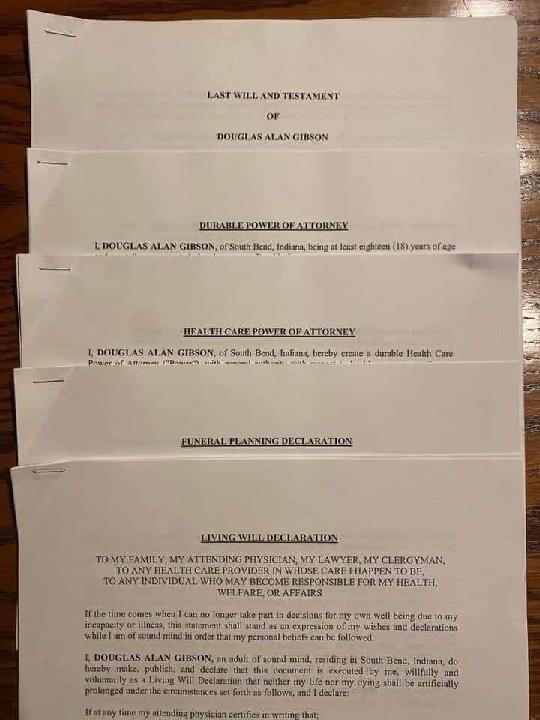
On a serious note: "getting our affairs in order"
Our colleague Em McGowan shared this in 'Share and Care Portugal' this morning. Great information, food for thought, sobering yet worthy of consideration... (NB - she has shared this information from a Warren Wichman who I assume is American, there there is work to do to ensure these documents have relevance in Portugal. It is work in progress. And while we figure it out, there are clearly some good pointers here). "This information is for those of you who don’t have your affairs in order... - Make sure all bank accounts have direct beneficiaries. The beneficiary need only go to the bank with your death certificate and an ID of their own. - TOD = Transfer On Death deed if you own a home. Completing this document and filing it with the court saves your heirs thousands. This document allows you to transfer ownership of your home to your designee. All they need to do is take their ID and your Death Certificate and they will then have the deed signed over. Doing this will avoid the home having to go through probate. - Living Will: Allows one to put in writing exactly what you want done in the event you cannot speak for yourself when it comes to healthcare decisions. - Durable Power of Attorney: Allows one to designate a person to make legal decisions if one is no longer competent to do so. - Power of Attorney for Healthcare: This document allows one to designate someone to make healthcare decisions for their person. - Last Will and Testament: Designates to whom personal belongings will go too. - Funeral Planning Declaration: States one’s wishes as far as disposition of the body and the service/s.
1-30 of 110
powered by

skool.com/gmp-vips-1236
News, views & community for foreigners in Portugal. Connecting Good Morning Portugal! Portugal Talk, Portugal Foregners' Forum & Portugal Talk Radio
Suggested communities
Powered by