
Write something

🚀
🔥
Jun 29 •
🫠 Selling isn't the ick. Misalignment is.
Let's start with the thing nobody says out loud: you don't hate selling. You hate the version of it some guy in a rented Lamborghini taught you. You picture the cold pitch. The seven-message follow-up. The "hey girl 💕" DM from someone who has never spoken to you in their life. The fake countdown timer. And your whole soul goes: I would genuinely rather make zero dollars than become that person. Babe. Same. 🙃 But here's what I need you to hear — that isn't selling. That's manipulation in a sales costume. Here's what selling actually is, stripped all the way down: 👉 Telling a person who could use your thing that your thing exists, what it costs, and who it's for. That's it. That's the whole job. No Lambo required. The ick doesn't come from doing that. The ick comes from a MISMATCH — when what you're saying and what you actually want are two different things: 🚩 "Just checking in!" → (where is my money) 🚩 "I'd love to support you on your journey 🙏" → (get on a call so I can pressure you) 🚩 "How ARE you?!" → from someone who has never once asked before they wanted something Your body clocks it instantly. That flinch right before you hit send? That's not you being bad at sales. That's your nervous system catching the gap between the words and the truth. Honestly? Trust the flinch. It has great instincts. 💜 So we're not going to teach you to override it. We're going to delete the reason it shows up. The rule for this entire classroom — write it on your hand if you have to: ✨ Say the true thing, out loud, to the right person, in a way you'd be glad to receive. ✨ Honest + useful + aimed at the right person = the ick has nowhere to live. 🎯 YOUR ONE THING: Find the last sales-y message that made you cringe. Underneath it, write what the person actually wanted. Stare at the gap. THAT gap is what we're removing — not the selling. You get to keep the selling.
🚀
🔥
Jun 6 •
The Email You’ve Been Putting Off Sending
You know the one. It’s been sitting in the back of your brain for a while now. The “I should really send something to my list” thought that shows up and then gets pushed aside because the timing isn’t right, or you don’t know what to say, or it’s been so long that now it feels weird to just show up out of nowhere. So you don’t send it. And another week goes by. Here’s the thing about that email: your subscribers are not sitting there noticing the gap the way you are. They’re not keeping track. They didn’t mark a calendar the last time you showed up and start counting the days since. The story about it being too late, or too awkward, or requiring some kind of explanation before you can just talk to them again — that’s entirely in your head. It feels huge to you because you’ve been thinking about it. To them it’s just an email showing up on a Tuesday. You don’t need a re-engagement campaign. You don’t need to apologize for being gone. You don’t need a special reason to reach out. You just need to send the thing. Not a perfect thing. Not a long thing. Not a thing with a strategy behind it. Just something real that sounds like you, sent to people who signed up because they wanted to hear from you. That’s the whole job. If you’ve been sitting on a list you haven’t emailed in a while — this is your nudge. Not a guilt trip. Just a genuinely low-stakes reminder that the hardest part is always the sending, and it’s almost never as big a deal as your brain made it. Open the tab. Write something short. Hit send before you can talk yourself out of it. How long has it been since you emailed your list — and what’s the real reason you haven’t? Drop it below, no judgment at all. 👇
5
0

🚀
🔥
Jun 1 •
Monday / You Don’t Need a Big List. You Need the Right People On It.
Let’s clear something up before we even start talking about email. You do not need thousands of subscribers to have a list that makes you money or builds real relationships. That number gets thrown around constantly and it makes people feel behind before they’ve even started. The truth is a small list of people who actually want to hear from you will outperform a huge list of people who don’t remember signing up — every single time. So if you’re sitting here with 47 subscribers thinking you’re failing — you’re not failing. You might just be at the beginning, which is a completely different thing. Here’s what actually matters about your list: Do the people on it know who you are? Do they remember why they signed up? When you send something, does it feel like it’s for them specifically — or does it feel like a broadcast to whoever happens to be there? That’s the difference between a list and an audience. Building an audience doesn’t require a lead magnet funnel and a $500 ads budget. It requires being clear about who you help, showing up somewhere they already are, and giving them a reason to want more from you. This week we’re talking about email and audience building for people who find the whole thing overwhelming — how to grow it slowly and sustainably, what to actually say when you get there, and how to make it feel like a conversation instead of a chore. This week’s minimum viable action: Think about the last person who signed up for your list or followed you because something you said resonated. What did you say? Where were you? Write it down. That’s a clue about what’s actually working. Where are you right now with email — haven’t started, have a list but never email them, or somewhere in the middle? No judgment, just want to know where people are. 👇

🚀
🔥
Jun 2 •
What To Actually Say In Your Emails
Most people don’t avoid email because they don’t want to build a list. They avoid it because they sit down to write an email and immediately think — what am I even supposed to say? And then they close the tab. And then a week goes by. And then a month. And then it’s been so long that now there’s a whole extra layer of anxiety because they feel like they have to address the gap before they can say anything else. Sound familiar? Here’s the thing nobody tells you when they’re selling you on email marketing: the format that gets taught most often — the nurture sequence, the value email, the sales email, the re-engagement email — was designed for people who are comfortable writing marketing copy on a schedule. That’s a very specific skill set. And it’s not the only way to do this. Your emails don’t have to be polished. They don’t have to be long. They don’t have to follow a formula or have a lesson and a call to action and a PS with a soft pitch. They can just sound like you talking to someone you actually want to talk to. Think about the last text you sent a friend about something that frustrated you, excited you, or made you think. That energy — that casual, unfiltered, this-is-what-I’m-actually-thinking energy — is more engaging than 90% of the “value-packed” emails sitting in your subscribers’ inboxes right now. The bar is not high. The bar is just: sound like a real person. This week’s minimum viable action: Write an email like you’re talking to one specific person on your list. Not “my audience.” One person — someone you know signed up because they get what you do. What would you tell them this week? What are you thinking about? What did you figure out recently that might be useful to them? Don’t overthink the format. Just talk to that one person. What’s the thing that stops you most when you sit down to write an email — the blank page, not knowing what to say, fear of how it’ll land, something else? 👇

1-4 of 4
skool.com/get-grounded
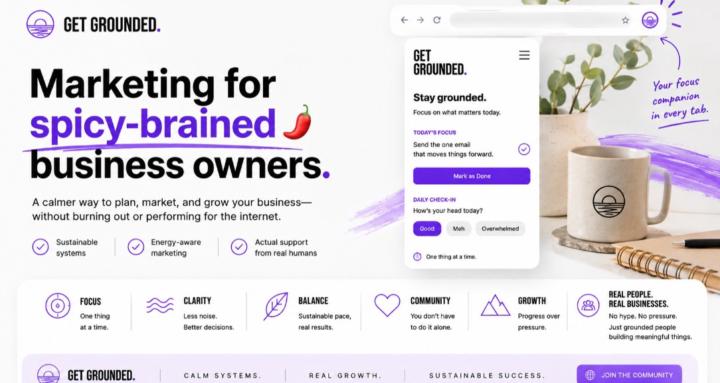
AI marketing for realistic entrepreneurs: day jobs, kids, low energy, and no patience for hustle bros. Build sustainably without burnout or shame.
Leaderboard (30-day)
1

+1
Powered by