Getting Started
New here? This short guide will help you get oriented in the Twigs & Tides Collective. You’ll learn how the community works, where different conversations happen, and how to jump in with your first observation or question. Whether you’re already someone who notices the small details of nature or just beginning to look a little closer, this is the place to start. Curiosity is the only requirement.
0%
The Science Behind What We See
Nature is full of patterns waiting to be understood. This course explores the science behind everyday observations — why mushrooms appear after rain, why birds migrate, how tides work, and how ecosystems change through the seasons. These short guides connect common observations to the biology and ecology that explain them, helping curious naturalists see the living world with deeper understanding.
0%
Nature Journal
A nature journal is one of the simplest and most powerful tools a naturalist can use. In this course you'll learn how to begin recording observations of the natural world around you — from birds and plants to weather patterns and seasonal changes. You don’t need artistic skill or scientific training. Just curiosity and a notebook. Your journal becomes a place to notice patterns, ask questions, and deepen your connection to the living world.
0%
The Seasons
Nature is constantly changing through the year. Birds migrate, plants bloom and fade, insects appear and disappear, and weather patterns shift with the seasons. In this course we explore how naturalists observe these seasonal patterns and why they matter. By paying attention to the rhythm of the year, small observations begin to form a bigger picture of how ecosystems work.
0%
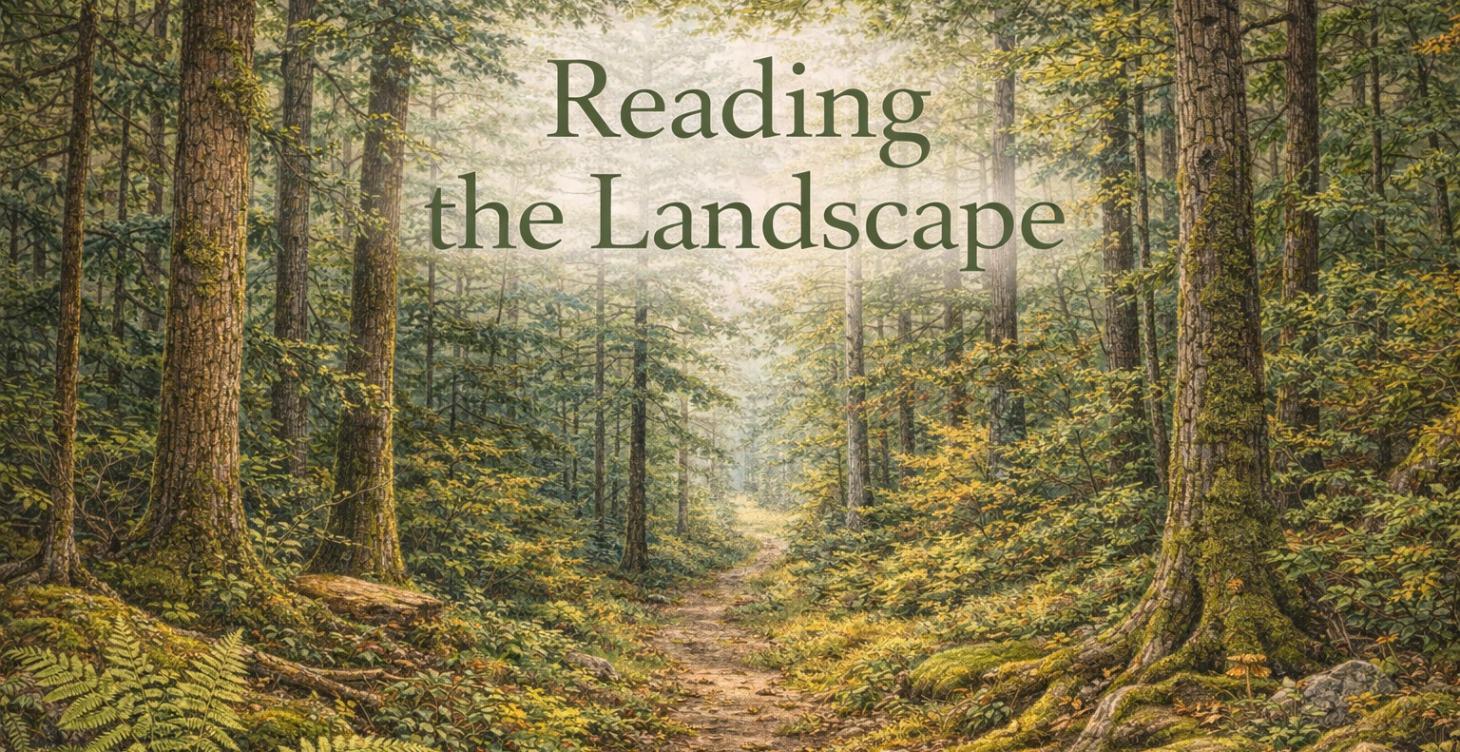
Reading the Landscape
Every landscape tells a story. The shape of the land, the plants that grow there, the presence of water, and the animals that live nearby all reveal clues about how an ecosystem works. In this course we explore how naturalists learn to “read” a landscape — noticing patterns in soil, vegetation, weather, and habitat. With a little practice, even familiar places begin to reveal surprising layers of science.
0%
1-5 of 5