
Write something
Pinned

Mar 3 •
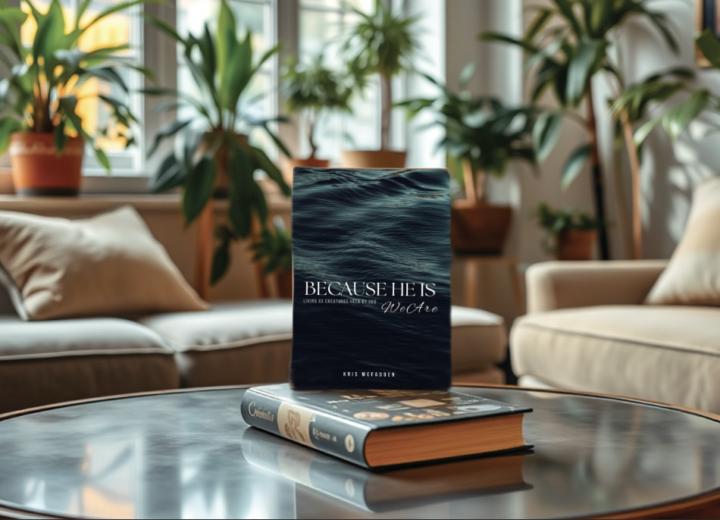
Because He Is, We Are — Released Today
Today the book I’ve been writing and refining is officially released. This project has been less about producing something and more about being shaped through it. The writing, the revising, the slowing down, the clarifying — all of it has been formative. Grateful for the process. Grateful for the shaping. Grateful for those who have walked this journey with me. More at EverySphereOfLife.com
Pinned
Sep '25 •
📜 Our Wholeness Creed (Read This First)
This community thrives on trust, simplicity, and wholeness. Here’s how we live that out: 1. Ground your assessments → opinions need clarity, standards, and purpose. 2. Make strong requests & promises → be clear, specific, and accountable. 3. Honor trust (Sincerity, Competence, Reliability) → we assume good intent, sharpen skills, and keep our word. 4. Engage in the right conversation → Orientation, Trust, Innovation, Implementation, or Learning. 5. Pray, practice, and pursue simplicity → we cut through clutter and focus on what matters. 6. Be true to yourself → lead with authenticity, courage, and faith. These aren’t just “rules” — they’re practices that build wholeness in us and through us.
Pinned
Sep '25 •
Welcome to the Faith-Based Leadership Lab 🚀
Welcome! This is a space for leaders who want to grow in who they are — not just what they do. Here, we blend faith, continuous improvement, and practical leadership tools to create lasting transformation. To kick things off, let’s get to know each other: 1. Introduce yourself (name + what you lead/manage). 2. Share one leadership challenge you’re facing right now. 3. Drop a verse, quote, or principle that inspires your leadership. This community works best when we all engage. Every comment and post earns points — and points unlock new lessons, resources, and rooms. 🚀 Excited to walk this journey with you. Let’s build together. 🙌

14d •
The Unchanging God in a Constantly Changing World
1.) Opening Meditation Everything around us changes. People grow older, relationships change, nations rise and fall, and circumstances can shift quickly. Yet Scripture reveals that God is not part of creation—He is its Creator. God does not depend on anything outside Himself. He does not receive life, wisdom, or strength from another source. He is eternal, unchanging, and completely sufficient in Himself. Every created thing depends on Him for existence, purpose, and continued life. As we study the Creator-creature distinction, we are reminded that our lives are not controlled by chaos. The God who created all things continues to sustain them according to His wise and sovereign purpose. 2.) Definitive Truth God is the self-existent, eternal, unchanging Creator, while creation is dependent, temporary, changing, and sustained by Him. Creation came from nothing—not from preexisting matter. God alone possesses life in Himself. He does not become more complete, more powerful, or wiser over time. He is already perfect in His being. This distinction protects us from making God too small or treating creation as divine. We are creatures, not the Creator. We depend on God every moment, while God depends on nothing. 3.) Micro-Teaching Creation Is Contingent To say creation is contingent means it does not have to exist. The universe could not create itself because it did not exist before God created it. Genesis 1:1 says: “In the beginning God created the heaven and the earth.” Before the beginning of creation, God already existed. Time, matter, space, and life began because God brought them into existence. Acts 17:25 teaches that God is not served as though He needs anything, because He Himself gives life and breath to everyone. God Possesses Aseity Aseity means that God exists from Himself. He has no beginning, no prior cause, and no external source of life. When Moses asked God His name, God answered: “I AM THAT I AM.” — Exodus 3:14 This means God is not defined by something outside Himself. He simply is. He is the eternal and independent source of all existence.
1
0
Sep 16 •
The End for Which God Created the World
Opening Meditation Imagine a fountain that is so full of crystal-clear water that it cannot help but overflow. It does not overflow because it is "lacking" water or because it needs to be filled by the stream it creates; it overflows simply because it is a fountain. In the same way, God is the infinite fountain of all goodness, beauty, and perfection. He did not create the universe because He was lonely or needed us to make Him happy. He created the world as an act of "superabundance"—the natural, glorious overflowing of His own infinite joy and excellence into the world. Definitive Truth God’s purpose in creation is the manifestation of His own glory. As Jonathan Edwards famously taught, the creation of the world is the "emanation" (the shining forth) of God’s internal fullness outward. Because God is simple—meaning He is not made of parts, but is perfectly one—every attribute of His (His love, justice, wrath, mercy, sovereign-power, righteousness, and holiness) exists in perfect, undivided harmony. He created the world not to gain anything, but to communicate the infinite beauty of His own being. Micro-Teaching In classical theism and Reformed theology, we understand God through the lens of ontology—the study of being. God is Actus Purus (Pure Act) - No Potentiality: Creatures possess potential—the capacity to grow, learn, change, or suffer loss. The creator God has no potential because He is already eternally and infinitely perfect; He cannot increase in His pure perfection or decrease in it. Because He is immutable (unchanging and unchangeable), the same yesterday, today, and forever, that means God is all that He can be infinitely without change; He is "Pure Being" and "Reality" itself. He does not "have" attributes like we have traits or changing characteristics; He is His attributes. His simplicity means that He is justice; His wrath is not separate from His love; they are one in pure harmony because of His perfect nature. When God created the world, He did not change. He remained the self-sufficient, self-existent Creator. Think of the stars: there are trillions upon trillions of them, yet God knows each one by name (Psalm 147:4). This shows that His power is not strained by the size of the universe. He spoke, and it stood firm (Psalm 33:9). Creation is the stage upon which the "overflow" of His character—His mercy, wisdom, and all powerful sovereignty—is displayed for His glory and for us to behold and enjoy forever.
0
0
1-30 of 249
powered by
skool.com/faith-based-leadership-lab-5138
A formation space for leaders learning to live & lead from God’s reality—integrating faith, identity, & embodied practice across every sphere of life.
Suggested communities
Powered by