
Write something

Dec '25 •
The Ashes
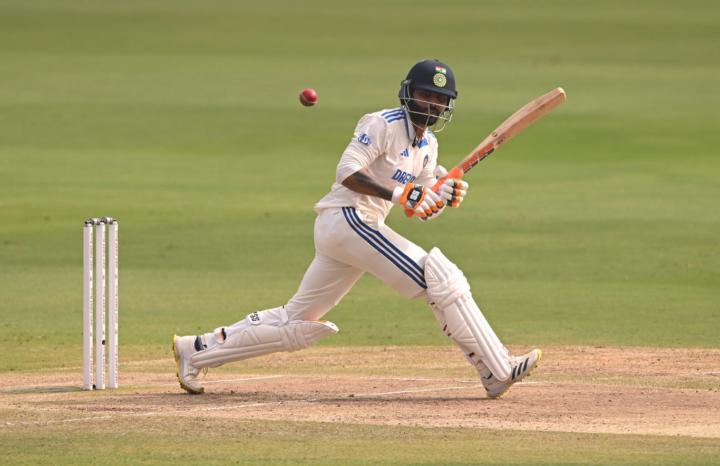
So, the bi-annual cricket contest between England and Australia is once again upon us. England are already 2-0 down in the 5 match series. Is there anyway back for them now?
Dec '25 •
The rules of cricket.
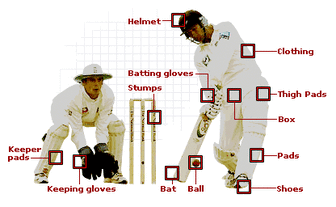
Cricket is a wonderful game and is referred to as the sport of gentlemen. To the uninitiated, it can seem quite a complicated sport. To make it easier to understand, try this handy and simplified guide to Cricket: https://www.bbc.co.uk/bitesize/guides/zwyyrdm/revision/3#:~:text=A%20cricket%20team%20consists%20of,the%20stumps%20with%20a%20delivery
0
0

Dec '25 •
Journey into Englishness - Early schooling
Much like it is today, the first time I was exposed to influences beyond my family was school, but unlike today there was no nursery or preschool. You were as free as a bird until you achieved the grand old age of 5, then off you went to school. It was here that I recall two images that acted as signposts in my journey towards Englishness. The first was the picture of the King; King George 6th. His picture, dressed in splendid military uniform, was prominently displayed in the school entrance. So England had a King, and this particular King was apparently held in great affection, as he had led the country through the war. As my grandfather was often pleased to tell me, “you fought for King and country”, and this king lived with his family in a palace in London. I also remember at some time being taken off to a nearby town and standing at the side of the road in quite a large crowd. They started cheering and waving handkerchiefs and flags as a large shining black car flashed by. Apparently the car was carrying the King and Queen, but it went by so quickly the occupants were simply a blur. Still, all the crowd seemed to be well pleased with the experience. They had seen the King and given him a cheer. The other school memory also hung on a wall in school. It was a large map of the world. There was England, a very small island in the great scheme of things, and it was coloured red. But there were large chunks of this map that were also coloured red. This, we were told, was the British Empire. Places that adventurous Englishmen had discovered while sailing around the world in wooden boats, with nothing but the wind to power them. Places where they has settled, taking with them their culture, beliefs and the wonderful thing that is the English language. All these places, India, Canada, Australia, New Zealand and lots more, were now joined in this collective known as the Empire, with England at its heart. To a small boy this seemed a truly amazing vision. I was part of a nation that was or had been running about a quarter of the globe. Of course I came to know much more about it, good and bad, as I grew older, but this is a six year old boy we are talking about and, let's face it, despite its many shortcomings, the Empire and its successor the Commonwealth, have been extraordinary achievements.
0
0
Dec '25 •
From little acorns - growing into Englishness
Being English, like being French, Russian, Japanese, or any other nationality, is not simply a matter of where or to whom you are born. To that is added life experience and the attitudes, behaviour, outlook and opinions that you absorb, assimilate and adopt throughout your life. It is progressive process involving both personal development and the embracing of shared community activities and values. You grow into your identity; you grow into who you are; you grow into being English. My learning curve began in the 1940's and 50's, in what was then semi rural and rural north-west Kent where people still lived in defined villages. Today those “villages” have been devoured and assimilated into the concrete monster that is expanded London. Gone are many of the village greens, small shops and schools that I recall, but I digress. In my growing up, I was blessed with the accompaniment of parents and grandparents of the war generations, along with a wide extended family of aunts and uncles. My grandparents had fought in and survived the First World War, going on to keep the home fires burning when The Second World War came along. There they successfully dodged bombs and rockets, while my parents joined that war effort. Thankfully they all came through it but, without question, they were inevitably marked by their direct involvement in human conflict. To have actually experienced the absolute awfulness of trench warfare and then, just over twenty years later, to crouch under your kitchen table while a seemingly invincible war-machine dropped bombs all around you, doubtless coloured the wisdom, heritage and values they embraced as being part and parcel of being English. I would like to think I absorbed and embraced much of it, and still hold it dear to this day. In those days immediately following the end of “the war” even as a small child, all around where Kent bordered London, there was unmissable evidence of cataclysmic destruction. The home of my paternal grandmother, living in Woolwich, was surrounded by whole areas where houses had been destroyed as a result of the Luftwaffe targetting Woolwich Arsenal and London's docks. These “bomb sites” became our playground. We rode our scooters and bicycles through what had very recently been living rooms and kitchens. Rationing was still in operation. Some foodstuffs were only available if you had, not just money, but tear-off coupons to give to the butcher or grocer. Just about everything was in short supply. Nothing, especially food and clothing was wasted. Nothing was thrown away, until it was clear that no amount of repairs or bodging-up could squeeze any more life out of it. My general memory was of a happy time. Despite almost all materials being scarce, there was a real sense of community. Everyone knew everyone. People had come together to fight a war, and that togetherness just carried on after the fighting stopped. One of the first things for me about being English was just that, life maybe tough, but your don't complain, you might even make a joke about it. Another was that was a cup of tea was a balm for almost every occasion. There was a problem; let's have a cuppa and think about it. You fell off your bike; let's put a plaster on it and have a nice cup of tea. Tea was so much more than a drink. There was resilience. There was community. You got on with it, you had each other's back and, most importantly, you didn't give up. Qualities of Englishness a certain Mr Hitler apparently never understood. For a small boy growing up in all this “togetherness” could be a bit restricting if you wanted to get up to a bit of mischief as almost anything you did would be observed, and the observer, almost certainly, would know your parents or the village bobby [policeman].
0
0
Dec '25 •
British humour
The late, great Sean Lock was a genius and a real ambassador of true Brit humour. He is sadly missed. https://youtu.be/-m054hsCFr8?si=y-1voIuYmcKk7h9z
0
0
1-6 of 6
powered by

skool.com/everything-english-2836
A rich learning environment for everything English. The language, the culture, the history and the quirks are all found here. 1-2-1 lessons included.
Suggested communities
Powered by