
Write something
Pinned

Feb 12 •
👉 Start here
Welcome! Our new community is only just unboxed and unpacked so you can still smell the fresh paint. Likely things will be a bit quiet as new people join over the next few weeks. ☕ Start by introducing yourself in the comments below 👇 It will be cool to know a bit about you and your motivations for joining. 🔥 I will be putting up a series of podcasts we made over the last few months. Find them in the Classroom These should serve as context and grounds for questions and discussions. 🔓 The platform grants you access to the Classroom after your first post or interaction. You can find yourself on the leaderboard here. 👩🚀 This main area of the community will always be free for members. Later I will add paid tiers for those that want to go a bit deeper with me via live group calls and discussions. These levels will be optional. Remember without your input and ideas this is just an empty space. So don't wait for any one else to go first - it's up to YOU! Love ya! Justin --------------------------------------------------------------------------------------- COMMUNITY GUIDLINES: - Please make sure you have uploaded a Bio and foto to your profile within 7days

Pinned
May 22 •
🔴 The Power of Intent. New Podcast Episode.
What does it truly mean to want freedom — not as a passing wish, but as the deepest, most unshakeable commitment of your life? Your desicion to be free when made at the most fundamental level of your being will change the trajectory of your life. This episode will challenge you, confront you, and possibly change the direction of your life. 👉 Watch here

Pinned

May 24 •
Enlightened communication?
What is enlightened communication ? Could you talk or write about that?

May 7 •
NOTHING IS IMPOSSIBLE
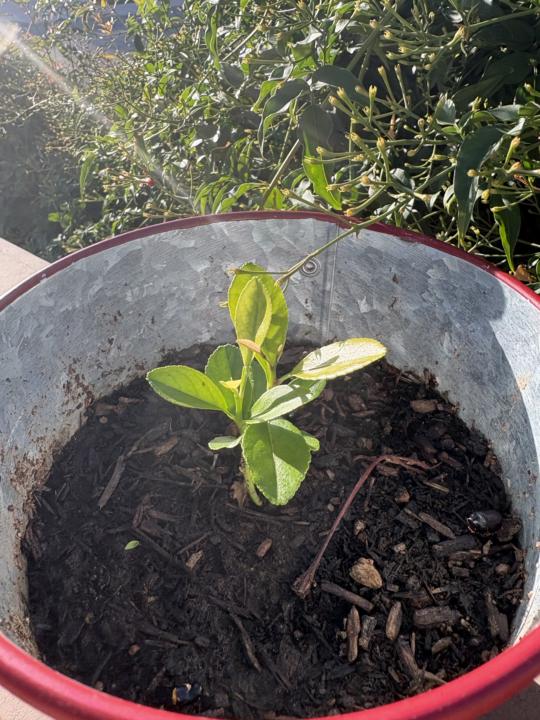
I was thinking about my little lemon tree today, and a mind-blowing revelation came to my mind that I wanted to share. Right now, in a little plant pot, in the front yard of a suburban home in Riverside California, a little lemon tree is growing. A lemon tree that one day will grow and produce 150-300 lemons a season for the rest of eternity if nothing stands in its way. Each lemon will contain up to 10 seeds...each with the potential to create a tree that will create 150-300 lemons a season for eternity, if nothing stands in their way. This little lemon tree has the potential to contribute to the infinite abundance of not just the ecosystem of my back yard but the Universe as a whole. In the grand scheme of things, each little lemon tree has the potential to feed and provide a home for an infinite number of birds, insects and animals. When you really think about it, the abundance created by ONE tiny little seed boggles the mind! Now...contemplate this. It get's better! Look at that little lemon tree sitting in that pot, from a seed I planted nearly 3 months ago. Do you know the odds of it even existing right now? Firstly, lemons have been growing in this garden for about 30 years, and as far as I know, this is the ONLY seed that has been removed from a lemon and planted. What are the odds of that alone? 300 lemons a year x 10 seeds x 30 years...(am I doing the maths right? That's a heck of a lot of seeds that have NOT been planted. But out of all those seeds, I decided to choose one and plant it! Now, what are the odds of that even occuring! Close to ZERO! I'm from England, and had to live 50 years of life before I even got here....to this country, this state, this city, this neighborhood, and this house with this garden and these lemon trees. You see what I mean?? And during that 50 year period, at a point a long the way, I just so happened to read a book (The Ringing Cedars Of Russia) that would transform my life and place a desire in my heart to ONE DAY plant a seed and begin the process of cultivating my own produce.
May 7 •
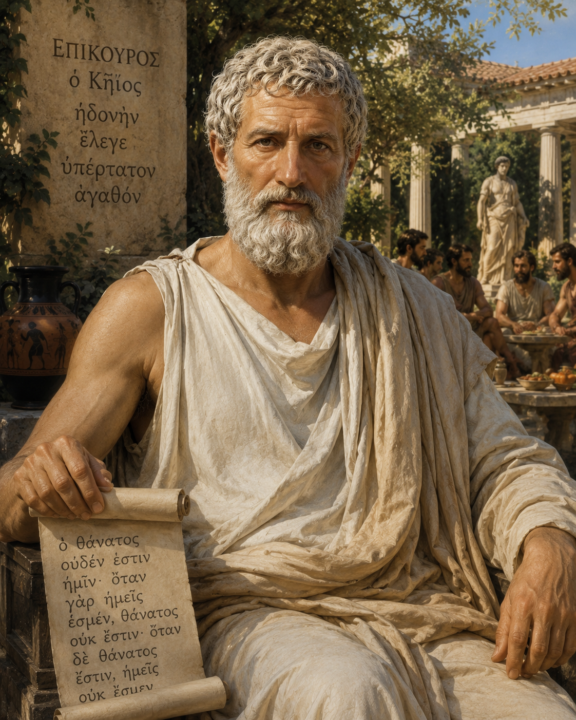
EPICURUS
I'm just learning about this dude.... Epicurus was a Greek philosopher born in 341 BC who founded one of the most influential philosophical schools of the ancient world. His teachings were centered on a simple but radical question: How can human beings live without fear and experience deep, lasting peace? To answer that question, he created a philosophical community known as The Garden. The Garden was more than a school. It was a way of life. Located just outside Athens, the Garden was a peaceful community where people lived, studied, ate, and reflected together. Unlike many philosophical schools of the time, Epicurus welcomed women, servants, and outsiders alongside wealthy men and scholars. That alone made it revolutionary in the ancient world. Epicurus believed most human suffering came from four great fears: Fear of death Fear of the gods Fear of pain Fear of lacking what we need His philosophy was designed to free people from those fears. One of the biggest misunderstandings about Epicurus is that people often associate “Epicurean” with luxury, indulgence, or endless pleasure. In reality, Epicurus taught almost the opposite. He believed the greatest pleasure was tranquility. Not constant stimulation.Not wealth.Not power.Not excess. He taught that a person with simple food, trusted friends, inner freedom, and freedom from anxiety was richer than kings consumed by ambition. Bread, water, conversation, nature, and peace of mind were enough for happiness. Friendship was sacred in the Garden. Epicurus considered loyal friendship one of the highest forms of human fulfillment. The Garden operated almost like a spiritual fellowship built on mutual care, philosophical reflection, and emotional peace. He also believed the universe operated through natural laws rather than divine punishment. The gods, if they existed, were not constantly interfering in human life. This freed people from religious terror and superstition, which were widespread in the ancient world. Epicurus viewed death in a strikingly calm way. One of his most famous ideas was:
1-30 of 93
powered by

skool.com/escape-the-matrix-9926
Serious Spiritual Seekers who want to design and build our new world.
Suggested communities
Powered by