
Write something

1d •
The ground beneath you or a future client is waiting to be remembered.
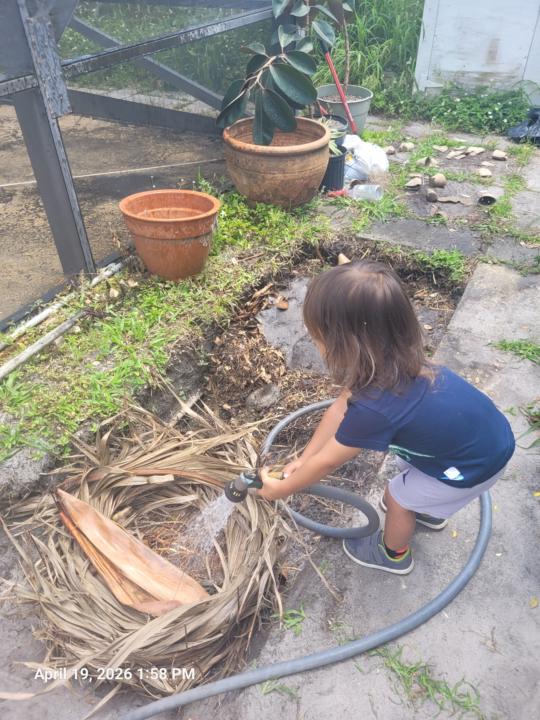
There is a patch of earth somewhere on your property — you know the one. The corner where nothing quite grows. The strip by the fence that's been dead sand for as long as you've lived there. The yard you inherited from whoever came before. You walk past it. You mean to get to it. Seasons pass. If you've wandered through the world of hügelkultur online, you've seen it performed as spectacle: towering berms, imported hardwoods, crews and diagrams and a vocabulary that seems to require initiation. You close the tab. The work feels like it belongs to someone else — someone with more land, more time, more knowing. But that version is a costume. The thing underneath the costume is older and quieter and already half-done. Soil wants to happen. Fungi are threading through fallen wood wherever wood falls. Roots are reaching for minerals wherever minerals lie. Water is carrying life downward through the smallest openings the earth will give it. This is not a project you begin. It is a conversation you enter — one the land has been holding without you, waiting to be joined. You do not build soil. You gather the conditions, and then you step back. A shallow trench. Whatever wood the last storm gave you — palm fronds, fallen branches, the neighbor's curbside pile. Leaves raked from where they didn't want to be. Cardboard from the recycling. Water, patience, a little shade. My son helps lay our first. He is three. My daughter sorts rocks from roots through the sifter with impeccable accuracy. She just turned one. The gesture is that simple, and the gesture is that old. In six weeks the ground softens. In six months it will grow you something worth eating. In a year it will hold a community of microbes that money cannot purchase, because it is not a product — it is a place, and places are made slowly, by the hands that tend them. This is what we are doing here at Agrinauts. Not selling a technique. Remembering a practice. And building it in a form small enough, and honest enough, that a child can carry it and an elder can teach it and a neighbor can look over the fence and ask how.
0
0
7d •
Soil Is the New Gold.
They tell you to hedge against inflation with precious metals. But gold won't grow your food for free. Gold is a bet on scarcity — soil is a bet on abundance. Biodynamic gardening treats the land as a living organism, not a resource to extract. You feed the microbes, compost the scraps, honor the cycles — and the soil compounds interest in the form of food, medicine, and resilience. Every handful of healthy soil holds billions of living organisms. That's not a commodity. That's a currency backed by life itself. When drought comes, when shelves empty, when the dollar wobbles — the people with living soil eat. The people with gold bars wait in line. We're Agrinauts. We back our dollars with dirt. We invest in the one asset that grows itself: regenerative, biodynamic, alive. Ready to start your soil portfolio? Drop a 🌱 in the comments and tell me: what's one thing growing (or composting) in your world right now?
0
0
1-2 of 2
powered by
skool.com/erikas-group-9722
Earth isn't finite — it's cycling forward. We compost, cultivate, and terraform. Act locally, think collectively.
Suggested communities
Powered by