
Write something
Jan 29 •
Reason #116 to start weaving digital occupational health into how we do business:
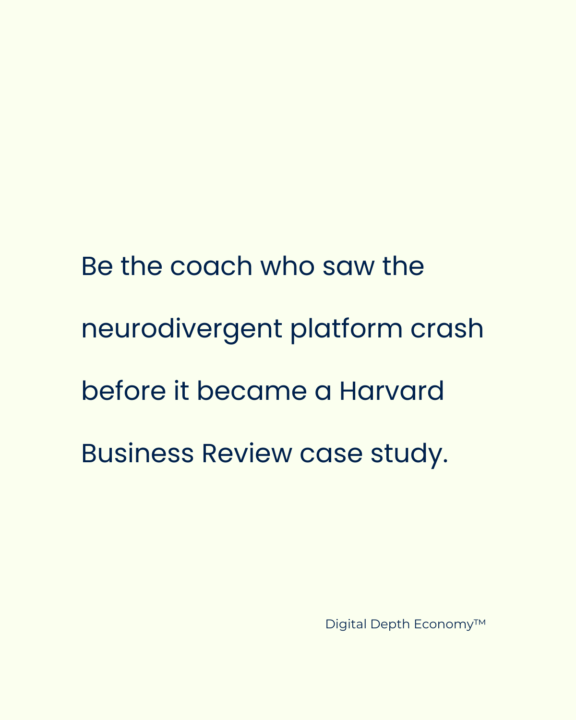
This isn’t about panic, shame, or being “the perfect coach.” It’s about being honest that platform-heavy business models are asking a lot of human nervous systems—especially for neurodivergent, deep-feeling entrepreneurs. We’ve all watched clients who are smart, committed, and doing “everything right” quietly burn out, ghost, or disappear. Not because they’re weak. Not because our strategy is bad. Because the environment itself is an occupational health risk we were never trained to name. ... And this isn’t slowing down. Autism diagnoses have climbed from 1 in 150 kids in 2000 to 1 in 31 school‑age children as of 2025. Neurodivergent people are 3–5x more likely to become entrepreneurs. An estimated 57% of Gen Z want creator/digital careers—and the majority are entering that world with zero occupational health protections. ... In other words: the next wave of clients walking into our programs will be more neurodivergent, more online, and more exposed to platform harm than any generation before them. If we’re serious about protecting each other— as colleagues and as humans— then at some point we have to stop treating this as a personal failing and start treating it as infrastructure. That doesn’t mean you overhaul your entire business overnight. It means you have a simple, ethical path when you notice a client is clearly not just “stuck on strategy” anymore. No guilt trip. No moral high ground. Just: we are operating inside systems that can harm people, and we’re choosing to build better guardrails together. That’s what “ahead of the curve” actually looks like in the Digital Depth Economy. ------------- Be the coach who saw the neurodivergent platform crash before it became a Harvard Business Review case study. Comment 'REFERRAL' for the 3-question filter that helps you know when a client needs occupational health support—not more strategy.
0
0
1-1 of 1
powered by
skool.com/digital-soulcraft-lab-6928
Where Deep-Thinking Entrepreneurs build systematic, clinically validated alternatives to harmful extractive biz models for authentic, lasting progress
Suggested communities
Powered by