
Write something

2d •
The 1 Reason Most Websites Don't Convert
Most websites don't have a traffic problem — they have a clarity problem. When visitors land on your website, they should instantly know: ✔️ What you do ✔️ Who it's for ✔️ What action to take next If they have to figure it out themselves, they'll usually leave. A simple message, clear structure, and strong call-to-action often outperform fancy designs. If you're unsure whether your website is helping or hurting conversions, drop it below and I'll share a few quick insights.
1
0

4d •
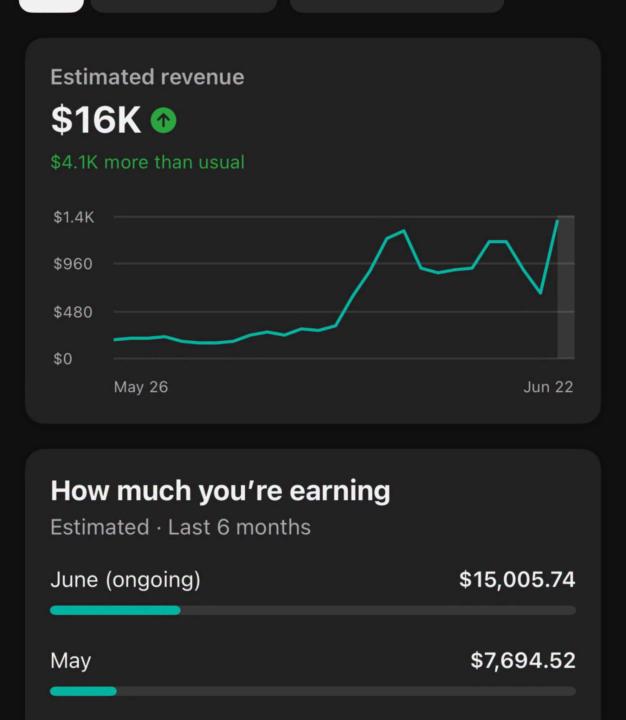
From $7K to $15K+ in 30 Days YouTube Automation in Action
Most people think YouTube income is slow… until the system is right. This is a real breakdown of a faceless YouTube automation channel scaling from $7,694 in May to $15,005+ in June, with an estimated $16K+ monthly run rate and still climbing. No luck. No face. Just content systems, smart niche selection, and consistent uploads optimized for retention and RPM. The difference between struggling channels and scaling channels is strategy, not time. What would you do if your channel hit $15K/month?

4d •
The Rise of AI-Augmented Workforces: Why Human + AI Collaboration Is the Future of Work
Most conversations about AI in the workplace still circle back to the same fear — that machines are coming for jobs. But inside actual organizations, a different pattern is emerging. Instead of replacing employees, companies are using AI to make their existing teams more capable. This shift has a name: the AI-augmented workforce, and it's quietly becoming the dominant strategy for businesses trying to stay competitive without burning out their people. The core idea is simple. AI handles the repetitive, data-heavy parts of a job — pulling information together, spotting patterns, drafting first versions of things — while employees focus on the parts that actually require judgment: strategy, relationships, and final decisions. It's less about machines replacing people and more about machines removing friction so people can do better work, faster. This shift is happening now because the pressure on businesses has changed. Data volumes are growing faster than teams can manually process. Customers expect faster, more personalized service. Competition is intensifying across nearly every industry, and hiring enough people to keep up isn't always realistic. AI gives organizations a way to absorb that complexity without proportionally growing headcount. It's worth separating augmentation from automation, since they're often used interchangeably but mean different things. Automation is built to complete tasks with minimal human involvement — scheduling, basic data entry, templated responses. It optimizes purely for efficiency. Augmentation keeps humans in the loop by design. It's meant to make people better at their jobs, not remove them from the process. Most mature AI strategies end up using both, depending on the task. You can already see this playing out across departments. Customer service teams use AI to summarize conversations and prioritize urgent tickets, while human agents still handle anything requiring empathy or negotiation. Finance teams use AI for forecasting and anomaly detection, but finance professionals still interpret what the numbers actually mean. HR teams use AI to screen applications faster, but hiring decisions still come down to human evaluation. Developers use AI to generate code suggestions, but engineers still own what actually ships.
9d •
Your Visitors Don't Care About Your Website as Much as You Do
💡 One mistake many website owners make is assuming visitors will take the time to figure things out. The reality is that most people decide within seconds whether to stay or leave. If your homepage doesn't clearly explain what you offer and who it's for, visitors may move on before reading anything else. The easier it is to understand your website, the easier it is for people to trust it.
0
0
10d •
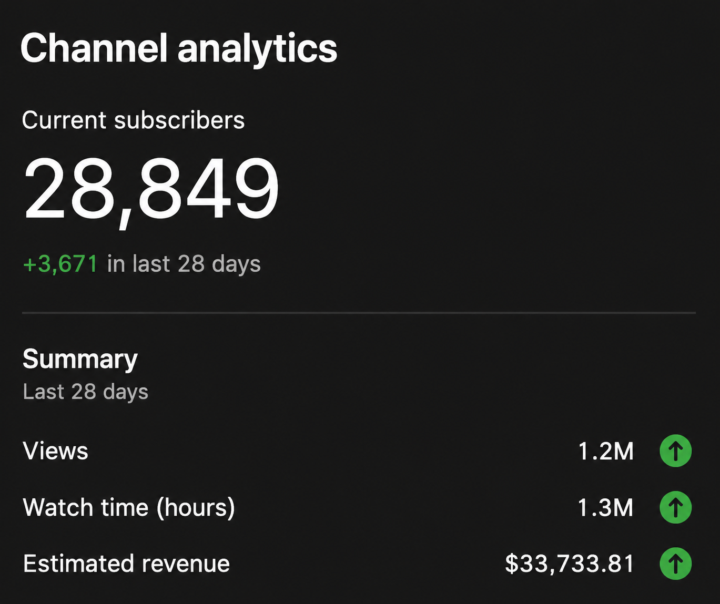
Stop Watching Others Win. Build Your Own Channel 🚀
This is the power of YouTube Automation when done right. 🚀 +3,671 subscribers in just 28 days 👀 1.2M views generated ⏱️ 1.3M watch hours 💰 $33K+ estimated revenue No luck. No guesswork. Just strategy, consistency, and a proven system. You don’t need to be famous to win on YouTube. You just need the right structure and execution. The question is simple: are you building your channel or just watching others grow?
1-30 of 84
powered by
skool.com/digital-marketing-network-2248
Collaborate, share and scale with digital pros worldwide
Suggested communities
Powered by