
Write something

6d •
Loss of belonging as punishment
Incarceration is usually framed as the justified removal of freedom of movement. Criminal Law Professor Federica Coppola argues this is a misidentification. Imprisonment is a form of manufactured exile, punishing not just the body's freedom but the self's very capacity to exist in relation to others. Against the Kantian notion that personhood is a self-contained bundle of autonomy, Coppola argues the deepest harm of imprisonment isn't the loss of liberty itself but the loss of belonging. "If belonging is as fundamental to human well-being as basic physical needs such as food and water, then a punishment that systematically frustrates it raises difficult questions." Tap the link to read more. https://iai.tv/articles/the-self-cannot-exist-in-isolation-auid-3685
0
0

8d •
Weekly Highlights: Race, Racism & Deconstruction
September 27, 2026 Happy Sunday! Here are a few things worth reading, watching, and thinking about from this past week. A thread kept appearing while I was putting these together: What happens when we define racism primarily by individual intention, while institutions continue producing racial patterns? That question shows up in schools, workplaces, immigration policy, and even in how we teach people to recognize and respond to racism. As always, you don't have to agree with every author or conclusion here. The practice is to notice the framework being used, examine the evidence, and ask what becomes visible, or invisible, through that lens. 🏫 1. Can systemic racism exist without an individual racist? NEWS REPORTING | Associated Press | September 25 This one connects directly to something we've discussed repeatedly. The AP examines changes in federal civil-rights enforcement in schools under the Trump administration, particularly disparate impact: the idea that a seemingly neutral policy can still be discriminatory when it predictably produces significant racial disparities. The administration has withdrawn longstanding regulations allowing some discrimination claims to be evaluated through racial outcomes and has instructed schools not to consider race when designing discipline policies. The administration argues that prior disparate-impact approaches could pressure schools to treat students differently according to race; critics argue that abandoning the framework makes structural discrimination much harder to identify or remedy. And that gives us a clear distinction: Interpersonal racism asks: Did someone discriminate? Systemic analysis also asks: What does the system consistently produce? [Read the AP report via ABC News](https://abcnews.com/Politics/wireStory/trump-administration-moves-limit-fixes-systemic-racism-schools-136743667?utm_source=chatgpt.com)
0
0

11d •
Ballroom has become more inclusive, more all white balls pop up
Ballroom was born, in part, because Black and Latino LGBTQ people were navigating racism and exclusion in predominantly white pageant spaces. Decades later, the culture they built is becoming more mainstream, global and inclusive — but that growth is creating an uncomfortable conversation. As predominantly white ballroom spaces emerge and voguing travels further from its Black and Latino roots, parts of the pageant world still remain noticeably divided along racial lines. So what happens when a culture created by people who were excluded becomes more inclusive than some of the spaces that once excluded them? We’re taking a deeper look at ballroom’s history, its growing diversity and the complicated line between inclusion, appreciation and cultural erasure. #BallroomCulture #LGBTQCulture #BlackCulture #Vogue #QueerHistory https://aintstraight.com/2026/09/24/as-ballroom-becomes-more-inclusive-all-white-balls-are-popping-up-while-pageant-culture-remains-divided/
0
0

16d •
Converse zero stars...
Another advertisement from a company that either lacks Cultural fluency or is intentionally using racist imagery. 🤷 Two different campaigns ended up depictions of lynching and one evoked kkk imagery. https://wwd.com/footwear-news/sneaker-news/converse-campaign-ad-kkk-lynching-comparisons-apology-1239244502/
0
0

16d •
Wage Gap
For Black women, inequity does not stop with the paycheck. Lower wages over time affect the ability to save, invest, buy a home, build security, and pass wealth to the next generation. Economic justice is not separate from racial justice or gender justice. They are deeply connected. Closing the gap requires more than equal pay for equal work. It requires confronting the systems that continue to determine who has access to opportunity, ownership, and lasting economic security. Survey of Income and Program Participation (SIPP), a comprehensive household survey conducted by the U.S. Census Bureau #How We're Racialized #📝About: Gender
0
0

1-30 of 63
powered by
skool.com/deconstructing-theater-1925
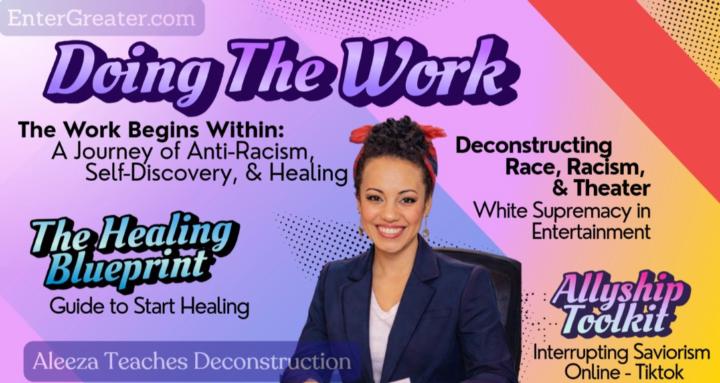
We're deconstructing white supremacy, antiblackness, race, and racism in theater and our daily lives.
Suggested communities
Powered by