
Write something

13d •
DEIB vs MEEA
DEIB vs. MEEA: What Are We Actually Building? I’ve been playing with the idea that maybe the opposite of belonging isn’t simply exclusion. Maybe it’s acceptance. Because acceptance can sound wonderful—and sometimes it is. But acceptance can also be conditional: You can be here. You can participate. We accept you. …as long as you can function within what already exists. Belonging asks something different. Can you be here without becoming more like us? Can your needs change how the space operates? Can your perspective influence decisions? Do you have access to power, resources, and repair? Does the community change because you are part of it? That got me thinking about DEIB as a set of relationships rather than a collection of buzzwords: Diversity ↔ Monoculture Equity ↔ Exploitation / Theft Inclusion ↔ Exclusion Belonging ↔ Acceptance And once I started mapping those, more appeared: Invitation ↔ Assimilation Access ↔ Gatekeeping Shared Power ↔ Power Hoarding Voice ↔ Silencing Representation ↔ Erasure Reciprocity ↔ Extraction Accommodation ↔ Conformity Pluralism ↔ Normativity Interdependence ↔ Domination Repair ↔ Preservation of Harm Accountability ↔ Impunity Justice ↔ Injustice Liberation ↔ Oppression Community Care ↔ Individualism I’m calling the second framework MEEA: Monoculture, Exploitation, Exclusion, Acceptance. Not because every instance of acceptance is harmful, or because these words are all perfect dictionary antonyms. They aren't. I’m interested in what happens when we look at them structurally. A space can be diverse while still expecting assimilation. It can include people while withholding power. It can represent people while extracting from them. It can accommodate difference while treating the dominant culture as the default. It can even accept people without ever allowing their presence to transform the institution. So perhaps the question isn't simply: “Are people welcome here?” Maybe it's: “What are people required to give up in order to be welcome here?”
0
0

15d •
Deconstructing Weekly
This Week in Race, Racism & Deconstruction Hey everyone! I thought I’d start sharing a few things I’m reading, watching, or thinking about each week. The goal isn’t necessarily to agree with every author or perspective. It’s to practice looking at what’s happening around us through the frameworks we’ve been learning: race, racialization, systemic racism, whiteness, belonging, allyship, power, intent vs. impact, and accountability. Here are a few things worth exploring this week: When does allyship become solidarity? “Why Black Women Don’t Need White Women’s Allyship” — Lovette Jallow This essay challenges the idea of allyship as an identity and asks us to think instead about solidarity as something demonstrated through behavior—especially when doing the right thing costs us comfort, belonging, access, or social capital. It also opens up a larger conversation about white feminism, intersectionality, boundaries, and what happens when someone opposes the oppression that affects them while continuing to participate in hierarchies affecting others. [Read the essay on Substack](https://lovettejallow.substack.com/p/why-black-women-dont-need-white-womens?utm_source=chatgpt.com) 💭 Think about it: Is “ally” something we can call ourselves, or is it something other people should be able to observe through our actions? What happens when solidarity actually costs us something? --- 🧠 Who gets automatically imagined as American? A recent controversy in Texas provides a fascinating example of racialization. After seeing a crowd containing many South Asian people at a University of Texas football game, a political candidate suggested the image represented foreign students taking opportunities from Texans. But there's a problem with using appearance to reach that conclusion: you can't tell someone's citizenship, nationality, or residency by looking at their race. The controversy gives us an opportunity to notice how quickly categories like brown, Asian, immigrant, foreign, and not from here can become collapsed together.
0
0

Feb 22 •
🎬 Take the Stage: Introduce Yourself!
Welcome to Deconstructing Race, Racism & Theatre! Drop: 🎭 Your name & pronouns 📍 Where you’re joining from 🖤 One reason you joined 📸 A photo of your workspace, rehearsal room, or favorite creative corner Bonus: If your life were a play right now, what would this chapter be called?


Aug 23 •
Modern day Minstrelsy pops up at Target
We need to talk about this Target costume. 19th century minstrel imagery somehow, somebody approved this. Somebody photographed a child wearing it. Somebody uploaded it to Target.com. And it took public backlash — not internal review — to get it pulled. In less than a day. That’s the pattern we keep seeing. Big retailers roll something out, Black folks call it out, and only then does it disappear quietly with no real accountability. No statement. No apology. Just... gone, like it never happened. We see it. We remember it. And we keep showing up to say something, every single time — because silence is how this keeps happening.

1-30 of 58
powered by
skool.com/deconstructing-theater-1925
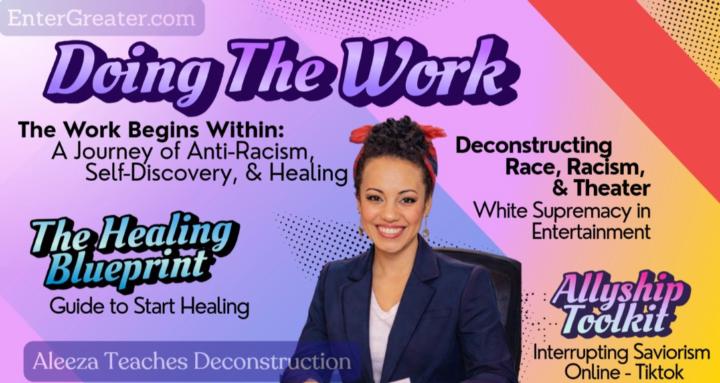
We're deconstructing white supremacy, antiblackness, race, and racism in theater and our daily lives.
Suggested communities
Powered by