
Write something

22d •
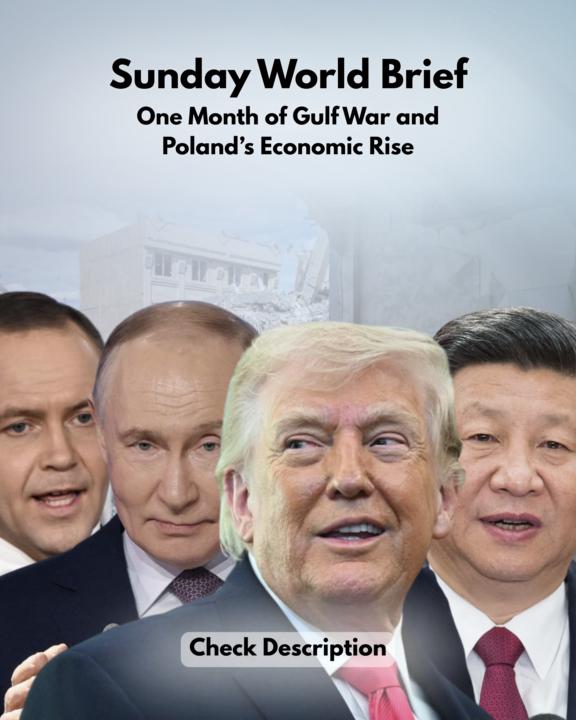
Sunday World Brief: One Month of Gulf War and Poland’s Economic Rise
The war in the Persian Gulf has reached its one-month mark with a massive escalation. US and Israeli forces are facing a triple-front attack from Iran, Lebanon, and Yemen. A missile strike on the Prince Sultan base in Saudi Arabia destroyed several US Air Force planes, while Houthi rebels threaten to block the Bab al-Mandab strait, a key route to the Suez Canal. In Tehran, massive explosions were reported overnight, and the Pentagon claims to have hit 11,000 targets. The conflict is now paralyzing the tech industry, as AMD and Intel have halted chip production. In economic news, the White House has officially recognized Poland as an economic power. Domestically, Polish drivers might see a fuel price drop this week due to tax cuts. Globally, Russia is set to stop all gasoline exports on April 1, and Argentina has hit a record debt level. While the war rages, China is aggressively outbidding others for gas imports, and Saudi Arabia has maxed out its pipeline capacity to bypass the Strait of Hormuz. Despite the chaos, there are small moments of normalcy: Kimi Antonelli won the F1 Grand Prix, and nature thrives with 899 bisons now living in the Bieszczady mountains. Mija miesiąc od wybuchu wojny w Zatoce Perskiej, a sytuacja staje się coraz bardziej napięta. USA i Izrael mierzą się z atakami z trzech stron: Iranu, Libanu i Jemenu. Rakietowy ostrzał bazy Prince Sultan w Arabii Saudyjskiej zniszczył kilkanaście amerykańskich samolotów, a Huti (ugrupowanie rebelianckie w Jemenie) grożą całkowitym zamknięciem drogi do Kanału Sueskiego. W samym Teheranie doszło do potężnych eksplozji, a Pentagon ogłosił zniszczenie 11 000 celów militarnych. Konflikt uderza w technologię: produkcja chipów firm AMD i Intel została wstrzymana. Dla Polski płyną ważne sygnały z Waszyngtonu: Biały Dom nazwał nasz kraj gospodarczą potęgą. Możliwe jest także obniżenie cen paliw dzięki zmianom w VAT i akcyzie. Tymczasem Rosja od kwietnia wstrzymuje eksport benzyny, a światowe rynki niepokoi rekordowe zadłużenie Argentyny i zamrożenie wypłat z funduszy nieruchomości przez bank. W cieniu walk toczy się gra o surowce: Chiny masowo skupują gaz, a Arabia Saudyjska uruchomiła rurociąg omijający cieśninę Ormuz.
0
0
23d •
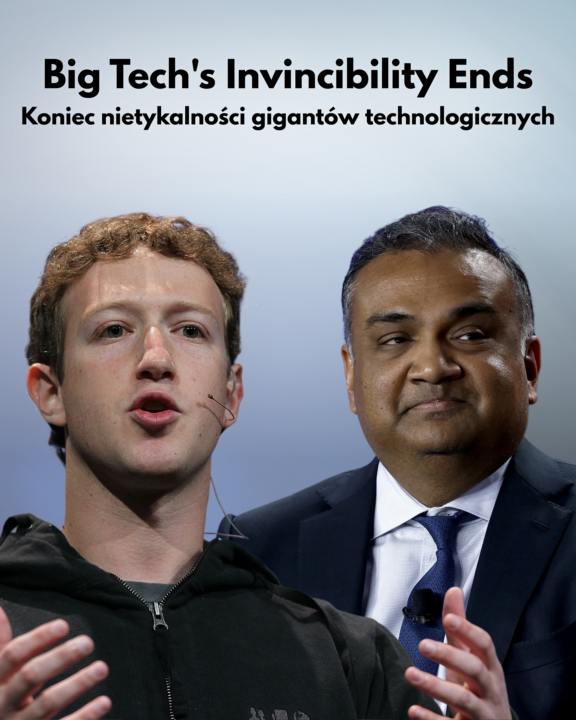
Big Tech's Era of Invincibility Ends. Koniec nietykalności gigantów technologicznych.
Historyczny wyrok sądu w Los Angeles uznał firmy Meta i YouTube za winne celowego projektowania uzależniających aplikacji, które szkodzą dzieciom. Eksperci nazywają to momentem wielkiego tytoniu dla branży technologicznej. Po raz pierwszy ława przysięgłych uznała, że oprogramowanie może być wadliwym produktem powodującym uszczerbek na zdrowiu. To nie koniec kłopotów gigantów, ponieważ Meta została także ukarana grzywną 375 milionów dolarów w Nowym Meksyku za wprowadzanie użytkowników w błąd co do bezpieczeństwa platformy. Kraje takie jak Australia, Indonezja i Brazylia już wprowadzają zakazy lub surowe ograniczenia dla osób poniżej 16 roku życia. Choć korporacje zapowiadają apelację, uwaga prawników i rządów przeniosła się z samej treści postów na uzależniające funkcje, takie jak nieskończone przewijanie i automatyczne odtwarzanie filmów. A historic court ruling in Los Angeles has found Meta and YouTube liable for deliberately designing addictive apps that harm children. This is being called the tech industry's Big Tobacco moment. For the first time, a jury ruled that software can be a defective product that causes personal injury. Beyond this case, Meta was also fined 375 million dollars in New Mexico for misleading users about platform safety. Governments in Australia, Indonesia, and Brazil are already starting to ban or heavily restrict social media for those under 16. While tech giants plan to appeal, the legal and political focus has shifted from the content of posts to the addictive design features, such as infinite scrolling and autoplay videos.
1
0
24d •
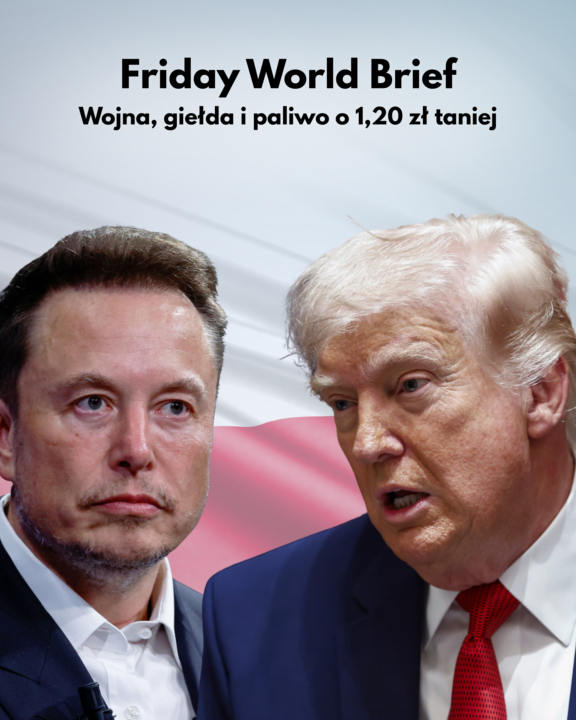
Friday World Brief: War, Markets and Cheap Fuel
Piątek 27 marca 2026 roku przynosi ogromne emocje na rynkach i w polityce. W Polsce dobre wieści dla kierowców: paliwo tanieje o 1,20 zł na litrze dzięki obniżce podatków. Rząd włącza JSW do programu zbrojeniowego, a LPP chwali się wysoką marżą. Donald Trump przełożył atak na Iran na 6 kwietnia, ale sytuacja w regionie jest krytyczna: Izrael informuje o kryzysie w armii, a Iran minuje wyspę Khark i powołuje 12-latków do wojska. Na Wall Street wyparował bilion dolarów, co jest najgorszym wynikiem od początku wojny. SpaceX wchodzi na giełdę, dając 30 procent akcji małym inwestorom. W technologii brakuje helu, co hamuje produkcję chipów AI, a OpenAI blokuje niektóre funkcje ChatGPT. Facebook i YouTube tracą przez oskarżenia o uzależnianie dzieci. Z innych wieści: Indie i Japonia wracają do węgla. Friday March 27 2026 is a day of massive global shifts. In Poland, fuel prices drop by 1.20 PLN per liter after tax cuts, and JSW enters the national arms program. Donald Trump has delayed the strike on Iran until April 6, but tensions remain high: Israel reports its army is near collapse, while Iran is mining Khark island and recruiting 12 year old soldiers. Wall Street saw its worst day since the war began, losing one trillion dollars in a single day. SpaceX is making its market debut, reserving 30 percent of shares for retail investors. A global helium shortage is slowing down AI chip production, and OpenAI is stopping erotic ChatGPT features. Facebook and YouTube stocks fell over child addiction lawsuits. In other news, India and Japan are turning back to coal.
0
0
25d •
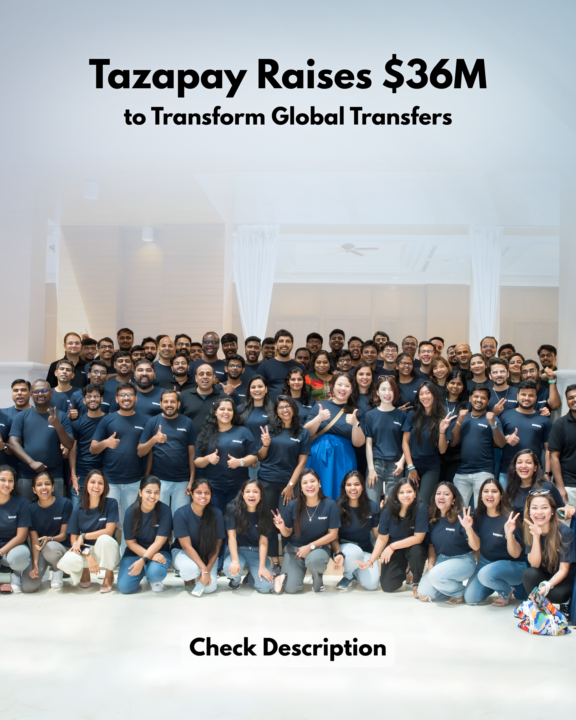
Payment Start-up Tazapay Raises $36M to Transform Global Transfers
Singapore-based Tazapay has completed its Series B funding round, raising a total of 36 million dollars. The round was led by Circle Ventures, with participation from major industry players like Coinbase Ventures, Ripple, and Peak XV Partners. Tazapay provides cross-border payment infrastructure that connects stablecoins to traditional fiat currencies. The company already operates in 70 markets and serves over 1,000 businesses, replacing slow traditional banking routes with real-time digital settlements. The new funds will be used for: - Expanding payment licenses into the European Union and Hong Kong. - Accelerating growth in Asia, Latin America, and the Middle East. - Developing specialized payment infrastructure for AI-driven financial flows. Singapurska firma Tazapay sfinalizowała rundę finansowania serii B, zdobywając łącznie 36 milionów dolarów. Inwestycji przewodniczyła firma Circle Ventures, a wsparły ją takie marki jak Coinbase Ventures, Ripple oraz Peak XV Partners. Tazapay buduje nowoczesną infrastrukturę do płatności międzynarodowych, która łączy świat stablecoinów z tradycyjnymi walutami fiducjarnymi. Firma działa obecnie na 70 rynkach i obsługuje ponad tysiąc przedsiębiorstw, zastępując powolne systemy bankowe szybkimi rozliczeniami cyfrowymi. Pozyskany kapitał zostanie wykorzystany na: - Zdobycie nowych licencji w Unii Europejskiej oraz Hongkongu. - Rozwój w Azji, Ameryce Łacińskiej i na Bliskim Wschodzie. - Budowę systemów płatności przeznaczonych dla autonomicznej sztucznej inteligencji.
0
0
Mar 8 •
Binance Rejects US Senate Allegations: Exchange Defends Its Systems
Binance has officially responded to a US Senate investigation. The company calls the claims of failing to prevent illegal activity false. In its letter Binance stated that it employs over 1500 compliance specialists. The firm highlighted its active cooperation with law enforcement helping to seize 752 million dollars in illegal funds over the past three years. The exchange also removed accounts of suspicious entities reportedly linked to sanctions evasion involving Iran and Russia. Platform representatives ensure that their monitoring systems are highly effective and constantly being improved. Giełda Binance wydała oficjalną odpowiedź na dochodzenie amerykańskiego Senatu. Firma nazywa oskarżenia o brak odpowiednich zabezpieczeń nieprawdziwymi. W swoim liście Binance informuje że zatrudnia ponad 1500 specjalistów do spraw zgodności z przepisami. Firma podkreśliła że aktywnie współpracuje z policją i w ciągu ostatnich trzech lat pomogła przejąć 752 miliony dolarów pochodzące z przestępstw. Giełda usunęła także konta podejrzanych firm które miały pomagać w omijaniu sankcji przez Iran i Rosję. Przedstawiciele platformy zapewniają że ich systemy monitorowania są bardzo skuteczne i stale rozwijane.
0
0
1-30 of 62
powered by

skool.com/cti-community-8043
Crypto Trading/Investing community: Courses, Indicators,Strategies,News.
We help beginners/intermediates/pro's.
Suggested communities
Powered by