
Write something

⭐
🔥
5d •
🥄 Word of the Day: Streusel
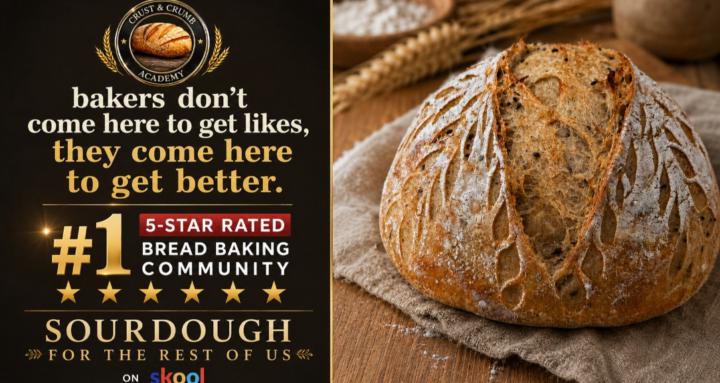
Everybody notices the soft, gooey cinnamon roll. The streusel is what takes it from good... to unforgettable. The secret isn't just the ingredients. It's the temperature. A great streusel should be cold, even close to frozen, when it goes on the rolls. Those little bits of cold butter stay separate long enough to create the crisp, crumbly topping that gives every bite texture and flavor. If it's warm going into the oven, it melts too soon and you lose those beautiful buttery crumbles. It's a small detail, but it's one of those little techniques that makes homemade baking look and taste like it came from a professional bakery. This week we're putting that lesson to work with Brown Butter Peach Cobbler Cinnamon Rolls, and they're every bit as good as they sound. 🍑🥮 Streusel is one of 150 bread baking terms inside the Crust & Crumb Glossary. If you'd like to learn the why behind great baking, and bake alongside more than 1,000 home bakers every week, come join us inside Crust & Crumb Academy, the number one bread baking community on Skool. Come bake with us. ~Henry⭐🔥

⭐
🔥
24d •
🥐 WORD OF THE DAY: DELAYED ENRICHMENT
This week's bake-along is brioche, and if there's one thing I want you to take away from the entire process, it's this: Don't rush the butter. Get gluten development first. Before you add a single piece of butter, you should be able to pull a windowpane. The dough should already be smooth, elastic, and showing signs of strength. Why? Because butter makes gluten development harder, not easier. Once that butter starts going in, it's much more difficult for the dough to build the structure it needs to support all that richness. If you start adding butter too early, you can end up with a soupy, greasy mess that seems like it will never come together. Trust the process. Build strength first. Then add softened butter a little at a time, letting each addition fully incorporate before adding the next. The second thing to watch is temperature. Brioche dough should stay cool. If the dough gets too warm, the butter begins to soften and smear into the dough instead of creating the rich, silky structure we're after. But if I had to choose the most important lesson this week? It's gluten development before butter. Get your windowpane first. Everything else gets easier after that. Perfection is not required. Progress is. Henry ⭐🔥
⭐
🔥
May 15 •
🌾 Word of the Day: Surface Tension
The tight outer skin you create while shaping dough. It's what helps the loaf hold its form instead of spreading out flat. When you shape properly, you stretch the outer layer of dough across itself and create tension on the surface. Not tearing. Not squeezing. Tension. 🔥 Why It Matters 🔹 That tension helps direct oven spring upward instead of outward 🔹 Too little tension and the loaf spreads 🔹 Too much and you degas the dough or tear the skin 🔹 You're looking for balance: a smooth, taut surface with enough strength to support the rise This is one of the biggest differences between a loose loaf and a beautiful one. Most home bakers blame their flour, their hydration, or their starter when a loaf comes out flat. Nine times out of ten, it's surface tension. Henry ⭐🔥 Like and subscribe please
⭐
🔥
May 13 •
WORD OF THE DAY: SOAKER 🌾💧
This is one of those old-school techniques that quietly fixes a lot of whole grain baking problems. A soaker is simply pre-hydrating whole grain flour, oats, seeds, cracked grains, or bran before mixing the final dough. Why does that matter? Because bran is sharp. At a microscopic level, those bran flakes can weaken gluten development and hold back your rise. A soaker softens the bran and lets the grain absorb water before it starts competing with the dough for hydration. That usually means: 🥖 Better extensibility 🥖 Better rise 🥖 Softer crumb 🥖 Better overall structure You generally start thinking about using a soaker once whole grain flour climbs above about 30% of the total flour in the dough. Below that, the gluten can usually handle things just fine on its own. Small technique. Big difference. Do me a big favor and like and subscribe while there if this is helpful to you.
⭐
🔥
May 11 •
WORD OF THE DAY: LEVAIN🧑🍳
A lot of bakers use “starter” and “levain” like they mean the same thing. They don’t. Your starter is the culture you maintain. Your levain is the portion you build specifically for the dough you’re making today. That one distinction changes how you think about fermentation. 🫙 Starter = maintained culture🥖 Levain = freshly built preferment for a specific bake Why does it matter? Because building a levain gives you: - better timing - stronger fermentation - more predictable results - better control over flavor and dough strength This is where baking starts shifting from “following recipes” to actually understanding what the dough is doing. Small distinction. Big breakthrough. Perfection is not required. Progress is.
1-30 of 33
powered by
skool.com/crust-crumb-academy-7621
#1 Sourdough Community on Skool 🍞
Coaching, not judgment. Sourdough, starter, yeasted, enriched & every bread between.
✅ ProveWorth Certified ⭐⭐⭐⭐⭐
Suggested communities
Powered by