
Write something

8d •
RVR - THE NEW WAY TO 5TH WHEEL
Every once in a while, an idea comes along because someone asks a different question. RVR began with a simple observation. Fifth-wheel RVs have become incredibly sophisticated. Yet the vehicle that connects the two has barely changed in decades. If you want to tow one of today’s premium fifth-wheel trailers, you’re still expected to buy a heavy-duty pickup truck. That’s perfectly acceptable for many people. I simply wondered… What if there was another option? Not another pickup. Not another motorhome. An entirely new category. A vehicle that’s easier to drive and park once you’ve arrived. RVR is my exploration of what happens when you design a grand touring vehicle from the ground up around fifth-wheel towing instead of treating towing as an afterthought. That single decision changes everything. The engineering. The proportions. The customer experience. Even the emotional appeal. How do we make a vehicle specifically designed for fifth-wheel touring, then make it easy to drive and park once you’ve reached your destination? That shift in thinking creates opportunities conventional vehicle design has never seriously explored. Cab-forward architecture. A true fifth-wheel towing system integrated into the vehicle’s structure. Transforming bodywork that preserves elegant styling when not towing. Long-distance touring capability measured in hundreds of comfortable miles between fuel stops. Premium ride quality. Premium presence. Throughout the project I deliberately challenge assumptions, not because today’s solutions are wrong, but because every mature industry eventually reaches a point where someone has to ask whether the starting assumptions are still valid. The goal isn’t to criticize pickup trucks. The goal is to imagine what comes next. RVR is ultimately less about designing a vehicle than demonstrating a process. (Although if Dave Kindig is ready…) Look at a familiar market. Question its oldest assumptions. Start from first principles. Then design the experience customers actually wish existed.

28d •
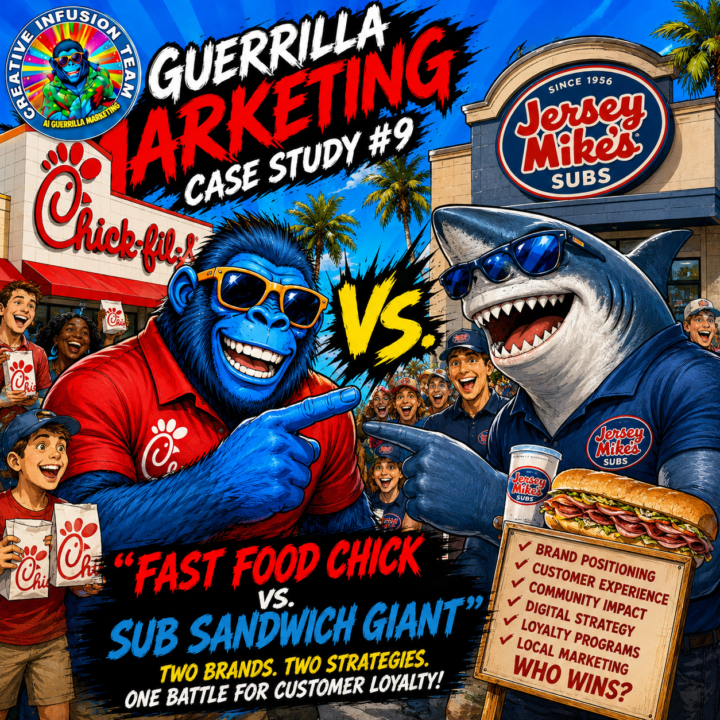
GUERRILLA MARKETING CASE STUDY #8. JERSEY MIKE’S VS. CHICK-FIL-A
THE PRODUCT ISN’T THE PRODUCT For more than a decade, Chick-fil-A sat on top of the customer satisfaction mountain. Then something happened. Jersey Mike’s took the #1 spot. Most marketers immediately ask: “How did Jersey Mike’s make a better sandwich?” Wrong question. The better question is: “How did Jersey Mike’s create a better outcome?” Because customers rarely buy products. They buy completed outcomes. THE CHICK-FIL-A LESSON Chick-fil-A built an empire on consistency. Customers know: - The food will be good. - The restaurant will be clean. - The employees will be friendly. - The experience will be predictable. The chicken sandwich is important. The confidence is more important. People don’t drive across town for chicken. They drive across town because they know exactly what will happen when they arrive. That certainty has enormous value. THE JERSEY MIKE’S LESSON Jersey Mike’s took a different path. Walk into a Jersey Mike’s and what do you see? The meat is sliced in front of you. The sandwich is assembled in front of you. The ingredients are visible. The process is visible. The outcome is visible. Customers are not simply buying turkey, ham, roast beef or cheese. They’re buying reassurance. The customer watches the sandwich being created and subconsciously says: “Yes. That’s exactly what I wanted.” The product becomes proof. THE REAL COMPETITION Neither company is really selling food. They are selling confidence. Confidence that lunch will be good. Confidence that the order will be right. Confidence that the experience will match expectations. That’s why customer satisfaction is won or lost long before the first bite. WHAT THIS MEANS FOR YOUR BUSINESS Travel advisors are not selling cruises. Airlines are not selling seats. Hotels are not selling rooms. Restaurants are not selling food. Everyone is selling outcomes. The strongest brands remove uncertainty. The strongest brands remove friction. The strongest brands make customers feel successful before the purchase is complete.
1
0
May 28 •
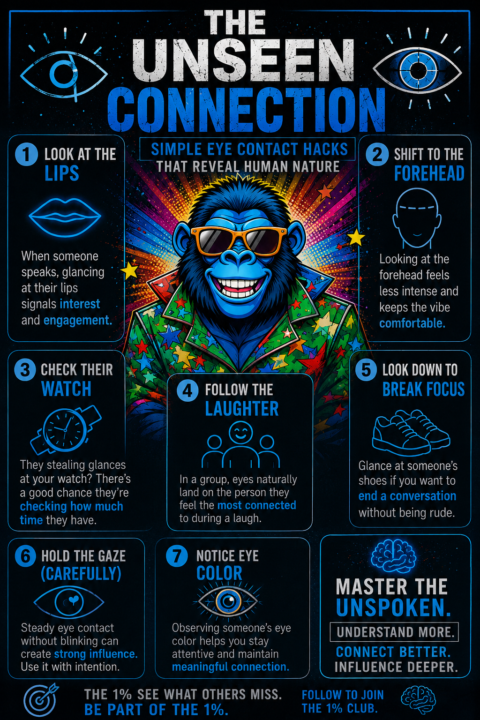
Most people think communication is all about words…
It’s not. The strongest signals in any room are usually the ones nobody says out loud. Eye contact.Focus.Timing.Attention.Comfort.Pressure.Connection. The people who understand human behavior at that level tend to move through life differently. Better leaders. Better marketers. Better negotiators. Better storytellers. That’s what fascinates me about Guerrilla Marketing and Creative Infusion. Tiny shifts in perception can completely change outcomes. The “unseen connection” is real. Most people never notice it.A few learn to recognize it.The best learn how to use it ethically, creatively, and intentionally. That’s where influence begins. 😎🦍
1
0
May 22 •
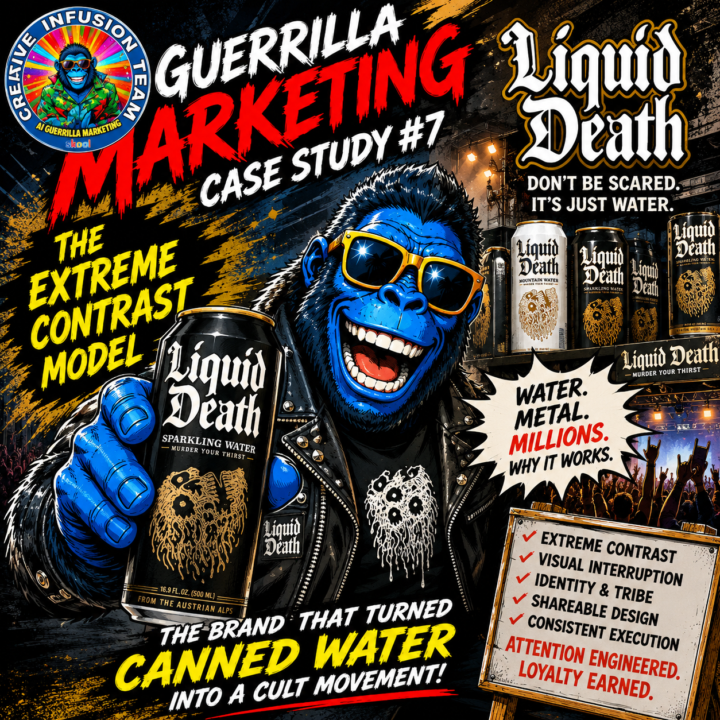
GUERRILLA MARKETING CASE STUDY #7 LIQUID DEATH.
The Extreme Contrast Model. Most companies try to fit in. Liquid Death built an entire business around standing out. And they did it with… water. Not energy drinks.Not alcohol.Not supplements. Water. That’s what makes this such an important Guerrilla Marketing case study. Because this is not really about canned water. This is about: EXTREME CONTRAST Liquid Death understood something most companies miss: Safe branding is invisible branding. Walk through a grocery store. Most beverage companies look almost identical: - blue - mountains - purity - health - hydration - smiling people jogging Then suddenly… A black tallboy can appears with skulls, metal fonts, and the name: LIQUID DEATH Your brain has no choice but to stop. That interruption is the entire strategy. Not because it’s “crazy.”Because contrast creates attention. And attention creates curiosity. And curiosity creates trial. And trial creates customers. This is Guerrilla Marketing at its purest form: VISUAL INTERRUPTION The brilliance is deeper than people realize. Liquid Death didn’t just make packaging. They created: - identity - tribe - signaling - conversation - photography bait - social media bait - reaction bait People post Liquid Death because holding it says something about them. That is advanced branding psychology. The can becomes: - rebellious - funny - anti-corporate - anti-boring - anti-health-brand cliché The product became content. That’s the real breakthrough. Most companies spend fortunes trying to get attention AFTER the product is created. Liquid Death built attention INTO the product itself. That changes everything. And here’s the deeper lesson… Extreme contrast only works when: - the product is still good - the joke is sustainable - the identity is consistent - the execution is disciplined Otherwise it becomes a gimmick. Liquid Death committed fully. Every ad…Every visual…Every product name…Every campaign…Every social post… Same energy.
1
0
1-29 of 29
powered by
skool.com/creative-infusion-team-9335
Creative Infusion Team brings bold thinkers together to spark guerrilla marketing, sharp strategy, AI and unstoppable momentum for your business.
Suggested communities
Powered by