
🔥
18d • The Playful Shift
Frustration Is Not the Enemy
As I watch my grandson begin to navigate the world, one of the hardest things for me is watching him struggle with something I could fix in ten seconds. He’s learning to walk and to navigate his space, my daughter is doing great at letting him struggle, while grandmama, who knows better, wants to rush in and help! I have to remind myself that in my hurry to make the frustration disappear, I’m also taking away the moment of growth.
Think about this, resilience is not built by keeping children from ever feeling disappointed, irritated, embarrassed, or stuck. It is built in the small moments when they meet a manageable challenge, feel the discomfort of not getting it right immediately, and discover that frustration does not have to end the experience. They may need a breath, a different approach, or a short break before trying again. What matters is that struggle is not automatically treated as proof that someone else needs to take over.
Play gives children a remarkably safe place to practice that.
A lost round of a card game is not the same as a serious life setback. A marble run that collapses is not a crisis. But the emotions that rise in those moments are real. So is the chance to recover.
When we treat every frustration as something to erase, children may learn that discomfort means something has gone wrong and someone else should step in. When we stay close without immediately taking over, they have a chance to learn something more powerful: I can feel frustrated and still be okay. I can struggle and decide what happens next.
Now, this doesn’t mean we ignore tears or leave children alone in distress. It means we begin to tell the difference between a child who needs comfort and a child who needs a little room to wrestle with the problem before we solve it for them.
This week, we are stepping into The Resilience Playground: the everyday spaces where play, frustration, and growth collide. We will look at how to support children without rescuing too quickly, how to help them reset after a fumble, how to turn mistakes into useful information, and why being bad at something can be part of becoming strong.
For today, simply notice where frustration shows up in your home. Notice what your child does first. Notice what you do first. Do you explain? Suggest? Fix? Distract? Or do you pause long enough to see whether they are already beginning to find their own way through?
7
8 comments
Frustration Is Not the Enemy
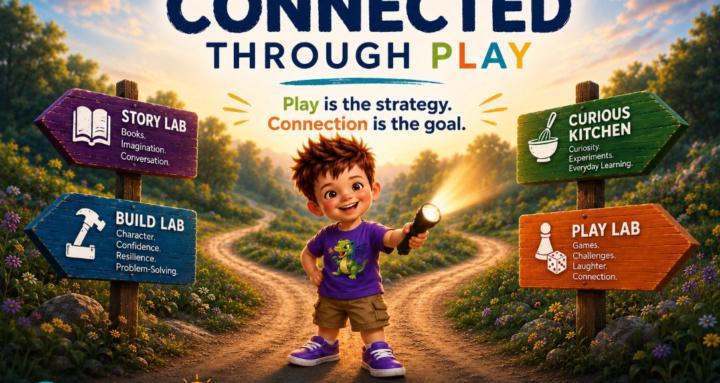
skool.com/connectthruplay
Helping families create more moments that feel real again.
Leaderboard (30-day)
1

+85
2

🔥
+65
3

+61
4

🔥
+48
5

+47
Powered by