
Write something
Pinned

Jul 21 •
The Path To Compression
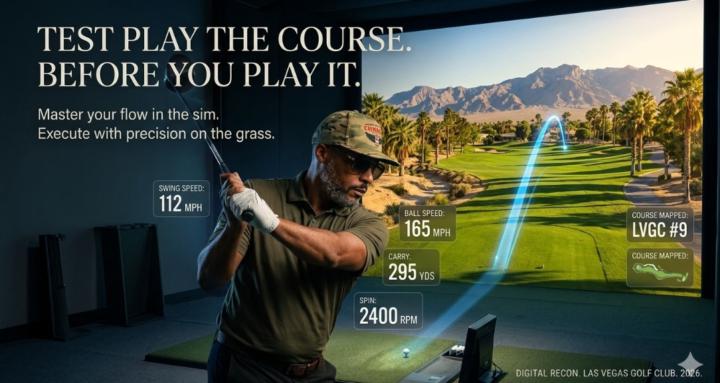
- Connect: Establishing alignment, mental clarity, and body-club connection before taking a swing. - Practice: Purposeful, metric-driven reps off the mat or in the simulator (not random bashing). - Play: Transferring simulator and range mechanics directly to real course conditions and target focus. - GoLIVE: The critical reflection and data capture phase—reviewing performance, metrics, and swing feel immediately post-session. - Scale: Systematizing your game so improvements stick and compound over time. Grab a pen or open your phone notes. Rate yourself honestly on a 1–5 scale for each of these 5 areas: 1. Connect: Do you have a repeatable pre-shot routine and clear mental focus every time you step up to the ball? [Score 1-5] 2. Practice: Are your range sessions driven by real metrics and specific swing feel, or are you just hitting grooved shots with no feedback? [Score 1-5] 3. Play: How well does your range swing translate onto the actual course under pressure? [Score 1-5] 4. GoLIVE: Do you review and reflect on your session data immediately after you play to lock in learning, or do you just drive home and forget? [Score 1-5] 5. Scale: Do you have a clear plan to compound your gains month after month, or do you keep fixing the same mistakes every spring? [Score 1-5] Look at your scores. Most golfers score okay on Practice, but drop to a 1 or 2 on GoLIVE and Play. That gap right there between hitting reps and reflecting/transferring them is why practice doesn't stick on the golf course. You don't need a total swing overhaul, you need a system that closes the GoLIVE reflection gap. If you scored a 3 or lower on any of these stages especially GoLIVE and Play that's what we fix when we get together. We bring you through the full ecosystem live on the mat and simulator, capture your data, and run through the reflection process together so you leave with a clear blueprint. To bridge that gap and see where your swing is leaking performance, come practice with Will Roy Mangum Jr. live. Go to tinyurl.com/LVGoLIVE, to request a session, and let's run through your GoLIVE diagnostic together.
0
0
Pinned
Jun 1 •
Classroom
Classroom will be periodically updated with new content as they become available. Thank you for your support!
0
0
Jul 20 •
The Origin of the Clubhouse Session
In this clip, Dr. Garner breaks down how simple post-round clubhouse check-ins evolved into the framework for Golf Therapy in Las Vegas [00:56]. Real comradery isn't built in isolation—it happens when we create space to talk, debrief, and unpack what we're carrying on and off the course [01:02]. Key Takeaway: Golf is more than mechanics; it’s a sanctuary for reset and real connection [00:41]. 💬 Member Reflection Prompt: When you finish a round of golf or a heavy simulator session, what is your routine to wind down and reset mentally? Drop your thoughts or post a quick comment below to earn points and connect with the group! ⛳️🤝
0
0
Jul 20 •
From Stress to Compression | The Birth of Golf Therapy in Las Vegas
Hello everyone, I’m Will Roy Mangum Jr. In this raw, real moment with an intimate live crowd, Dr. Douglas L. Garner and I share the motivation behind our co-authored book, Golf Therapy in Las Vegas. As a medically discharged U.S. Army Combat Veteran, daily resilience and staying grounded are non-negotiable. When Dr. Garner and I hit the course, quick conversations turned into strategies, strategies turned into notes, and those notes became a complete framework for emotional control, presence, and peak performance when the pressure is on. This project bridges my data-driven mechanical foundation with Dr. Garner's deep psychological architecture to help you master your emotions and achieve calm execution—on and off the course. Empowering Veterans & Leaders Through Golf and Multimedia. Amplify Your Story. Experience the Ahh Haa Moment in Las Vegas 📖 ORDER YOUR COPY OF THE BOOK TODAY: Read the Manifesto: https://da.gd/GTILVPB Join the Inner Circle: https://da.gd/CWMCSkool Experience the Lab: https://da.gd/LVGoLIVE Amplify Your Story: https://da.gd/AYourStory Get the Swag: https://da.gd/CWMCswag Your growth is the objective. Let’s get to work. 🤝 JOIN THE COMRADERY: Subscribe for more reflections on performance coaching, golf simulation breakdowns, and mindset systems. #CombatVeteran #GolfCoaching #MentalResilience #GolfTherapyInLasVegas #PerformanceMindset #PathToCompression #WillRoyMangumJr #DrDouglasGarner #LasVegasGolf #Comradery #DaChiefCreativeOfficer
0
0
Jul 15 •
The Jet Fuel Story: Navigating Hidden Wounds on the Course
Hey team, I wanted to share a quick, incredibly grounding insight from Dr. Douglas Garner, PhD. He tells a story about standing on a tee box out by the airport with a veteran who was a helicopter gunner. A plane flew over, and the smell of the jet fuel triggered an instant flashback. It’s a perfect example of what we mean when we talk about hidden wounds. Sensory triggers (like smell) are deeply wired into our nervous systems. They bypass our logical brains entirely. When they hit, they hit hard, and they don't ask for permission. But watch how Dr. Garner handles it in the clip: 1. Awareness: He noticed his buddy having a moment. 2. Support: He checked in simply and without judgment ("Are you okay?"). 3. Space: They allowed the moment to pass, got re-centered, and moved on. This is exactly why we do what we do. Our community isn't just about dialing in swing mechanics—it’s about creating an active decompression chamber where you can show up, put in the work, and have a crew that has your back when those hidden wounds pop up. Check out the clip below to hear Dr. Garner explain it in his own words. Note: A portion of every copy of "Golf Therapy in Las Vegas" goes directly to support Connect with My Comrade to keep facilitating these exact programs. https://da.gd/GTILVFun01
0
0
1-30 of 40
powered by
Suggested communities
Powered by