
Pinned

Mar 15 •
Welcome to Clief Notes. Here's where to start.
1. Watch the intro video and introduce yourself in the intro post here 2. Start with The Foundation (free course). Concepts, folder architecture, prompting framework. Everything else builds on this. 3. Check in at the bottom of each lesson. Polls, discussion posts, other members working through the same stuff. Use them. 4. When you're ready to build real things, move to Implementation Playbooks (Level 2). When you're ready to build your own tools, Building Your Stack (Level 3). 5. Post your work. Ask questions. Help others when you can. What are you here to build?
Poll
6360 members have voted
Pinned
4h •
☕ June Tea Schedule
Sat, June 13 3pm: High Tea Sat, June 20 2pm: Afternoon Tea 3pm: High Tea Sat, June 27 2pm: Afternoon Tea 3pm: High Tea Mark your calendars and we'll see you there!

Pinned
3d •
🚨 You've been asking when the Lyceum opens. The waitlist is live. 🚨
The waitlist is up and seats are limited, so this is your nudge to go lock yours in. 👇 New here? Quick context. 👀 The Lyceum is Jake's live cohort program built on ICM, the methodology 35,000 people in this community are already using to get real results with AI. The short version: folders over agents. You learn the layer underneath the tools, the one that keeps working when the next model drops. Full breakdown is on the site. Here's what's inside: 🎯 Three cohorts, Technical, Business, and Creator. Same methodology, built around what you actually do. 🎥 Live sessions with Jake and a full team of instructors. ♾️ Lifetime recordings, written curriculum, and a private cohort Discord. 📜 An Eduba ICM certification you can put on your resume. And a guarantee no course makes: ✅ You leave with a working product, or the team finishes it with you. ⏳ Seats are limited and this community moves fast, so the math is not in your favor if you wait. 💡 Pricing and start dates aren't public yet. The waitlist sees them first, gives feedback on timing, and gets in before the program opens. Everything you want to know is on the page. If you already know this is for you, get on it. 🔥 👉 https://lyceum.eduba.io

21h •
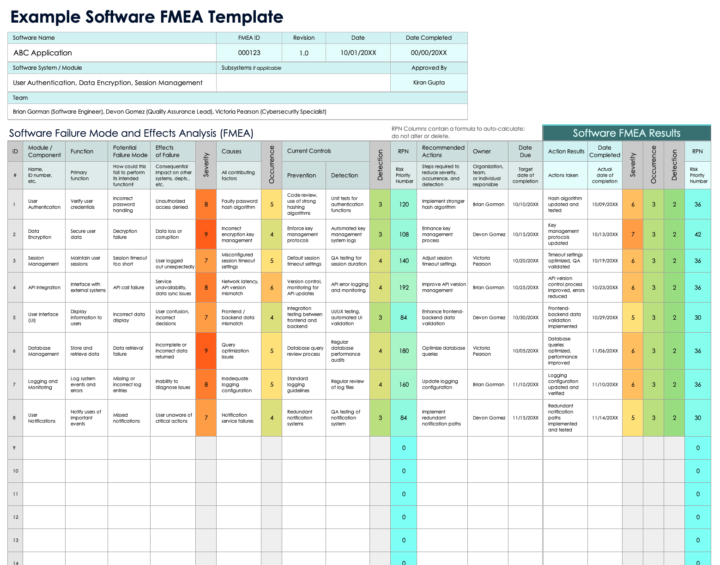
FMEA - A six sigma methodology to find flaws in your flow before ever running it 🔍
I continue to find that many are reinventing the wheel with AI workflows. There are many tools and methods that have been around for decades and in some cases over a century for traditional manufacturing that map cleanly to this new era. One of these I keep mentioning is FMEA or failure mode and effects analysis. FMEA is a risk management methodology that allows you to review your designs and processes prior to implementing them. The process is as follows: - List out the sequential steps of your process, design or workflow - List the potential failures modes one by one at each process step. What can go wrong and how - List the potential causes that could result in that failure - Rate the severity (how bad is it if the failure occurs), occurrence (how often does the failure happen or is likely to happen), and detection (how good is your ability to detect that failure when it occurs or before it occurs). A score combining the three is calculated What this does it assign a numerical value to each risk to prioritize attacking them in order of most to least importance. You can fix any gaps and reevaluate the new workflow. All of this is done before shipping anything. If you make a change to the workflow, adjust the FMEA and make sure there are no gaps. I’ve included an image of what one of these typically looks like. Try it out on your workflows. Do you see any gaps? Any failures you didn’t think of before or something that you can build a feature to catch? Let me know what you think below ⬇️
6d •
🏆 WEEKLY COMP #6: THE RESEARCHER 🏆
🎟️ PRIZE: FREE SEAT IN THE LYCEUM 🎟️ Pick your cohort. Technical, Business, or Creator. Your call. ---- 🇺🇸 Quick note first. This post is going up Today because we took Memorial Day off yesterday. To keep things fair, you've got until Sunday May 31st at 12:00 PM EST to submit. Same week of build time, just shifted. ---- 📋 THE CHALLENGE Build a folder-based AI researcher for a specific topic or industry. You pick the domain. This week's deliverable is one researcher folder that someone could drop into a Claude project and use as their personal research partner for whatever domain you've built it for. ---- 🎯 PICK YOUR DOMAIN The domain is yours. Pick something specific. Pick something you'd actually use. A few sparks to get you thinking: - 🏦 M&A activity in one industry (fintech, healthcare, defense) - ⚖️ Court cases in one area of law (employment, IP, immigration) - 🧬 Scientific research on one health condition or treatment - 🏘️ Real estate market dynamics in one city or asset class - 🥊 Competitive intelligence for one product category - 📜 Historical research on one period, place, or movement - 📚 Academic literature in one specific subfield - 📋 Regulatory developments in one sector - 📰 Journalism research on one beat (climate tech, AI policy, biotech funding) The more specific, the better. "Research assistant" is too broad. "M&A research analyst for early-stage fintech deals in the US and Europe" is right. ---- 🗂️ THE METHODOLOGY If this is your first comp, welcome. Here's what you need to know: This week (and every week) you're learning interpretable context methodology. Folders as architecture. Each file does one job well. Your researcher is a folder with five things: - 📄 identity.md (who the researcher is, what domain they cover) - 📐 rules.md (how they research) - 💬 examples.md (what good looks like) - 📚 reference/ (frameworks, source lists, key concepts) - 📖 README.md (how to use it)
1-30 of 1,500

skool.com/cliefnotes
Jake Van Clief, giving you the Cliff notes on the new AI age.
Leaderboard (30-day)
1
+1233
2

+982
3

+825
4

+668
5

+642
Powered by