
9d • 🛠️ Show Your Work
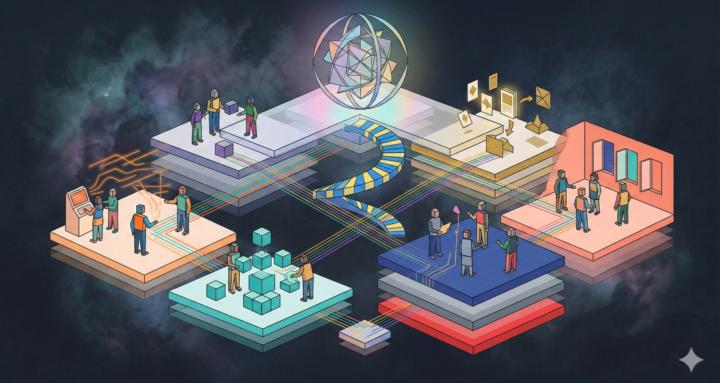
I was asked about my process: I didn't hire 3 teams. I built an architecture :)
On April 10 I was trying to clean up my Instagram.Tighten the cover graphics. Build a repeatable system. Stop redesigning the same template every week.
A one-afternoon job.
What actually happened was the first real test of an architecture I had been sketching for writing work — and I tested it on design.
I built a sandbox, gave it a governing file, separated references from working material, wrote one clean brief… and let it run.
Fifty covers came back in minutes. Same palette. Same typography. Same visual language. None off-brand.
That was the moment something shifted.
Not because of the output — but because of what it proved:
Once an architecture is clear enough, the question is no longer “what can I delegate?”It becomes “what is now worth building?”
In 21 days, that small test turned into:
- Three working teams (orchestrator, content, design)
- Four books shipped or shippable
- A new website
- Two additional teams already scoped
Same operator. Same hours in the day.
For those who asked about mindset and process — this is the real answer:
1. I stopped thinking in prompts and started thinking in systems.The model is not the asset. The structure around it is.
2. I separated thinking from doing.The orchestrator doesn’t write. It reads, structures, briefs, and validates.The workers execute. They don’t improvise outside their lane.
3. Everything moves through briefs.No direct “do this” requests. Every handoff is:task → context → scope → acceptance → return checklist.That alone removed most iteration cycles.
4. Context is layered, not dumped.Reference material lives separately from working material.The model doesn’t have to “figure out what matters” — it’s already decided.
5. The human sits outside the system.Not inside prompting.Outside — validating outputs and deciding what ships.
The clearest proof this wasn’t theory came from the hardest task I’ve ever tried to coordinate:
Mapping TCM meridians, Thai Sen lines, and Anatomy Trains on the human body — in one consistent visual language.
Three teams. One pipeline.
- Research team aligned the systems and terminology
- Content team wrote the clinical layer
- Design team rendered the visuals
No single team could have done that alone.Together, through structure, it shipped.
So when people ask “what’s your process?” or “what changed?” —it’s not more tools, better prompts, or even better models.
It’s this:
The architecture became the asset.
The factory got built.
Now it produces.
Configure the factory.
Validate the output.
Trust the structure.
Full piece in the PDF.
16
27 comments
I was asked about my process: I didn't hire 3 teams. I built an architecture :)
skool.com/cliefnotes
Jake Van Clief, giving you the Cliff notes on the new AI age.
Leaderboard (30-day)
1

+850
2

+730
3

+625
4

+558
5
+452
Powered by