

6d •
New Free Event: Launch Your Own ChatGPT Dot
I've been talking about multi-agent orchestration publicly since 2024. Over the years, I've seen a number of iterations around it. This product launch is interesting purely out of the doors it opens within our October theme. Offloading real work. It's a game of science and art. It requires design, especially when your usage is on the faith of these agents off on their own. Within these next two weeks, I'll be collecting business use cases and showcasing it live to the JoinLeland audience. Excited to build on top of this and see what perspectives standing on the shoulders of giants can give us, what do you think you'll be using it for? https://openai.com/index/introducing-dots/
0
0

8d •
October Calendar Live!
The day job, strenuously tedious and mundane as it can be time to time, is a symptom of a larger disconnect. October, I'm all about offloading more than 30% of your days. I've found this to have real effects on the joy and happiness you experience, creatively and mentally. Here's what's on the calendar (all free): Sat Oct 10, 12pm ET: AI Job Search Engine Live If you're job hunting, this one's for you. It's the setup I use to find roles worth applying to and tailor each application without losing a whole weekend. Sat Oct 17, 12pm ET: Offload 25% of Your Day Job This is my favourite one. Tell me about the task that drains you, and I'll try to automate it live on the call. No rehearsal, and no promises it goes smoothly 😅 Sat Oct 24, 12pm ET: Becoming an AI-native Seller For my fellow salespeople. I spent 10 years in sales, and this is everything I wish I'd had for research, call prep and follow-ups. Mon Oct 26, 6:30pm ET: From Chat to Agents (No Code) For anyone who wants to be the "AI person" on their team but doesn't know where to start. You don't need to code. If you're interested in setting up your own harness to work with others, the era of multiplayer agentic development is just around the corner. The 2020's experience a dawn of singleplayer AI, each of us glued to endless prompt chains. Now, imagine a team member you can tap on like a mechanic to tune your vehicle, that's what we're building here in The Open Campus for AI. Happy Autumn!
0
0

Jul 27 •
Full Course Added: 5 Real Revenue Engines for Owner/Operators
After a month of consolidating years worth of projects and experiences, I've come to the table with another magnum opus. These are the same five engines I've used with clients to: - Add $250k of net new pipeline for a tax firm in 6 months - Add $24k of net new opportunities for a recruitment firm under 30 days - Recover of $18k of stale contracts already sitting in an event company's inbox Firms like KPMG charge around $15k for implementing any of these, I've netted $3-5k of personal income from each of these. It's free for every member that's here before 500 members, published in the classroom! Additional async resources also available, which will evolve into an interactive iOS app experience in the launch of Plinko Pocket late 2026 (more on this later!) The first half of the course is a comprehensive Hermes Desktop and iOS guide, and the second half is real revenue engines you can repurpose for yourself and/or clients. What you'll build Station 1 — Prospecting: A sourcing engine that pulls qualified leads with evidence of the pain, on a schedule. Station 2 — Proposals: Discovery call transcript in, a scoped and priced proposal out — in 20 minutes instead of 2 days. Station 3 — Onboarding: Welcome messaging, kickoff brief, and the client workspace built for you the moment a contract is signed. Station 4 — Delivery: A catalog of engines you can ship off the shelf — and how they replace software you're currently renting. Station 5 — Reporting: The weekly loop that tells you whether you're growing or just busy. Every station follows the same three moves: run it as a prompt, save it as a skill, schedule it so it runs without you. What it costs $48/month for the server, plus whatever model subscription you already pay for. That's the whole stack. I use Codex — you can point it at any model you want.
Jun 7 •
Boiling the Ocean - We’re Unbelievably Early
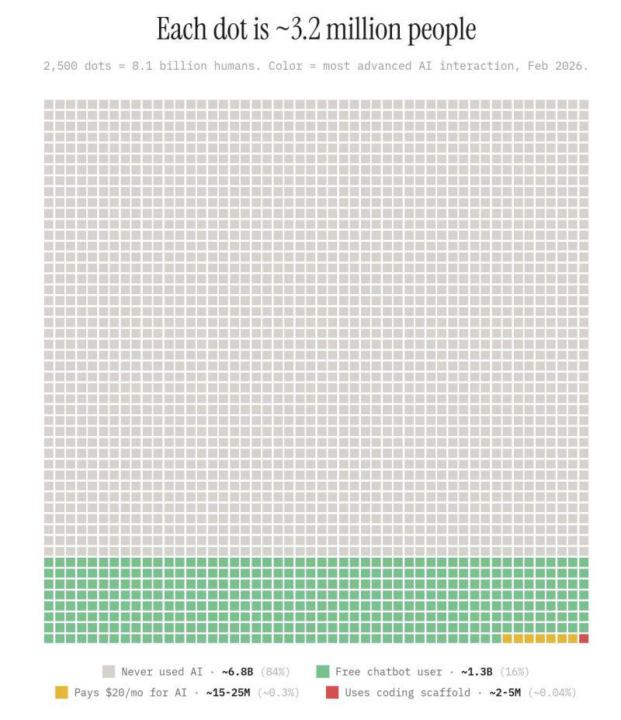
Any time you feel like you’re not moving fast enough or maximizing what you’ve got access to, remember that we are still early in the mass adoption of AI. The path under-travelled is meant to be messy. If it was clear, that would mean it’s been walked many times before. You are in new territory, adventure with exploration, leave room for the miracles! Let us know what you’d like more of:
Poll
5 members have voted
May 25 •
Multi-Agents = More Hands, Less Eyes
After a certain level of caffeine and brute focus, I spin up anywhere between 9 to 15 agents to get my to-do list cleaned up. Typically, as a solo founder, my operational days consists of a lot of different hats. That degree of context switching, for the sober minded, is not healthy. It's dizzying. It hurts. It's the equivalent of running an electric bolt through a circuit, it mentally fries the human. This is where the power of delegation with AI is more of an art than science. Your relationship to input and output is directly correlated with how "hands-on" you are with everything. What if I told you the screenshot attached was only the agents I wanted to drive, and that I had 4 others working in terminals that I'm not babysitting? This isn't just demo-theatrics. 1 agent is hardening my outbound email campaign. Another is troubleshooting a voice agent UI for a client. The other two are idle for the client and one for myself, ready for me to offload tasks into so I don't have to click and think with my eyes. I think with my ability to communicate and I pass it on. I've got Claude running in parallel to ensure the outbound email campaign hardening has a reference anchor, and of course, music to enjoy the sunshine to. There's a sourcing engine (which is 2 parallel agents), an enrichment engine (Chrome MCP running through OSINT or wherever else I point it), all at fractions of what any cloud provider would charge to do this. I'm not interested in competing with the ocean of DFY tools for this, at least not for now. More hands and less eyes translates into more capability without the concerning eye/oversight distracting from real work getting done. I know, there's a window of ignorance and capitalizing on that feels like pointing to a gold tunnel in a gold rush. I'm more interested in selling the shovel, the stick and plate that goes with the cart. I want to give you the Agentic Harness, not give you another series of stable bot subscriptions to drain your wallet.

1-15 of 15
powered by
skool.com/citizen-developer-1179
AI is replacing the busiest part of your week.
This is where you learn to use it.
Access Everything: https://tinyurl.com/citizen-dev
Suggested communities
Powered by