13d •
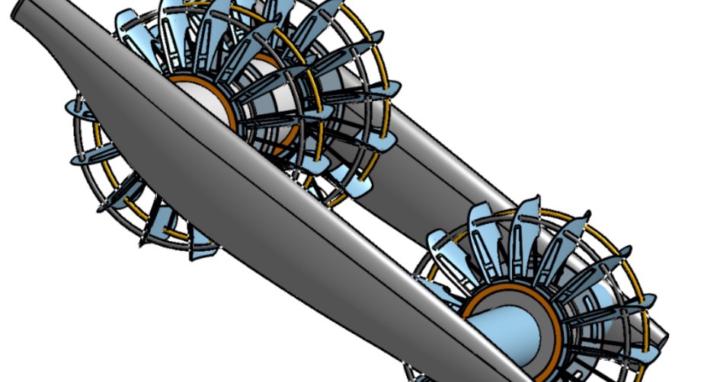
Bladerunner succeeded to win attention
The missing water quality marks the summer in Denmark so Limfjord may be first mover on this low cost (thanks to Vestas) energy and aireation equipment.
0
0
Mar 11 •
Catbark invites you to change the shipping world!
Catbark group believes that shipping must change and preferably back to wind driven sailing to avoid disaster from spilled containers and polluting ships. Initially we designed the basic 20m foiling cat from composite filament pipes, reducing Capex and best LCA possible. AI confirm Catbark can become the game changer, built cheaper than similar size, and can produce H2 onboard. Now, we launch H2bladerunner design made from discarded windmill blades and ROI about 2 years from H production and invite you to join our Skooler community to learn from our experience in building with pipes, vacum infusion and foiling hydro kinetic energy solutions. Fair winds
Apr 17 •
Boat building 2026
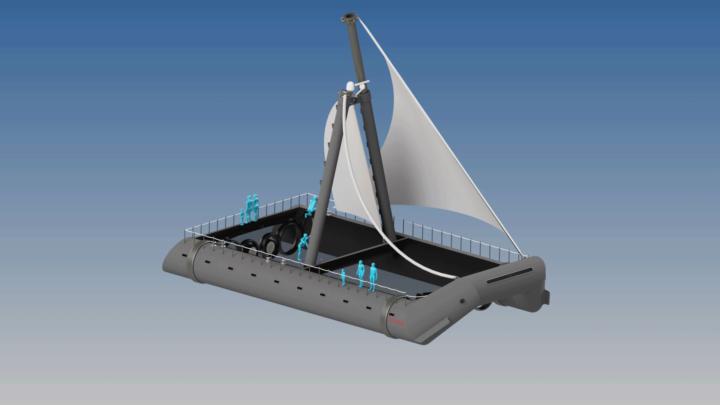
Obviously changes are greater than before due to AI and market value on prime materials. It is a must to use composite and maybe even natural fibers ( like Greenboats in Flensburg) but also the CAPEX will be with great savings even compensate the change in work force, which happens anyway due market demands. Few years back several countries directly prohibited wood construction for safety reasons in commercial transport. Catbark’s assembly method is proven in other areas but still needs certification in pipes, which really should be something back when biggest bridge construction were in pipes. To be continued 😊
0
0
Apr 10 •
Catbark vision
Down sizing shipping, a MUST. Ultra low Opex and CAPEX in construction, >50% below similar size steel ships Durable for hundred years, safer, cheaper, lighter and with round GRP containers that stacks safer and easier loading unloading adaption to bulk handling and on top of all; energy production !. Easy recycling and dismantling if needed for over-land transport, each and all argument for the shipping world MUST change away from huge steel ships with uncertain LCA , disasters of unknown size and enormous CO2 emissions. Mission An explorer yacht and safer ferry with lower construction price of similar vessel in steel or aluminum. Sailing rig, foils and thrusters generator with battery banks make for zero CO2 emissions and with PEM Hydrogen production. Lifecircle study will prove the better use in vessel construction of composite filaments fibers and with very short production time in green field yards or riverside. A start could be a simple barge ferry construction of GRP pipes assembly by vacum infusion at Venø, with bottom line draw system value below 100.000 Euros, construction in-loco or at Sydkajen, Struer. Location ideal for the ferries construction and to build explorer and energy producers like Bladerunner H. For this kind of barge a classification and registering is expected to be fast and relatively inexpensive. In our workshop in Thyholm we want produce a innovation in thrusters from Magnetic Innovation 485 basic electromagnetic permanent magnet stator by carbon fiber vacum infusion cladding of the permanent magnets and support structure. Likewise we want to produce the innovative 8 figure foils by use of cuts from same pipe size used for barge main hulls, from the filament pipe with visconite bushings and vacuum infused carbon cladding support. Yes, a big big challenge and mission, so let’s get started 😀
0
0
Apr 4 •
Innovation thinking
Catbark project include several “back to the past” technologies now possible as innovation through new materials from the chemical discoveries of fossil oil and natural resin, often under the common name composite. Now when you look into the insolation materials Rockwool stands out by inventing “stone wool” The history of Rockwool is a classic "pivoting" success story. It began not with insulation, but with gravel, and was inspired by a scientific phenomenon observed at Hawaiian volcanoes. ## 1. The Early Years: Gravel and Dust (1909–1936) The company was founded in **1909** as *Korsør Stenforretning* by Henrik Johan Henriksen and Valdemar Kähler. For nearly three decades, the Danish company focused on gravel mining and stone processing. The shift toward insulation was sparked by **Finn Henriksen**, the founder’s son. During a study tour to the United States in the mid-1930s, he discovered a technology for turning stone into "wool"—a process inspired by **"Pele’s Hair,"** the thin strands of volcanic glass formed when molten lava is cooled by the wind. ## 2. The Birth of Stone Wool (1937–1961) In **1937**, the company acquired an American license to manufacture mineral wool and officially rebranded its production as **Rockwool**. * **The First Factory:** Production began in Hedehusene, Denmark. * **Expansion:** By 1938 and 1940, the company had already expanded into Norway and Sweden through partnerships. * **Wartime Innovation:** During WWII, raw material shortages forced the company to innovate, experimenting with various stone types and industrial byproducts, which eventually refined the durability of their product. ## 3. Consolidation and Global Reach (1962–1990s) In **1962**, the original partnership between the Henriksen and Kähler families split. The **Kähler family** took full control of the Rockwool business, leading to a period of massive international expansion. * **The 1970s Energy Crisis:** This was a major turning point. As oil prices skyrocketed, the world suddenly cared deeply about energy efficiency. Rockwool's fire-resistant, high-thermal-performance insulation became a global standard.
0
0
1-5 of 5