High performance Hunting Bow Build: Tillering
With the limbs of the bow balanced we can now begin tillering the bow. As the bow limbs are already balanced this will be tremendously easier than if not. This is much easier when done on a tillering tree, a diagram is available on page as a reference. There are also many videos online as to how to construct a tillering tree. Placing the bow on the tree while braced we can hook the scale onto the string. Stepping back we can give the bow string a few tentative pulls. Observe the bend of the limbs and how they flex monitoring any areas showing excessive bend. If some areas are stiff or excessively weak now is the time to address them. If an area is weak mark it with a pencil and avoid removing material from it. We will then weaken the other limb and stiff areas by taking material off with the card scraper. If an area is too stiff simply take material off with the scraper before exercising the limbs and bracing once more.
When the bow limbs are bending evenly showing no sign of excessively stiff or weak areas we can then draw the bow to full design weight. Using the scale monitor how much weight the bow is displaying at a given draw length. For a 60lb bow we draw to roughly 27kg, for a 50lb bow we draw to 22kg etc. Pull the bow gently to full design weight this should only take a small amount of draw to achieve at this stage. Draw the bow a few times to the full design weight observing the bend of the limbs. As we've already balanced the limbs even scrapes should now be taken off each limb. This can be done while the bow is braced but is made easier if unbraced at this stage. Count the strokes ensuring that the same amount is taken off each limb. With the material removed we can place the braced bow back on the tillering tree. We then pull to half design weight 15 times before drawing to full design weight another 15. This exercises the limbs while the bow is braced. Once again pull the bow to full design weight observing the bend of the limbs before marking, scraping, exercising and drawing once more.
Once the bow is well into tillering we can increase the brace height to around 6". This will give plenty of room to nock the arrow silently when hunting ensuring the feathers don't brush up against the bow.
We continue this routine gradually bringing the bow closer and closer to full design weight at our desire draw length. Once this is reached we can move onto the next stage.
Photo Left: The braced bow being drawn on the tillering tree. Right: An example of a timber hitch knot
1
0 comments
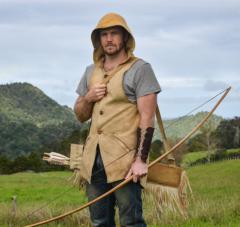
High performance Hunting Bow Build: Tillering
powered by
skool.com/bow-building-101-1014
A page dedicated to the teaching and discussion of the art of bow building and spreading the knowledge around the world.
Suggested communities
Powered by