
Write something
Pinned

Aug '25 •
BEER WILL NEVER DIE
Welcome to the beer cult! Introduce yourself by saying the best beer you've ever had. The one that really BLEW your mind. It could have been the pour that got you into craft beer, or the latest whale you sought out.
May 5 •
Angry Chair for Sale | Funguys, Rogue, & True Anomaly Closing
Dang, for the last year or two, it feels like every time I get on Instagram another brewery has announced their impending closure. A small local one by us, Dirty Job, just announced last week. What is the craft market looking like in your cities? Does it just seem dire because we have so much information at our fingertips? Or are y'all seeing your favorites drop like flies?!
Feb 3 •
Pilsner Brewing
1. The Technical Art of the Pilsner As any seasoned cellarman knows, the pilsner is the ultimate diagnostic tool for brewery hygiene and process discipline. It is a style of uncompromising transparency; its lean, pale profile offers no sanctuary for technical flaws, off-flavors, or substandard raw materials. Since the 1842 debut of Pilsner Urquell, this category has served as the benchmark for technical brewing skill, demanding a masterful command over enzymatic activity and fermentation kinetics. The high-quality pilsner is defined by three non-negotiable pillars: surgical crispness, brilliant clarity, and high-drinkability refreshment. Achieving these requires more than a recipe; it requires the precise management of the "cold side" and a sophisticated understanding of how water chemistry and yeast health interact. A successful pilsner demonstrates that a brewer has graduated from simply "making beer" to orchestrating a complex biochemical transformation. This journey begins with a strategic selection of regional style, which dictates the technical parameters of the entire brew. 2. Evaluating Regional Variations: German, Czech, and Modern Styles Selecting a specific pilsner style is the primary strategic decision in the production pipeline. This choice governs everything from the grist composition and mash schedule to the specific yeast kinetics required during the lagering phase. A brewer must decide whether they are pursuing the high attenuation of the North or the rich, melanoidin-heavy complexity of the East. German Pilsner: Crisp, clean, and highly attenuated light lager. Focused on a lean, dry finish; traditionally utilizes a single infusion mash and soft water. Czech/Bohemian Pilsner: Complex, rich malt depth with a spicy hop backbone. Employs "Double Decoction" to drive Maillard reactions and utilize under-modified malts. New Zealand Pilsner: Refreshing, fruity, and aromatically modern. Often utilizes the "Quick Lager" method to prioritize hop-derived thiols and esters over traditional crispness.

Oct '25 •
New to Skool, where are all the beer groups?!
Any other brewery owners in here? Just started building my Skool to help people build breweries and other businesses especially in small markets. Let’s get this group more active!
Nov '25 •
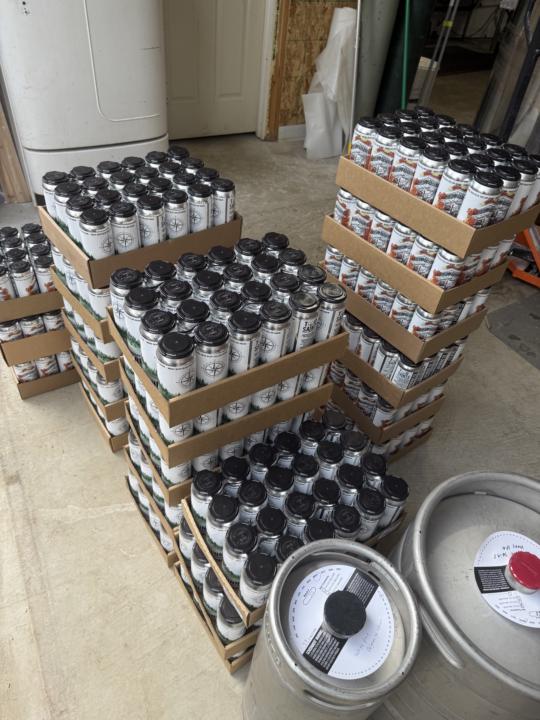
Biggest delivery day in months
Distribution really isn’t my focus anymore but it’s nice to pad the sales with a delivery day and empty my can stock. Couple kegs and 25 cases to the local stores and gas stations. All filled and labeled solo by me. Bout a $1500 day
1-16 of 16
powered by
skool.com/beer-is-not-dead-9221
Community to connect beer lovers to brewers & owners. Get tips, share wisdom, support your beer habit and keep your brewery alive!
Suggested communities
Powered by