
Apr 1 • General discussion
The Future of Audiology Will Not Come from Improving Old Standards Alone
For decades, audiology has relied heavily on methods that were groundbreaking in their time. Pure-tone audiometry became the foundation of hearing assessment, and it still plays an important role today. Yet an uncomfortable question remains:
Are we still measuring hearing in the way that matters most to people’s lives?
Because hearing is not just about detecting tones in a quiet room. Hearing is about understanding speech in noise. It is about following conversations in meetings, at family dinners, in traffic, in crowds, and in all the messy real-world situations where communication actually happens.
That is where I believe the future of audiology must go.
We Need to Move Closer to Functional Hearing
Traditional audiometry tells us something important, but not everything important.
A patient can have a certain audiogram on paper and still struggle enormously in daily life. Another patient may present differently. The gap between what we measure clinically and what people experience functionally is still too large.
This is why I believe audiology must evolve toward functional hearing assessment as a much stronger clinical standard.
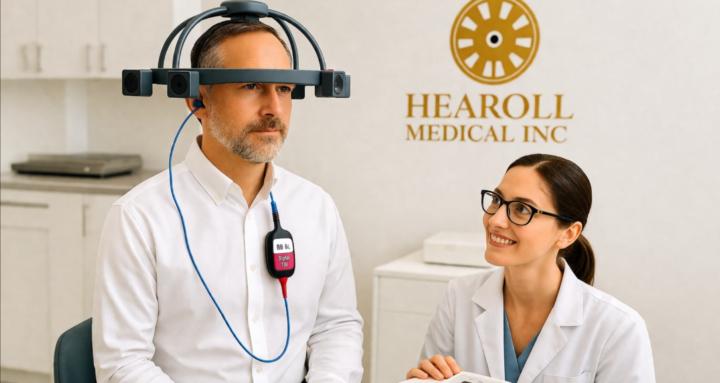
Speech-in-noise testing is part of that future. Free-field assessment is part of that future. Standardized methods that better reflect the listening challenges of real life are part of that future.
If the source of information is limited, the field itself becomes limited.
No Field Is Stronger Than Its Source of Information
This is one of the core ideas behind my work.
If we continue to build decisions on incomplete hearing data, we should not be surprised if outcomes remain inconsistent.
Better fitting, better counseling, better diagnostics, and better patient trust all begin with better information.
In my view, the next leap in audiology will not come simply from improving hearing aids alone. It will come from improving the way we measure hearing, the way we define benefit, and the way we standardize real-world performance.
That is where true progress begins.
Why Speech in Noise Matters So Much
Many patients do not complain that they cannot hear a beep.
They complain that they cannot understand speech when there is competing sound around them. They complain about restaurants, workplaces, social settings, and fatigue. They complain that they hear, but do not understand.
That distinction matters.
A modern hearing assessment system should move us closer to measuring the challenges people actually live with. That means placing more weight on speech understanding in realistic conditions, not only tone detection in controlled silence.
Audiology has an opportunity here to become even more clinically relevant, more human-centered, and more outcome-driven.
Standardization Must Be the Next Big Conversation
Innovation without standardization has limited reach.
If we want to transform hearing care, we need systems that are measurable, repeatable, comparable, and clinically useful across settings. We need better ways to document hearing performance with and without intervention. We need data that can be understood across professionals, clinics, technologies, and eventually populations.
That is also where AI becomes meaningful.
AI does not change healthcare by itself. Standards do. AI only scales them.
If we build better standards for functional hearing, then AI can help us interpret larger datasets, identify patterns earlier, personalize care better, and perhaps even uncover new insights into hearing disorders over time.
But first, the foundation must improve.
The late Professor Oren Harari said it best:
“The electric light did not come from the continuous improvement of candles.”
That quote applies powerfully to audiology.
We should absolutely respect the legacy of current methods. But respect should not become stagnation. At some point, every field must be willing to ask whether its gold standard is still golden enough.
I believe audiology is approaching that moment.
A Call to Rethink the Field
The future of hearing care should be more functional, more precise, more standardized, and more aligned with the real communication needs of people.
That future will require courage from clinicians, researchers, innovators, and industry leaders alike. It will require open discussion. It will require a willingness to challenge tradition where tradition no longer serves patients well enough.
Most of all, it will require us to rethink what we consider meaningful hearing data.
Because in the end, hearing care is not about preserving old systems.
It is about improving human connection.
Martin Sørnes
Founder, Hearoll Medical
3
1 comment
The Future of Audiology Will Not Come from Improving Old Standards Alone
powered by
skool.com/audiology-disruption-1376
Exploring the future of audiology through speech in noise, functional hearing, stronger validation, and better clinical thinking.
Suggested communities
Powered by