User
Write something
Pinned
Introduce yourself + share a pic of your workspace 🎉
Let's get to know each other! Comment below sharing where you are in the world, a photo of your workspace, and something you like to do for fun. 😊 I’m here to help you have fun with ArchiCAD tell me about your current project

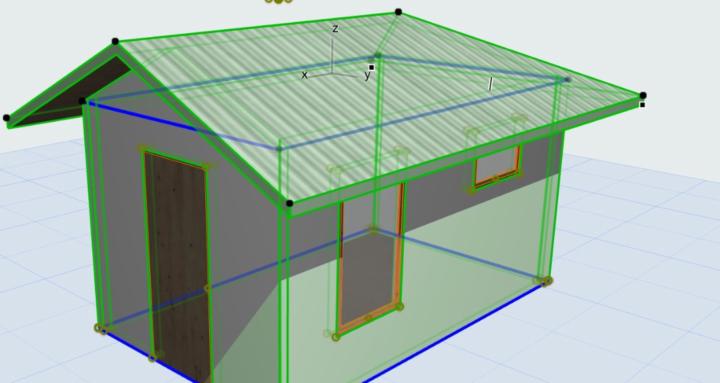
Wall and Roof Connections
Dive into his insightful tricks for connecting walls with roofing, including using solid element operations for precise adjustments. Learn about effective methods to address complex wall-roof interactions and achieve perfect architectural harmony. #Mastering Wall and Roof Connections
0
0
Introduction
I'm new to this ArchiCad site but know of Jonathon...
The Efficiency Audit: Building Your Professional Office Standard
The Invisible Leak: Is Your Office Losing Hours? Most architectural practices suffer from an "invisible leak"—a constant drain of billable hours caused by a lack of unified systems. We often see talented designers spending 20% of their time actually designing and 80% fighting with disorganized files, inconsistent line weights, and broken templates. To fix this, we don't look for more speed; we perform an Efficiency Audit. We stop and ask: Is our office standard helping us win, or is it the very thing holding us back? 1. Creating the Unified Office Library (The Style System) The most effective firms operate from a "Single Source of Truth." Instead of every staff member creating their own objects from scratch, the office must have a centralized, curated library of Plug-In Object Styles. 2. Developing Professional Standards (Data Tags & Classes) A professional drawing should be readable at a glance. This requires a strict office standard for metadata and graphics: 3. The Living CAD Manual (Upgrading for 2026) If your office standards only exist in the head of your senior technician, you have a bottleneck. An effective office needs a written CAD Manual that evolves with the software. The Result: The Multi-Office Breakthrough When I worked with large multidisciplinary practices in London, like BDP or DIN Associates, these systems were the difference between chaos and profit. By implementing a "snapped-together" project library and a unified standard, we enabled directors to work across time zones. We moved from "drawing" to "assembling" high-quality sets. This allowed the principals to focus on what they do best—designing and winning work—while the system handled the production. Conclusion: Systems are the Ultimate Form of Effectiveness An Efficiency Audit isn't about working harder; it's about removing the friction from your daily workflow. By investing in your office standards and mastering your "Styles" today, you are buying back your time for the rest of your career.
0
0
What is Document Content Analysis
What is Document Content Analysis (DCA)? It is looking at the content of the drawings that you think will be needed to describe the project. DCA allows you to make an educated guess about the number of plans, sections, elevations, and details will be needed to complete the project. In major projects this is an essential step, for domestic projects, maybe not. it allows you to calculate the number of drawings needed, the time required to create the drawings.
0
0
What is Document Content Analysis
1-13 of 13
powered by
ArchiCAD For Beginners
skool.com/archicad-for-beginners-2502
Archicad made simple. Learn the software step-by-step with practical tutorials, supportive guidance, and an engaging community for absolute beginners.
Build your own community
Bring people together around your passion and get paid.
Powered by