
Write something
Mar 21 •
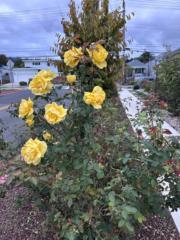
what people get wrong about roses (and why they struggle)
Most problems people run into with roses aren’t because roses are difficult.They come from approaching them the wrong way from the start. Roses are actually pretty consistent once you understand how they grow.But if you misunderstand a few key things, you end up constantly trying to fix problems that shouldn’t be there in the first place. Here’s what we see over and over again: 1. Treating all roses like they should behave the same One of the biggest mistakes is assuming every rose should: - grow upright - stay compact - respond the same to pruning That’s not how they work. Some roses naturally: - arch and spread - send long, flexible canes - want to be trained across space instead of up When you try to force a plant into a shape it doesn’t naturally want to be, you create: - awkward structure - weak growth - constant maintenance The plant isn’t the problem the expectation is. 2. Cutting too much, too often, and without intention There’s this idea that roses need to be cut back hard to perform well. In reality, most of the issues we see come from: - removing strong, established canes - cutting without looking at overall structure - resetting the plant too frequently When you over prune: - you lose the framework the plant already built - you force it to spend energy replacing growth instead of improving it - you end up in a cycle of constant correction Good pruning isn’t about how much you remove. It’s about what you choose to keep. 3. Trying to fix everything with fertilizer If a rose isn’t blooming well or looks weak, most people assume it needs more feeding. But more often than not, the real issues are: - not enough direct light - poor air circulation - being crowded by surrounding plants Fertilizer can support a healthy plant, but it won’t fix: - bad placement - lack of sun - structural problems You can’t out feed a poorly placed plant. 4. Letting everything grow without direction Roses don’t always grow in a way that makes sense visually.
0
0
Jan 18 •
Cornelia: The Rose That Blooms and Blooms With Barely Any Pruning
Cornelia is a hybrid musk that wants to grow like a fountain and bloom nearly year-round. In this video, I walk through shaping it gently, removing dead wood, and doing just enough to keep it balanced and flowing. This is pruning for people who don’t want to overthink it.
0
0

Jan 14 •
Rose de Rescht: The “Do Almost Nothing” Rose
Rose de Rescht is one of those roses that doesn’t ask much from you. In this video, I show how simple winter care really is. A little tip back, some light cleanup, and minimal thinning is all it needs to stay happy and productive. If you like roses that don’t demand perfection, this one’s for you.
0
0

Jan 12 •
Dominique Sampson: The Rose You Shouldn’t Over-Prune
Dominique Sampson is a scotch briar that thrives on neglect. In this video, I explain what not to cut, how to spot dead growth, and why winter pruning can actually reduce blooms. If you’ve ever worried about cutting the wrong thing, watch this first.
0
0

Jan 12 •
Why Your Climbers Bloom Up High (and Not Below)
Ever wonder why your climbers are full of flowers up top but bare down low? It usually comes down to how they’re pruned and trained. One small change can make a huge difference in where blooms show up. Watch this, and come back for more real-world garden tips.
0
0

1-7 of 7
powered by

skool.com/alexander-nurseries-7637
Plants is the name of our game! Growing and teaching about plants !🪴
Suggested communities
Powered by