
Write something

Apr 23 •
AI Music Monetization Reality 👇
A lot of people think: “Upload songs → get streams → make money” That’s NOT how this works anymore. Streaming alone is not paying most people — especially with AI music. Here’s what actually matters now: – Having a clear artist identity – Making music that sounds consistent (not random generations) – Building content around your songs (TikTok, Shorts, etc.) – Creating a sound people recognize and come back to If you’re just uploading songs and hoping they hit… you’re going to stay stuck. The people making money right now are: – treating this like a real artist brand – not just a tool – not just a quick upload Be honest 👇 Are you: A) Uploading and hoping B) Actually building something Drop A or B
Mar 23 •
AI Music News Update 👇 (Important for anyone uploading music)
Streaming platforms are getting better at detecting AI music. Platforms like: - Spotify - Deezer - Apple Music are now using AI detection systems that analyze:• audio patterns• generation artifacts• metadata• upload behavior• distribution patterns This means it’s not just about AI voices anymore — they’re analyzing the entire track and how it was uploaded. This is why hybrid creation (human + AI) is the safest lane.Write your own lyrics, structure songs, edit audio, build an artist brand — don’t just mass generate and upload. Read more here: Spotify AI policy & artificial streaming:https://support.spotify.com/us/artists/article/spotify-artificial-streaming/ Deezer AI music detection info:https://www.deezer.com/en/company/press/ai-music-detection Music Business Worldwide AI articles:https://www.musicbusinessworldwide.com/tag/ai/ Billboard AI music news:https://www.billboard.com/t/ai/
Feb 11 •
🎧 AI Music + DistroKid News — February 2026Here’s the latest every AI creator needs to know:
📌 1. DistroKid Is Being Talked About as a Potential $2B Sale TargetThere’s industry chatter that DistroKid — one of the largest music distributors in the world — may be considering a major sale or strategic investment at a billion-plus valuation. That means real money and real expectations are moving into the music distribution layer. When distribution gets big money behind it, features and policies can change fast. 📌 2. AI-Generated Music Can Be Distributed — With ConditionsDistroKid (and other major DSP distributors) aren’t banning AI-generated music. What they are enforcing is clarity on rights and transparency around how tracks were created. If you own the rights and disclose the creation correctly, you’re good to distribute — even on major platforms like Spotify, Apple Music, TikTok, and more. But here’s the key: Uploading AI music isn’t enough. How you upload it matters. 📌 3. The Industry Is Shifting to “Ownership + Transparency First”Platforms aren’t afraid of AI — they’re afraid of unlicensed samples, ambiguous rights, and metadata chaos. That’s where most creators lose value, get takedowns, or fail to claim full revenue. 🔥 What This Means for AI Creators Right Now ✔ AI creation is LEGIT — and distributable.You no longer have to wonder if you can upload AI-assisted tracks. You can — as long as the rights are clear. ✔ Metadata is your weapon.AI credits, split percentages, author attributions, stems ownership — this isn’t optional anymore. DSPs are treating metadata like financial data. ✔ Rights management separates hobbyists from professionals.If you don’t prove ownership of every element in your AI track, you lose revenue — or worse, you get a takedown. ✔ Distribution strategy affects long-term income — not just plays.The difference between a track that earns $0.10 and a track that earns $100+ per year is how the rights, splits, and credits are structured behind the scenes. 💡 This Is Why We Teach It in Premium
Jan 27 •
🚨 BIG INDUSTRY SHIFT — AI MUSIC CREATORS PAY ATTENTION
Universal Music Group’s CEO just publicly called out AI companies and platforms that are using models that don’t respect artists’ work. Translation: The music industry is officially moving to filter low-effort AI content and protect professional creators. What this means for YOU in 2026 👇 ❌ Random prompt songs won’t survive long ❌ Spam uploads will get buried or blocked ✅ Branded AI artists will win ✅ Creators with catalogs, identity, and structure will rise ✅ Hybrid creators (human + AI workflows) will dominate The future isn’t “make more songs”. It’s build an artist business powered by AI. This is exactly why we focus on: • Vocal & Production DNA • Artist identity • Song structure systems • Ownership proof • Catalog strategy • Long-term monetization If you’re here just to generate tracks — you’ll struggle. If you’re here to build a real AI music brand — you’re early. 🔥 👇 Drop a comment: Are you building for quick uploads… or long-term artist growth? https://www.musicbusinessworldwide.com/sir-lucian-grainge-talks-ai-music-superfans-in-2026-memo-taking-swipe-at-firms-validating-business-models-that-fail-to-respect-artists-work/?utm_source=chatgpt.com
Jan 1 •
🎯 Why We Don’t Teach “AI Slop” Here at AIM
A new industry study found that over 20% of the videos recommended to new YouTube users are low-quality, AI-generated content — nicknamed “AI slop.” These videos are often mass-produced to grab attention and clicks, not to deliver real artistic value or intentional creative quality. The Guardian 👉 AI slop is flooding platforms with content built for quantity over quality. Ammon News This trend matters for music too — because just like video, AI-generated music without purpose, structure, or intention can end up sounding like noise instead of art. Too many people think AI = auto-success, but what actually spreads isn’t always good — it’s the fastest output. Wikipedia 💡 What We Bring to the Table at AIM We don’t teach:🚫 random one-click generations🚫 generic AI dumps🚫 output that sounds like “slop”🚫 releasing anything just because it was generated We do teach:✔️ intentional song structure & direction✔️ human-guided creative choices✔️ quality control before release✔️ prompt engineering with purpose✔️ how to elevate AI output into usable music AI doesn’t ruin music — bad direction does. Our goal is mastery, not noise. 🧠 Why This Matters If 20%+ of what shows up on major platforms is low-quality AI content, then what stands out — and what gets real attention — is:✨ craftsmanship✨ intentional creation✨ human-AI collaboration with standards At AIM, we train you to create music worth releasing — not slop. 📌 Read the full article on the rise of AI slop here:👉 https://www.theguardian.com/technology/2025/dec/27/more-than-20-of-videos-shown-to-new-youtube-users-are-ai-slop-study-finds The Guardian

1-10 of 10
powered by
skool.com/ai-music-production-manager-2840
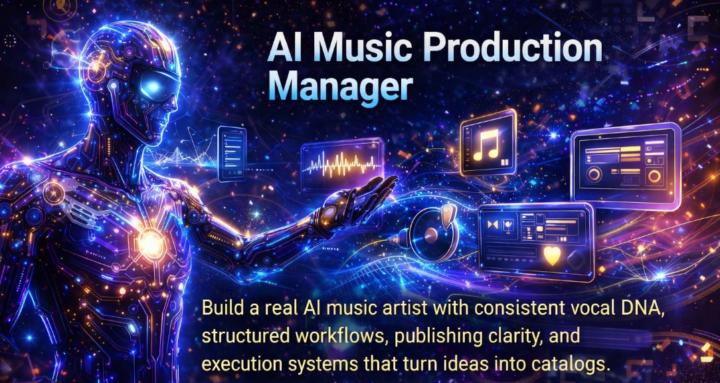
Build a real AI music artist with consistent vocal DNA, structured workflows, publishing clarity, and execution systems that turn ideas into catalogs.
Suggested communities
Powered by