

2d •
May - Front Post Double Crochet
The Front Post Double Crochet (FPDC) is a crochet technique that creates beautiful texture, raised ribs, basketweave effects, and dramatic stitch definition. Instead of working into the top loops of the stitch, you work around the post of the stitch from the previous row. It’s commonly used in: - Hat brims - Sweater ribbing - Waffle stitch - Basketweave stitch - Cables and textured blankets How to Make a Front Post Double Crochet Step-by-Step: 1. Yarn over (just like a regular double crochet). 2. Insert your hook from front to back to front around the post of the stitch below. 3. Yarn over and pull up a loop. 4. Yarn over, pull through 2 loops. 5. Yarn over, pull through remaining 2 loops. The stitch will sit raised on the front of your fabric, creating texture and dimension. - Front Post DC = raised toward you - Back Post DC = pushed behind the fabric Alternating them creates stretchy ribbing similar to knitted knit/purl columns. Common Uses - Cozy hat cuffs - Faux knit crochet projects - Chunky textured throws - Structured cardigan edging - Waffle and basketweave patterns Helpful Tip When learning FPDC, use: - A lighter yarn colour - A larger hook - Chunky or worsted yarn This makes it much easier to see the stitch posts and understand where your hook goes. Give this crochet stitch a try and let us know what you think in the comments below.
0
0

Apr 4 •
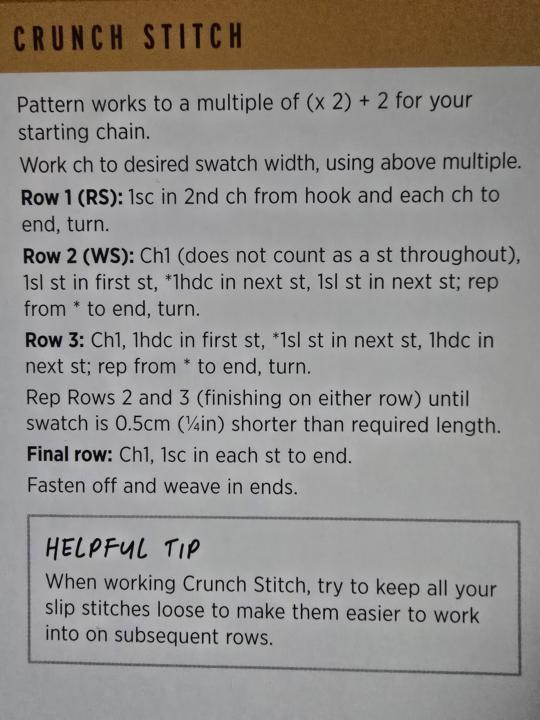
April - Crunch Stitch
The stitch for April is the Crunch Stitch. The pattern works to a multiple of (x2) +2 for your starting chain. Work the chain to desired swatch width using this multiple. The Crunch Stitch is a favorite among crocheters because it creates a beautiful, dense, and "bumpy" texture that is completely reversible. It is essentially a sequence of alternating slip stitches and half-double crochets. Because of its unique structure, here are the best applications for it: 1. Kitchen & Home Decor This is arguably the most popular use for the Crunch Stitch. - Dishcloths & Washcloths: The "crunched" texture provides excellent scrubbing power without being too abrasive. - Potholders & Trivets: Because the stitch is naturally thick and dense (with very few gaps), it provides great heat protection for your hands or table. - Hand Towels: It’s sturdy and holds up well to repeated wetting and drying. 2. Accessories The stitch creates a firm fabric that doesn't "stretch out" as much as standard double crochet, making it ideal for items that need to maintain their shape. - Scarves & Cowls: It looks sophisticated and provides a lot of warmth due to the lack of holes. - Bags & Totes: The density of the stitch means you might not even need to line your bag, as small items won't slip through the stitches. - Headbands: It offers a cozy, chunky look that stays snug against the head. 3. Blankets If you are looking for a "weighty" project, this is it. - Baby Blankets: It provides a wonderful tactile experience for babies to touch. - Throw Blankets: It creates a high-end, woven look that looks great draped over a sofa. Just keep in mind that this stitch "eats" a lot of yarn and results in a heavier finished product. 4. Garments - Cardigans & Sweaters: It’s great for the body of a warm winter sweater or a heavy cardigan. It mimics the look of some knit textures quite closely. Pro-Tip for Success The key to a successful Crunch Stitch is to keep your slip stitches loose. If you pull them too tight, it becomes very difficult to work your half-double crochets into them on the following row!
Mar 5 •
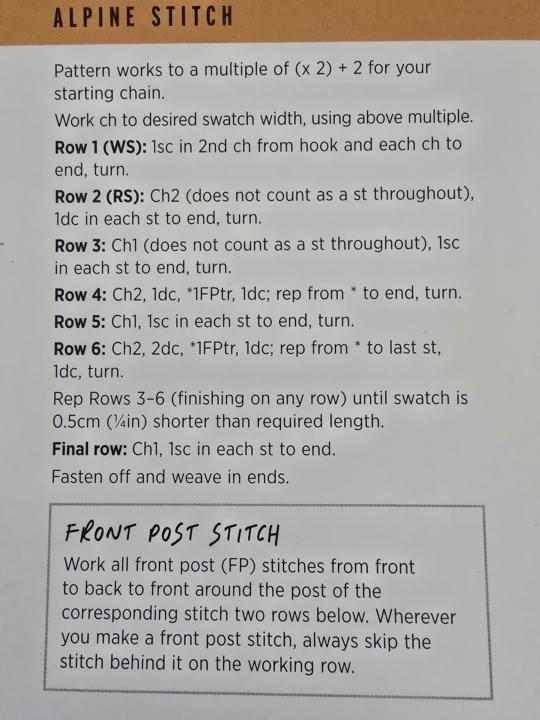
March - Crochet Stitch - Alpine Stitch
Our crochet stitch for the month of March is the Alpine Stitch. Give it a try and post your pictures here when you are done. The Alpine Stitch is a beautiful, multi-dimensional pattern that creates a thick, diamond-like texture. It is achieved by alternating rows of standard stitches with front post double crochets, making it one of the most visually striking "architectural" stitches in crochet. Here are the best applications for the Alpine Stitch: 1. Winter Wear and Cold-Weather Accessories Because the front post stitches overlap the previous rows, the Alpine Stitch produces a very dense, heavy fabric with almost no gaps. - Winter Hats and Beanies: It provides incredible insulation and a professional, "boutique" look. - Heavy Scarves and Cowls: The stitch creates a squishy, structured fabric that holds its shape against the wind. - Mittens: The thickness of the stitch makes it perfect for keeping hands warm in freezing temperatures. 2. Home Decor The 3D texture of the Alpine stitch makes it look more like a woven textile than a typical crochet project. - Throw Pillows: It adds a high-end, tactile element to living room decor. It is sturdy enough to handle frequent use without stretching out. - Texture-Rich Blankets: While it is a "yarn eater" (it uses more yarn than flat stitches), it creates a luxurious, weighted blanket. It is also common to see it used in striped "sampler" blankets to provide a bold horizontal band of texture. 3. Structured Bags The Alpine Stitch has very little vertical or horizontal stretch compared to basic stitches like the double crochet. - Tote Bags and Purses: The density of the fabric means you often don't need to line the bag—smaller items are unlikely to poke through the stitches. - Laptop or Tablet Sleeves: The thickness of the "diamonds" provides a natural layer of padding for electronics. 4. Durable Kitchen & Bath Items - Washcloths and Dishcloths: The raised ridges provide excellent scrubbing power. - Hand Towels: When worked in cotton, the Alpine Stitch is highly absorbent and looks beautiful hanging in a guest bathroom.
1
0
Feb 4 •
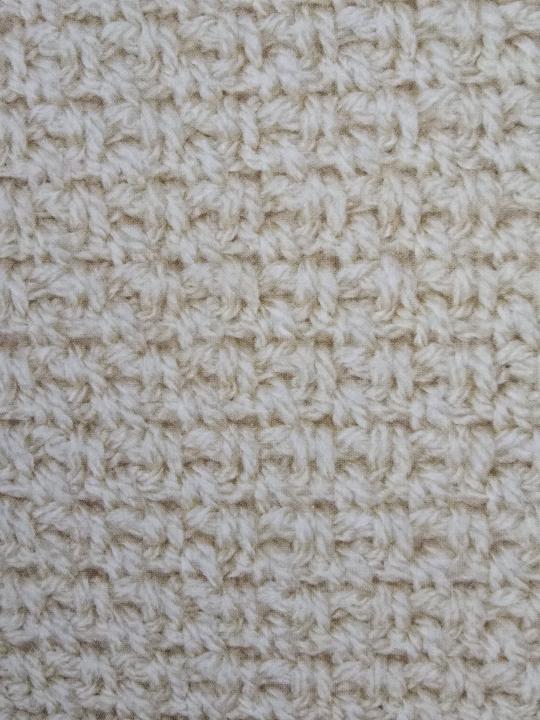
February - Moss Stitch
Pattern works to a multiple of 2 +1 for your starting chain. Also known as the granite or linen stitch. The Moss Stitch is a beautifully simple pattern also known as the Granite or Linen stitch. It is created by alternating single crochets and chain stitches, which results in a woven-look fabric that is flexible, flat, and reversible. Because it is a "multiple of 2 + 1," it is incredibly easy to scale for various projects. Here are the best applications for the Moss Stitch: 1. Kitchen and Bath Essentials As noted in the Monthly Crochet Stitch Introduction, this is a perfect stitch for beginners to practice while making functional items. - Dishcloths and Washcloths: When worked in 100% cotton, the Moss Stitch creates a durable, slightly textured surface that is excellent for scrubbing but soft enough for skin. - Hand Towels: Unlike some denser stitches, the Moss Stitch creates a fabric that dries relatively quickly, making it hygienic for kitchen use. 2. Draping Accessories The "chain-1" spaces in this pattern give the fabric a much better "drape" than solid single crochet, meaning it flows rather than stays stiff. - Scarves and Cowls: It produces a sophisticated, subtle texture that looks high-end without being bulky. - Lightweight Wraps: Because the fabric is reversible (it looks the same on both sides), it is ideal for shawls and wraps where both sides will be visible. 3. Colorwork and Temperature Projects The way the stitches of one row nest into the chain spaces of the row below makes it the premier choice for color blending. - Temperature Blankets: Many makers prefer the Moss Stitch for temperature blankets because it creates a cohesive, interlocking transition between daily color changes. - Planned Pooling: This is the go-to stitch for "Planned Pooling" with variegated yarns, allowing you to create intentional argyle or plaid patterns. 4. Baby Items - Baby Blankets: The lack of large holes makes it safe for tiny fingers and toes, while the woven texture provides a comforting weight and tactile interest. - Baby Sweaters: It creates a fabric that is thinner and more flexible than other textured stitches (like the Alpine Stitch), allowing for better movement.
Jan 13 •
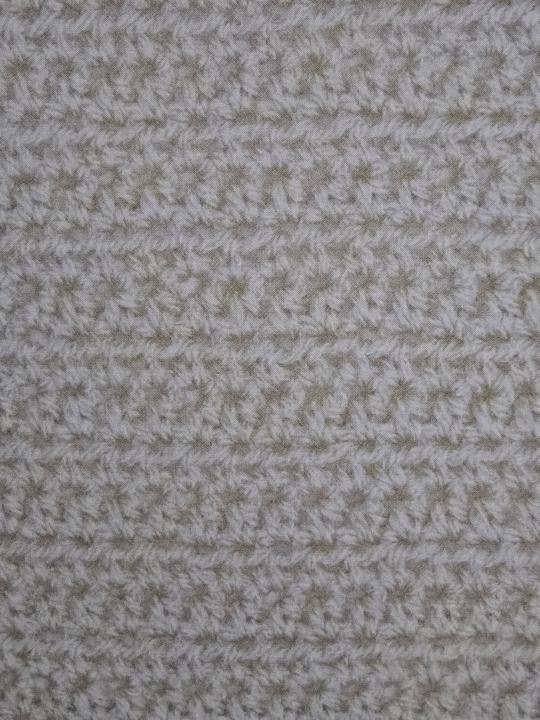
January - Half Double Crochet
We begin with a classic crochet stitch, the Half Double Crochet. The Half Double Crochet (HDC) is a staple "workhorse" stitch. It sits perfectly between the height of a single crochet and a double crochet, offering a unique combination of speed, flexibility, and density. Here are the best applications for the Half Double Crochet stitch: 1. Simple Home Essentials Because it is a basic stitch that builds fabric quickly, it is the primary recommendation for beginners in the Monthly Crochet Stitch Introduction. - Dishcloths & Washcloths: When worked in 100% cotton, it creates a solid fabric that is soft but durable enough for cleaning. - Hand Towels: It provides a slightly more flexible drape than single crochet, allowing towels to hang nicely and dry efficiently. 2. Everyday Garments The HDC is famous for having a "softer" drape than single crochet without the large gaps found in double crochet. - Beanie Hats: It is the go-to stitch for simple hats because it is fast to work and creates a warm, solid fabric that isn't too stiff. - Sweaters & Cardigans: It is excellent for the body of a sweater. It provides a clean, modern look that isn't as "holey" as other stitches, making it perfect for winter garments that need to trap heat. 3. Textured Ribbing One of the HDC's "secret powers" is the extra horizontal bar (the third loop) created by the yarn over. - Cuffs and Hems: By working HDC into the back loop only (BLO) or the "third loop," you can create a stretchy, knit-look ribbing that is perfect for the edges of sweaters, mittens, and hats. 4. Baby Items - Baby Blankets: The HDC creates a smooth, safe fabric with no large gaps for tiny fingers to get stuck in. It also makes for a very "squishy" blanket that feels luxurious. - Baby Booties: The height of the stitch makes it easy to shape small footwear while maintaining a structure that stays on a baby's foot.
1
0
1-6 of 6
powered by

skool.com/a-river-of-yarn-8378
A learning community created for knitters, crocheters, & fibre lovers who want to grow their skills, confidence, and creativity—one stitch at a time.
Suggested communities
Powered by