Activity
Mon
Wed
Fri
Sun
Sep
Oct
Nov
Dec
Jan
Feb
Mar
Apr
May
Jun
Jul
What is this?
Less
More
Owned by Zachariah
Health Fitness Autoimmune Pain We Care For It Beyond Traditional/Functional Medicine The best personalized Metabolic approaches to health or illness.
Memberships
Neuro Train
16 members • $50/month
You Can Reverse Dementia
62 members • Free
The Neuro Playground
446 members • Free
Skoolers
162.2k members • Free
7 contributions to You Can Reverse Dementia

12d •
Dementia Recovery
This is what building a high-performance neurological engine looks like. What you are watching is a 35-minute applied neurology mobility workout with my 83-year-young client, Hazel, compressed into 48 seconds. After a dementia diagnosis and a mini-stroke, the conventional medical narrative told Hazel to accept the slide. It told her to manage the descent and prepare for the end. We refused to accept that script. Your memories, your physical autonomy, and your wit aren't just parts of you - they are you. When they start to slip away, it feels like your very identity is being stripped piece by piece. But neurology is not a one-way street. Your brain cells retain the power of neuroplasticity throughout your entire life. You do not have to lose your mind, and you do not have to lose your Self. Through the "You Can Reverse Dementia System," we stopped guessing and started demanding excellence from Hazel’s nervous system. By systematically tracking her metabolic fuel, mapping her visual and inner ear gaps, and layering in targeted neuro-movement drills, we shifted her trajectory back toward growth. Now, she isn’t just surviving. She is thriving, moving with confidence, and quite literally dancing. If you are noticing some cognitive decline, or if you are trying to navigate a path forward for a loved one, please don't wait around for a definitive diagnosis to feel like a life sentence. You can start changing the environment your brain lives in today. My latest book, You Can Reverse Dementia is the exact 79-page playbook I use to help seniors go from physical and cognitive decline to true autonomy. It is a no-fluff guide designed to help you build the foundation for cognitive longevity. Stop tracking the descent. Build the engine to reverse it. #DementiaReverse, #Neuroplasticity, #BrainHealth, #CognitiveDecline, #AlzheimersPrevention, #AppliedNeurology, #ActiveAging, #BrainTraining, #NaplesFL, #NaplesFlorida, #NaplesSeniors, #NaplesLiving, #DowntownNaples, #NaplesHealth, #PaulWayneBowman

🍀
1 like • 12d
Brilliant
Jun 5 •
83-Year-Old Defies Her Dementia Diagnosis! 💃
“I COMMITTED MY TREMBLING MIND AND BODY... AND TODAY I AM DOING THINGS I BELIEVED I WOULD NEVER DO AGAIN.” Read those words carefully. They weren't written by a medical academic or a marketing department. They were written by 83-year-young Hazel while executing the floor routine you see in the video above. When a cognitive or physical decline begins, the default reaction is quite panic. You feel your autonomy slipping through your fingers, and mainstream advice tells you to simply manage the descent. Hazel refused to accept the decline. Here is exactly what she said about her decision to fight back: “I read his book, spoke with several people who knew Paul’s work, and committed my trembling mind and body to weekly private sessions with Paul. Not only have I (and friends and family) seen significant improvement but I also have learned to trust my independent work and can bounce progress and challenges off Paul at our weekly sessions. Paul is highly intelligent, well informed on relevant issues and quite modest and unpretentious. He is kind yet firm, encouraging, creative, self-critical, thoughtful, and very perceptive. He shares my enthusiasm as I meet new challenges and, if I can do better, he lets me know. I feel extremely positive about working with Paul and know I am fortunate to be one of his students. After several months of work, I am enjoying things I believed I would not do again and look forward to more!” The Neurology of Reclaiming Your Independence Why did Hazel see such radical improvement when traditional paths offered so little? Because your brain is a dynamic, plastic system. It does not care about a chronological birthday; it cares about fuel and proper stimulus. By utilizing advanced applied neurology, we didn't just give Hazel a generic checklist of exercises. We targeted her visual, vestibular, and motor systems simultaneously to rebuild a robust brain. We treated her brain like an adaptable system capable of optimization. If you are noticing small slips in memory, or if you are watching a parent slowly withdraw from the life they love, do not let passivity steal their future. Neurology is a two-way street.
🍀
1 like • Jun 5
Brilliant
Apr 2 •
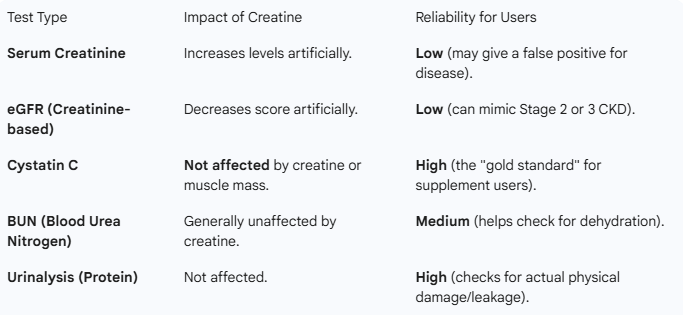
Creatine, Kidney Function, & Kidney Tests
1. The Safety Reality Scientific consensus indicates that creatine supplementation does not cause kidney damage in healthy individuals. - Mechanism: Creatine is stored in your muscles for energy. A small percentage (~1–2%) naturally converts into creatinine every day. - Pre-existing conditions: If you already have chronic kidney disease (CKD) or are taking medications that stress the kidneys (nephrotoxic drugs), you should consult a doctor before using it, as your kidneys may struggle to filter any extra load. 2. The "False Alarm" in Blood Tests This is where most confusion occurs. Standard kidney tests (the Basic Metabolic Panel or BMP) measure serum creatinine to estimate how well your kidneys filter blood. - Elevated Creatinine: Because you are taking more creatine, your body produces more creatinine. This can cause your blood levels to rise above the "normal" range (e.g., above 1.3 mg/dL), even if your kidneys are perfectly healthy. - Artificial Drop in eGFR: Labs use your creatinine level to calculate your eGFR (estimated Glomerular Filtration Rate). Since the formula assumes a high creatinine level means poor filtration, your eGFR may look dangerously low (e.g., dropping from 90 to 60) simply because you are supplementing. 3. Navigating Kidney Tests If you are taking creatine and need an accurate assessment of your kidney health, consider the following:
🍀
1 like • Apr 2
Well said!
Mar 28 •
ANTIBIOTIC LEVOFLOXACIN WARNING
If you or a loved one is prescribed an antibiotic, please read the paperwork and make sure it is not one like this! Levofloxacin (commonly sold under the brand name Levaquin) carries a black box warning - the FDA's most stringent warning - due to the risk of serious, disabling, and potentially irreversible adverse reactions. These side effects can occur together, involve multiple body systems, and appear hours to weeks after starting the medication. Key Components of the Black Box Warning - Tendinitis and Tendon Rupture: Increased risk of inflammation or tearing of tendons, particularly the Achilles tendon, but also the shoulder, hand, and arm. This risk is higher in patients over 60, those taking corticosteroids, and kidney, heart, or lung transplant recipients. - Peripheral Neuropathy: Nerve damage in the arms or legs, which may manifest as pain, burning, tingling, numbness, or weakness . This damage can become permanent. - Central Nervous System (CNS) Effects: Serious, sometimes permanent, psychological and neurological effects, including convulsions, hallucinations, depression, suicidal thoughts, insomnia, and severe headaches. - Exacerbation of Myasthenia Gravis: Levofloxacin can worsen muscle weakness in people with this condition and should be avoided. - Indications Restriction: Because of these risks, the FDA advises that fluoroquinolones should be reserved for cases where no alternative treatment options exist for: Uncomplicated urinary tract infections (UTIs). Acute bacterial sinusitis. Acute bacterial exacerbation of chronic bronchitis. Other Serious Safety Warnings Beyond the core black box warning, levofloxacin is associated with: - Aortic Aneurysm and Dissection: It can increase the risk of tears or rupture in the aorta, the body's largest artery, which can be fatal. - Heart Rhythm Changes: Prolongation of the QT interval (torsades de pointes). - Hepatotoxicity: Serious, sometimes fatal, liver damage. - Severe Hypoglycemia: Dangerous drops in blood sugar. - Clostridium difficile-associated diarrhea: Serious intestinal infections.

🍀
1 like • Mar 28
Did you make that pic?
🍀
1 like • Mar 28
@Paul Bowman very nice
🍀
3 likes • Mar 13
Make sure you get a good price for it!
1-7 of 7
🍀
@zachariah-salazar-5344
Z Health Mstr Prac
PRRT Mstr
AAT
Fascial ST
RPR 123
Be Activated
Int Kinetic Neuro
RKC AKC KBell
SFS IFS PES CES
Nutritionist
40+ Yrs M Arts + Health
Active 5h ago
Joined Mar 1, 2026
Phoenix AZ
Powered by