Activity
Mon
Wed
Fri
Sun
Dec
Jan
Feb
Mar
Apr
May
Jun
Jul
Aug
Sep
Oct
Nov
What is this?
Less
More
Better Bird Photography Club
553
Free
Spanish Fluency Club
1k
5.0
$20/m
The Qroo Spanish Crew
8.7k
5.0
$10/m
Speak Spanish Daily
69
5.0
Free
Spanglish Nomads
3.4k
$17/m
Spanish with Soul
44
Free
Spanish After Hours
9.6k
5.0
Free
THE FULL SPANISH TACO
303
5.0
Free
13 contributions to The Birding Lounge

8d •
Busy Backgrounds?
I'm a big fan of the habitat shot, but it rarely works when you just point and shoot when you have background clutter. Try these 7 techniques to help you get a good result without a 'clean' background https://www.flyingparrot.au/post/how-to-shoot-cluttered-backgrounds


1 like • 7d
Beautiful pics Sonia, and nice article, thanks
Oct 11 •
Ordinary Birds
Those everyday birds that you see all the time. Maybe they're a little on the plain side - like the Grey Shrike Thrush. You walk past them hoping for something more exciting. These birds hold the key to great photography 😉 When you see a bird on repeat, you get to know them - and their habits and actions start becoming familiar. The places they land, how they move through the trees, how they look for food and the little puddle they like to bathe in. And then you enter into the magical realm for bird photographers - predicting behaviour! It makes it so much easier to get a next level shot when you have a pretty good idea of what's about to happen next. And you are ready and waiting for it 🤎 PS: I'm going to be sharing a bird photography tip every Monday, so look out for one next week too. Happy birding xx S

1 like • Oct 12
I love the 'ordinary birds'. Although, actually, there is no such thing! 😊🦆
Sep 24 •
A quick poll
I'm working on a new course and I'm curious to know which shooting mode you use? Comment the relevant numbers below 1: Aperture Priority 2: Shutter Speed Priority 3: Auto ISO 4: Full Auto 5: Manual 6: A combination (tell me more if you can) Thank you in advance!! This will help me share the most relevant information 😊
1 like • Oct 6
Usually manual with auto iso, sometimes full manual, occasionally aperture priority
Sep 5 •
August brought an early spring...
... here in the western cape of South Africa. And the birds went crazy for the bird baths - a Cape bulbul, a Cape sparrow, a Cape weaver, an olive thrush, a southern double-collared sunbird, a pair of swee waxbills and a white-backed mousebird.

May 9 •
Latest Shots
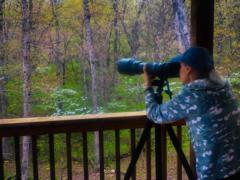
Spring has returned in Missouri and so have some of the birds migrating from the south. The male rose-breasted grosbeak, the female rose- breasted grosbeak and the male indigo bunting 🍃

1 like • May 10
Beautiful birds
1-10 of 13

@yvonne-robson-7576
Amateur photographer with a passion for all creatures, plants, fungi... I also do a bit of cooking and ¡intento hablar español!
Active 2h ago
Joined Apr 11, 2026
Langeberg Winelands RSA