Activity
Mon
Wed
Fri
Sun
Oct
Nov
Dec
Jan
Feb
Mar
Apr
May
Jun
Jul
Aug
What is this?
Less
More
Biohackinggirly’s Lab🥼🔬
2.2k members • Free
Reta Unfiltered Inner Circle
4.5k members • $37/month
BioOptimization Collective
367 members • Free
Mikes PEP-Talk
1.9k members • $5/month
The SelfmaxxingBlueprint
1.4k members • Free
Biohacking Peptide Playground
8.3k members • Free
Peptide Protocol Academy
102 members • Free
Testosterone Bible
194 members • Free
DadBod2Fit - SARM and Peptide
337 members • Free
3 contributions to Orion Peptides

Jan 5 •
Exclusive Member Discounts: Peptides, & Research
Hey team! To help you save on your research needs, I’ve compiled a master list of our partner vendors and exclusive discount codes. Whether you are looking for specific peptides or other research compounds, check the list below to get the best deal. 🧪 Peptides - Ascension Peptides: 20% OFF — Code: CAPRED20 - Tydes Peptides: 15% OFF — Code: REFROWANHOOPE - XL Peptides: 12.5% OFF — Code: CAPRED10 - Ameano Peptides: 10% OFF — Code: CAPRED10 - Prime Peptides: 10% OFF — Code: COMPOUND10 - Wolverine Peptides: 10% OFF — Code: CAPRED10 - Paramount Peptides: 5% OFF — Code: HOOPER5 - 🔬 Research Chems - PureRawz: 15% OFF — Code: CAPRED25 - Behemoth Labz: 15% OFF — Code: CAPRED25 - RCD.bio: 15% OFF — Code: CAPRED25 - Iron Mountain Labz: 15% OFF — Code: CAPRED25 - BC9: 15% OFF — Code: CAPRED25 - Freedom Research: 15% OFF — Code: CAPRED15 - Swiss Chems: 10% OFF — Code: CAPRED - Chemyo: 10% OFF — Code: CAPRED10 - MuscleChem: 5% OFF — Code: CAPRED5

0 likes • May 26
@Matthew Kehoe yeah bro its really hard so i just got my order from fusion peptides and , the kisspeptin they sent me cloudy with particles and will not mix all they way smdh!
1 like • May 26
@Matthew Kehoe never buying from them again just fyi
May 19 •
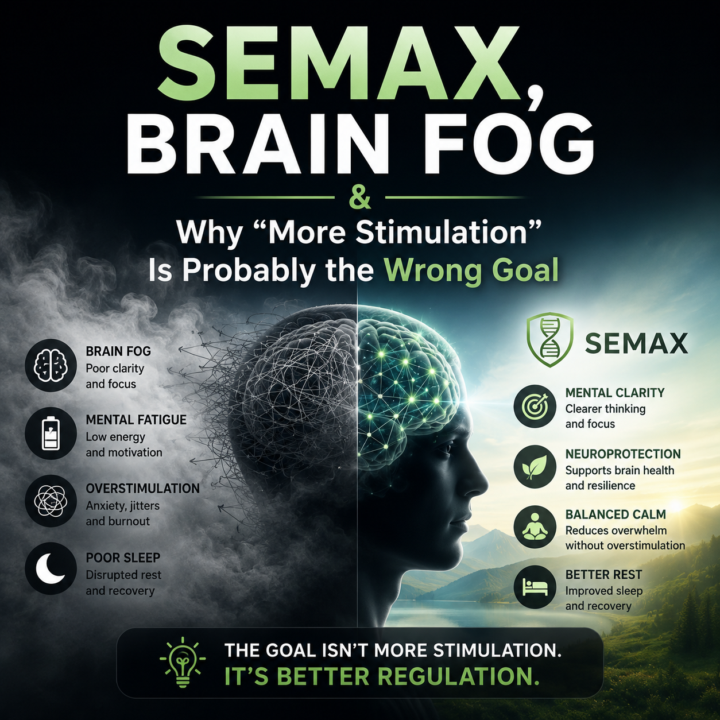
Semax, Brain Fog & Why “More Stimulation” Is Probably the Wrong Goal
Most brain fog content lives in the stimulant world. More caffeine. More dopamine. More acetylcholine. More temporary output. And yes — that can absolutely make someone feel sharper for a few hours. But the problem is: the underlying neurological infrastructure usually never changes. So eventually the crash happens. The burnout returns. The cognitive fatigue comes back. That’s what makes Semax such an interesting peptide in neuroscience research. Because Semax is not primarily being discussed as: “another stimulant.” It’s being studied more as: a neurotrophic signaling compound. That is a completely different category. The Difference Between Performance and Repair Most conventional nootropics work by temporarily increasing: - neurotransmitter activity - stimulation - alertness signaling - dopamine output That creates: - short-term focus - temporary cognitive enhancement - increased wakefulness But many of these compounds do very little for: - neuronal resilience - adaptive recovery - brain remodeling - long-term cognitive infrastructure Semax appears different because the research repeatedly points toward: - BDNF signaling - neuroplasticity pathways - neuronal adaptation - structural recovery signaling That changes the conversation entirely. What Is BDNF and Why Does It Matter? BDNF stands for: Brain-Derived Neurotrophic Factor. It’s often described as one of the brain’s primary: - repair signals - adaptation signals - growth signals BDNF plays a central role in: - forming new neural connections - strengthening existing pathways - learning and memory - stress resilience - neuronal survival Low BDNF signaling has been associated in research with: - chronic stress - burnout - depression - cognitive decline - neurodegeneration - impaired recovery after neurological stress In simple terms: BDNF helps the brain rebuild and adapt. Why TrkB Matters Just As Much Most people stop at BDNF.
0 likes • May 20
I tried a semax/selank blend from peptide crafters, bro i was on fucking edge ! Like i was just off idk wth happened i gave it a week and had to trash it i was needing calmness and less fog it literally did the completely opposite i was snapping at my kids and all kinds of shit idk about this one ... for me that is
1-3 of 3
Active 2h ago
Joined May 18, 2026