Activity
Mon
Wed
Fri
Sun
Jun
Jul
Aug
Sep
Oct
Nov
Dec
Jan
Feb
Mar
Apr
May
What is this?
Less
More
Memberships
Kell's Classroom Collective
44 members • Free
4 contributions to Kell's Classroom Collective

Feb 10 •
Cognitive Dissonance
New article in "Lessons Along the Way." Cognitive dissonance is a common term in education, though its message permeates the world we live in each and every day. A term coined by psychologist Leon Festinger in 1957, cognitive dissonance is the state of holding two (or more) conflicting beliefs, values, or ideas in our minds at the same time. Our brains really don’t like or appreciate the discomfort that opposing beliefs bring, so they try to rectify the discomfort through rationalization, justification, or changing said beliefs. We are human, after all. Cognitive dissonance isn’t just a psychological term- it’s a daily invitation to grow and learn in real time. I’m sure we can all remember a moment from childhood or otherwise where cognitive dissonance peeked its awkward, uncomfortable head out. Perhaps it was realizing that Santa’s wrapping paper was the same as the kind mom used, or learning that Pluto was a planet, then wasn’t, then was again (I’m still not sure about this one). Later in life, it could be realizing that your parents were simply grown-ups who made a lot of mistakes that maybe you wouldn’t have made. Or trying to hold onto the faith you were raised in, while the wider world introduces new ideas that gently question what you once understood as truth. In any case, it takes willingness and bravery to admit that something you once believed to be true may not be, and to remain open to something new. My grandma and I were chatting the other day about the state of the world (yikes), and she made a comment about how it’s harder for older people to change their minds. She talked about how, once someone retires, they lose regular exposure to diverse perspectives and to people they may not have naturally chosen to include in their circle. Over time, perspectives can narrow. In many workplaces, even casual interactions require a level of openness—or at least polite neutrality—that keeps us exposed to different viewpoints. Retirees also tend to surround themselves with people close in age who have likely had similar life experiences. Then, they have a lot of extra time on their hands, and the news is on 24/7. All that to say…our “cognitive dissonance” muscle can weaken over time, which can make conflicting beliefs feel more threatening. The capacity to grow never truly goes away; it just requires a bit more intention.
1 like • Mar 11
I can identify with this. I think I taught the book To Kill A Mockingbird for over 25 years - and every year I saw something different or learned something new. And sometimes what I realized, or what I read from someone else’s perspective, was uncomfortable. As a retiree, I totally get what your grandma is saying. I’m lucky to have children, grandchildren, nieces and nephews who challenge my thinking. Also, thank goodness for Facebook because I connect with so many former students and sometimes their perspectives challenge me. I think we have to look for opportunities to challenge our own thinking. And, though it’s sometimes difficult, we have to strive to keep an open mind - especially when faced with cognitive dissonance.
Dec '25 •
As a teacher how do you find life balance?
I have found meditation a wonderful way to relax before starting my day
1 like • Dec '25
I have to say that my drive to and from school helped me prepare and repair. On the way in I tried to listen to something uplifting- music, a podcast. On the way home, I TOTALLY went a different direction - usually a book on audible and mostly murder mysteries - nothin too intense but definitely not school oriented 🥰
Nov '25 •
Magical Monday
Mondays are tough for humans. The shift from Sunday Scaries to Moody (Miserable, Manic- your choice here) Monday can feel clunky and awkward. It's like our bodies forget how to human every seven days to protect ourselves- much like labor pains or Daylight Savings Time. Monday energy was getting super sticky at my house and in my classroom. Like annoyingly awful. I was spending too much time dreading its arrival, then every hour of the day counting down until it was over. Then I did some math (chill, this math I can do). How was I supposed to spend 14% of my LIFE intentionally miserable? How dare I wake up in this adorable body that breathes and dances and dreams and allow my day to be abducted by feelings of ENNUI!? At first, I was a bit embarrassed. Then, perhaps a bit frustrated with myself. Then, there was simply no more time to waste. Hello, Magical Monday! Its premise? Simple. Treat everything and everyone as if they are pure magic. Wholeheartedly believe that you are going to witness and partake in whimsy today. Did you enjoy a fresh cup of coffee? Sweet! Did you experience a hug from someone you love? Awe... Did you have yet ANOTHER fantasy football victory this week? Yes? WOW! If you're feeling stuck, ask the children in your life. Children are full of magic. Jo used to leave notes and snacks for the fairies, and the fairies (Danny or me) would write back. Jo firmly believed in Santa for forever and the sparkle in her eyes around Christmas was pure joy. She even added her own "Rudolph nose" one year to fully immerse herself in the season (it was red Sharpie, I'd recommend anything other than permanent marker). What's even cooler, though? Jo now recognizes the magic that was shared with her, and insists on doing the same for her younger sister. This season has already been so fun because I get to witness my older babies creating magic for my youngest. So. Magic can happen literally whenever you decide to create it. Don't wait for a "special" day to experience fun and curiosity, and charm. Today is the most special because of YOU!

1 like • Dec '25
I generally loved Mondays. I truly missed my students over the weekend. I definitely enjoyed and treasured time with my family, but each Monday was a new start and I loved that. ❤️
Sep '25 •
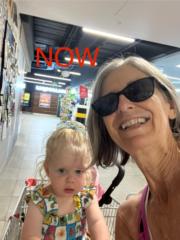
Welcome! Introduce yourself + share a pic of your inspiration 🎉
Let's get to know each other! Comment below sharing where you are in the world, a photo of something that inspires you, and something you like to do for fun. 😊
1 like • Nov '25
I’m Veronica from Utah. Retirement is very enjoyable though there are times I miss the classroom, the families, the colleagues.
1-4 of 4