Activity
Mon
Wed
Fri
Sun
Aug
Sep
Oct
Nov
Dec
Jan
Feb
Mar
Apr
May
Jun
Jul
What is this?
Less
More
Owned by Tytanus
Welcome to The Wylde Side. Let's Journey into The Wylde Together. I will show you How to Open Your Mind and expand your Imagination to become Wylde
Memberships
Heart’s Calling
10 members • Free
Practical Magick Skool
19 members • $15/month
Cre8tiv Collective
65 members • Free
Exploration Empathy
14 members • Free
Purple Light Lounge
185 members • $8
Rich Witch Magick
331 members • Free
High Priestess Tarot
121 members • Free
Hekatean Healing & Herbalism
82 members • Free
Story-First Songwriting
230 members • Free
12 contributions to Hekatean Healing & Herbalism
21d •
🔥 Tarot (Oracle) Tuesday: Pótnia Thērôn's Door 🔥
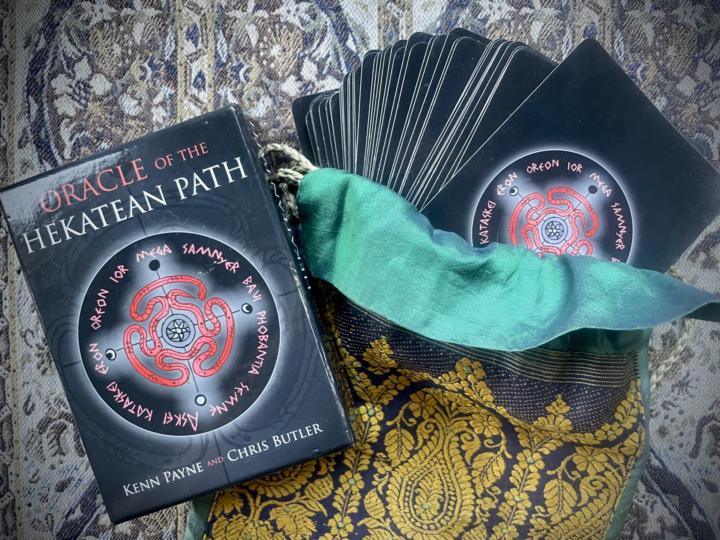
The new lunar month is one day old. Yesterday was the Noumenia — the new month came in under the Pótnia Thērôn, we talked animals and instinct and three-headed forms that shift depending on what the moment requires. Good conversation. The comments did not disappoint. ✨💛 Today the Oracle opens its doors again. Sixty of them. One has your name on it. Here's how it works: you pick a number, I shuffle and count, and I pull the card that was waiting at that position in the Oracle of the Hekatean Path. Then I draw a supporting card from the Witches Tarot to light the way forward. Every reading is personal — your number, your card, your message. I'll work through them this evening and post each one in the comments. We are one day into a new month, five days from the Hekatean Kitchen launch, and sitting in the last whisper of the dark moon. The Pótnia Thērôn showed us yesterday that She wears whatever face the moment requires. She's about to show you which face She's wearing for you. 🗝️ Drop a number from 1–60 in the comments. I'll shuffle and count to find the message She left at the wayside shrine for you. Then I'll pull a supporting card from the Witches Tarot to light the way forward. 👇 One number. One door. Let Her show you which face this new month requires. En Erebos, Phos. In darkness, light. Blessings, Tirza 🌿🗝️🌙 #OracleTuesday #HekateanHealing #Crossroads #PotniaTherоn #Noumenia #NewMonth #Phosphoros #PlutoRetrograde2026 #OracleOfTheHekateanPath #WitchesTarot #PersonalReading #HekateanHerbalism

🔥
4 likes • 21d
33. Thanks Tirza. Praise Hekate
🔥
1 like • 15d
@Tirza Cook THANK You Tirza and Praise Hekate. You have always Spoken Truth with Me through the cards and it is Appreciated
28d •
🎥 FINALLY Premiering Tonight 🕯️
🕯️ Tonight at 7 PM EST — premiering "Hekate Propylaia: Standing at the Threshold" Before you watch, tell me: What have you carried to the gate? 🔮 A truth I've been avoiding 🗝️ A version of myself I'm ready to release 🌑 Grief I haven't let myself feel 🕯️ I'll know when I get there Comment your answer below. En Erebos, Phos. Love, Tirza

🔥
4 likes • 28d
🕯️
Jun 2 •
🗝️ Oracle Tuesday: Propylaia's Parting Word
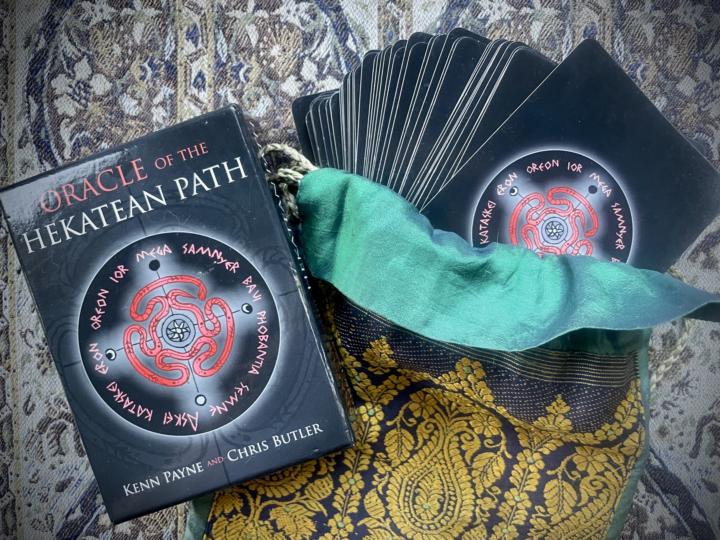
Good morning, loves! Today is the last day of Phase I — The Threshold. Tomorrow Phosphoros takes the torch from Propylaia and The Descent phase of Pluto Retrograde begins. Nearly a month at the gate. Nearly a month of Before-the-Door. And now the door is opening, and we are the ones walking through. So today's pull is a farewell. Propylaia's parting word. Her last counsel at the threshold before She steps back and lets Phosphoros lead us down. Hekate Propylaia — She Who Stands Before the Gate — has 60 doors in the Oracle of the Hekatean Path. One of them is the one She wants you to remember on your way across. Not the door you wanted. The one She's been holding open for you the whole time, waiting for you to notice. 🗝️ Drop a number from 1–60 in the comments. I'll shuffle and count to find the message She left at the threshold for you. Then I'll pull a supporting card from the Witches Tarot to light the way forward — because She doesn't just close the door behind you. She tells you what to carry across. Readings might roll in slow — but the door is open and neither of us is rushing. Every single reading will come. 🕯️ 👇 Leave a number between 1 and 60 — and if you want, one word for what you're hoping She'll say. The Threshold to Descent video airs tomorrow on YouTube under Phosphoros' first torch — better timing than I planned. 🌑 En Erebos, Phos. In darkness, light. Blessings, Tirza 🌿🗝️🌙 Sources: Kenn Payne & Chris Butler, Oracle of the Hekatean Path • Ellen Dugan, Witches Tarot #OracleTuesday #HekateanHealing #Crossroads #Propylaia #Phosphoros #PlutoRetrograde2026 #OracleOfTheHekateanPath
🔥
3 likes • Jun 2
13 for Me Please, Thanks Tirza
🔥
1 like • Jun 2
@Tirza Cook THANK You for this. You have Not Ever Steered Me Wrong. I shall listen. PRAISE Hekate
May 29 •
🔥 Freewill Friday 🔥 Thank You for Another Week Together
Happy Friday, torchbearers. This is the day you speak your choice out loud. Freewill isn't about big moves. It's about conscious ones. The moment you stop running on autopilot and say — out loud, in writing — this is what I'm choosing today. Maybe it's choosing rest when everything in you says push harder. Maybe it's the conversation you've been avoiding. Maybe it's stepping onto a threshold you've been circling for months. Whatever it is — name it. A shout out to all of you who show up here consistently, and share in front of witnesses. We are doing this work together, not alone. 👇 Drop your conscious choice of the day in the comments. Tag it #Freewill. Most likes and comments by the end of the day wins a full Triple Crossroads Spread with the Oracle of the Hekatean Path — completely free. 🗝️ No gatekeeping. No judgment. Just your will, witnessed. En Erebos, Phos. In darkness, light. Blessings, Tirza 🌿🗝️🌙 P.S. Stay tuned this weekend for my new video drop for the Threshold of Pluto Retrograde, going live on the Blue Moon.🌝 More about this later today! #FreewillFriday #HekateanHealing #Crossroads #FreeWill #OracleOfTheHekateanPath

🔥
7 likes • May 29
To Stay Wylde. To Truly Believe. To Show Others that MAGICK is Real and All Around Us #Freewill
🔥
1 like • May 30
@Tirza Cook THANK YOU. I Look forward to the experience.
May 27 •
🔥 Bonus: A Mask of Dionysus Just Surfaced in a 2,000-Year-Old Cave Cemetery
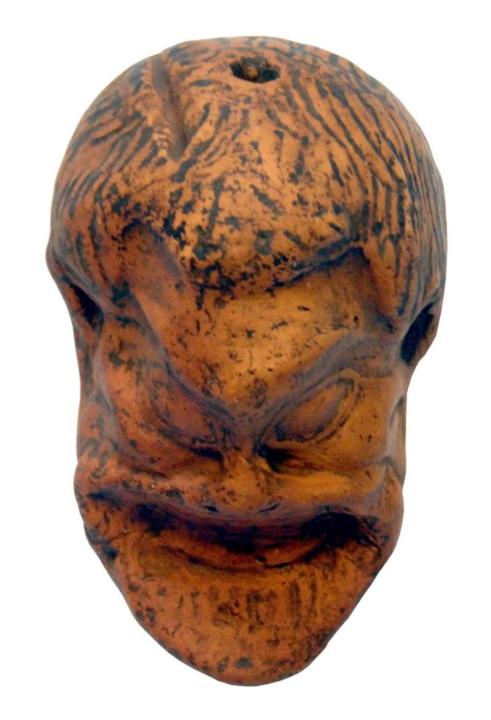
Reported first this week! Archaeologists on Croatia's Pelješac Peninsula pulled an intact terracotta Greek theatrical mask from a cave. 4th–3rd century BCE. Small hole at the top — it was hung on a wall. It belongs to the worship of Dionysus, closely related to Chthonic Hekate. He is the god of theatre, wine, ecstasy, dismemberment, and rebirth. But the cave is the real story. It has three lives: Bronze Age — a shelter. People hid there during conflict. Then, 1012–481 BCE — a necropolis. People were buried there for over 500 years. Radiocarbon confirmed. Late 4th century BCE onward — a sanctuary. The burials stopped. The Illyrians filled the cave with ritual offerings — miniature Greek vessels, wine cups, luxury pottery that wasn't part of daily life. And on the wall: the face of Dionysus, staring out over the bones. Shelter. Cemetery. Sanctuary.That's not a just a cave, that’s what I call a threshold. Same ground doing three different kinds of sacred work across a thousand years. Archaeologist Domagoj Perkić called it "a frozen image more than two thousand years old." 👇 A place where people hid, then buried their dead, then came back to pray. Does that sequence mean something to you? En Erebos, Phos. In darkness, light. Blessings, Tirza 🌿🗝️🌙 📖 Further reading: Croatia Week — "Rare Greek theatre mask found in ancient Illyrian sanctuary on Pelješac" (May 22, 2026) https://www.croatiaweek.com/greek-theatre-mask-found-peljesac-cave-croatia/ Ancient Origins (May 23, 2026) — "Sinister Looking Greek Theater Mask Found Inside a Cave in Croatia" https://www.ancient-origins.net/news-history-archaeology/greek-theater-mask-00102806 #HekateanHealing #Archaeology #Dionysus #Crossroads #Threshold
🔥
1 like • May 27
Dionysus brings the Party. He is a very boastful Godd. His energy is unpredictable, joyful and Wylde. He loves Music of all types and enjoys Dancing with the Dryads and Sylphs. The Satyrs now call Him thier Bro. Dionysus was at our recent Beltane celebration and it was Wylde. Thanks for the info, with links on the Mask
1-10 of 12
🔥
@tytanus-wylder-2479
Join Me as We Journey into The Wylde and I show You the Wonders of Pure Belief and Imagination
Active 5h ago
Joined May 16, 2026