Activity
Mon
Wed
Fri
Sun
Oct
Nov
Dec
Jan
Feb
Mar
Apr
May
Jun
Jul
Aug
Sep
What is this?
Less
More
Owned by Ty
Expanding our knowledge to make informed decisions.
Skoolers
157.7k members • Free
90 contributions to Dr. Ty Vincent

24d •
Sleep Duration
Hey @Ty Vincent I appreciate all the guidance you've been providing. I'm hoping you could offer some perspective on sleep. I go to bed around 8:00–8:30 p.m. aiming for 7–8 hours, and I wake almost every night at 2:00–3:00 a.m. and struggle to get back down. What's already covered, from your sleep guidance: - No artificial light in the bedroom at all, including taped-over device LEDs - No screens in the evening — no TV, no phone - No food within two hours of bed - No caffeine after noon - I've very calm before bed and fall asleep in mins The other piece is nighttime urination: I'm up 2–3 times, usually once around 10 p.m.–midnight and again at 2:00–3:00 a.m. I drink roughly 1–1.5 gallons of water a day and cut fluids off around 5:00 p.m. I'm curious how you'd think about this. Is the nocturia likely driving the sleep issue, or could something else be contributing to both? Appreciate your perspective.

1 like • 5d
I'm sorry I am still not seeing some of these comments people post - I think it's mostly when it's a follow-up comment to one of mine, but I scanned down the screen at least twice since you posted this and still didn't see it until today - argh! Salt is essential for all life on Earth as far as we know, and we must consume it to have adequate amounts. Your body has numerous mechanisms for dumping excess salt if you take in too much, but no way of creating something out of nothing if you don't get enough. 1,000mg is very little salt and it made that much difference already because your body is starving for it. Did you run the labs to calculate your FeNa? I suspect it will work out to less than 0.8% excretion, but let me know the numbers and your calculated result. I encourage you to use real sea salt instead of any manufactured product because they all have fillers and chemicals you do not want in your body, plus they lack all the trace minerals present in sea salt that also help maintain electrolyte balance and normal physiology. Try just 1 heaping teaspoon of salt in 6-8 ounces of water each morning when you first get up and see how much better you feel and perform within the first week. That is nothing compared to how much salt is in your body, but it makes a tremendous difference. Anyone who tends to feel thirsty a lot, but then just urinates out all the plain water they drink and never feels rehydrated - it's because you cannot keep that water inside you without enough salt to maintain the 0.9% concentration of your blood (if you want to be more scientific, the average NaCl concentration in your body is less than half that because 2/3 of your total body water is INSIDE your cells where the ratio of sodium to potassium is flipped the other way... but I keep it simple for people who aren't as nerdy as I am 🤓 ). So we need less than 1/2 tsp per pint of water we drink, or about 1 tsp per liter.
1 like • 5h
That much salt at once is an "acquired taste" for some, and others just hate it the whole time. You can put it in a larger amount of water and/or add some amount of organic fruit juice to make it palatable. The sugar in juice actually improves absorption of the salt too, so it's a benefit. My wife hated the taste for a long time, then it was obvious how much more energy and stamina it gave her, so she got past that and it isn't so gross to her any more :)
9h •
🔴 Live Q&A - This Sunday!
Got something on your mind? Bring it to the conversation! 💬 Join us Sunday, September 20 at 2 PM EST for a live Q&A inside the community. Ask your questions, get answers, and learn alongside everyone else. 📅 September 20 ⏰ 2 PM EST 🎥 Live inside the community Bring your questions. We’ll see you live! 🔥
3
0


3d •
Hi everyone
Thanks for taking the time to read this. I’ve been on a health optimization journey since I healed from my second surgery from testicular cancer. I can’t get clarity in any direction I go in whether it’s my PCP, my endocrinologist, urologist, Reddit, ect… so here I am gambling $9 in hope to find my footing. I was sedentary for 2 years and have been dealing with chronic stress since November 2025 when I was diagnosed. I been on Reta for 2 months; eating healthy, high protein and exercising 3 times a week. Doing everything I can to boost my T. I do feel a lot better but can’t beat the fatigue and brain fog, I’ve always dealt with this. I deal with morning anxiety and am an anxious person (which comes and goes very sporadically). I’m just trying to find the common denominator and hoping to fix my fatigue issue and level out my anxiety.. (I didn’t have any chemo done and hoping I will not need it). I’m 6,4 265lbs 31 years old 15% body fat roughly at 215lbs I’ve had one 🥜 removed and has 22 lymphnodes taken out earlier this year (RPLND). Total testosterone tests ranges from 295-345 (3 tests done in the after noon) Free 80 Free 17 I guess 2 different tests? Both on the lower end of their ranges Had a sleep study done and I have “mild sleep apnea” My vitamin d was low and co2 levels were low.I think these were the only tests that stood out. I have a ton of blood tests if any more data is needed. I’m taking Creatine Vitamin d Fish oil Magnesium I’m interested in TRT, KPV , Selank, and mot-c. I don’t have kids and want kids (not trying now) so TRT scares me. Any tips, advice, help would be greatly appreciated. Tyler
1 like • 2d
Hi Tyler. The testicular cancer is certainly a rare part of one's story, and hopefully that all seems to be in remission now? You can use TRT regardless, it would not have any conceivable stimulation of testicular cancer growth, and if anything it might slow the cancer's growth because it will turn off LH and FSH that stimulate testicular growth and function. I'll attach my TRT handout for you to read and then ask whatever remaining questions you might have. I have a YouTube channel with a lot of videos discussing common questions and concerns people have about TRT. As far as fertility goes, it's easy to restore your baseline or better fertility using HCG (250 units daily or 500 units every two days) and you don't have to stop or decrease TRT dosing. I've contributed my part to four pregnancies using it along with my TRT. It has absolutely no long term negative effect on your fertility, just like the birth control pills women have been taking for over 60 years now. It's puzzling to me how it became the "lore" in medicine that testosterone use would somehow ruin your fertility long term. It makes no sense to think that, and yet it is the prevailing belief. Such is the nature of "belief" and why it shouldn't dictate any medical decision-making on the part of the practitioner. I haven't been impressed at all with KPV, Skelank, or MOTS-C - but everyone is different and if you buy one vial and try it out you'll know if it's worth using or not. You should see some sort of tangible and meaningful improvement in things to make it worth continuing.
0 likes • 1d
You will feel like a very restored man on optimal TRT. It's hard to explain the difference because some things have to be experienced. You can't explain to someone the taste of chocolate; they just have to taste it. I appreciate the desire to be a father - I have nine children ranging from 7-31 and I'm "dad" before I am anything else. I think the extreme disinterest in having kids now in adults under 30-35 is due to all the chemicals in our environment influencing hormone levels or receptor function, causing a different wiring of the brain. Having three kids each in three different decades I've seen this shift within the past generation (20-25yrs). In your case I would consider starting HCG at the same time and just run it until you achieve pregnancy. You do get the temporary shrinkage of testicles and sperm production shuts off. It is all recoverable after men stop TRT, even after years being on it - but there would be a 75-day delay between starting the HCG and producing a normal sperm count (your normal). If you stay on the HCG all along you will be fertile any time, no waiting period. It's reasonable choice either way, start it withTRT or just wait until you want to start trying. Finasteride and Dutasteride are ONLY appropriate if DHT is high enough to be causing symptoms. You can let it run up to 120-125 for sure, unless the man is particularly sensitive and starts losing hair. Most men don't need to control DHT, and for those who do it usually requires anywhere from 5mg to 15mg per week, spaced out. Weekly dose chosen based on how high DHT is. There is a belief out there about "Finasteride Syndrome" being some strange set of side effects from the drug, but it's just the consequence of bottoming out a man's DHT because it wasn't even high in the first place. I have never seen a urologist order a DHT level before prescribing a 5-alpha-reductase inhibitor. It isn't some strange problem with the medication, it's medical malpractice to do it in the first place when a man already has low DHT.

0 likes • 2d
Hi Vlad. That cannot be answered without knowing the Estrone and Estradiol levels, what TRT dosing the man was on when the labs were drawn, and whether he is having any related symptoms. Managing metabolites is the most important job of the clinician overseeing TRT and it is 100% individualized to each man's situation. That being said, the most common regimens end up being 1mg Anastrozole every 2 days or every 3 days. Some men need it every day and some not at all, so you have to determine where you fall.
2d •
Trusted peptide vendors
Forgive me if I’m not supposed to post this. But I been trying to find a trusted source to purchase some peptides for research. Anyone have trusted sources?
1 like • 2d
I don't like to vouch for any particular companies and never intend to promote or represent any. My wife has always handled our ordering of peptides and from which companies, and I could not even rank them if you asked me to - but I know a few names of companies: Penguin Modern Aminos Peptide Sciences Other people in the community may know more.
1-10 of 90
@ty-vincent-8952
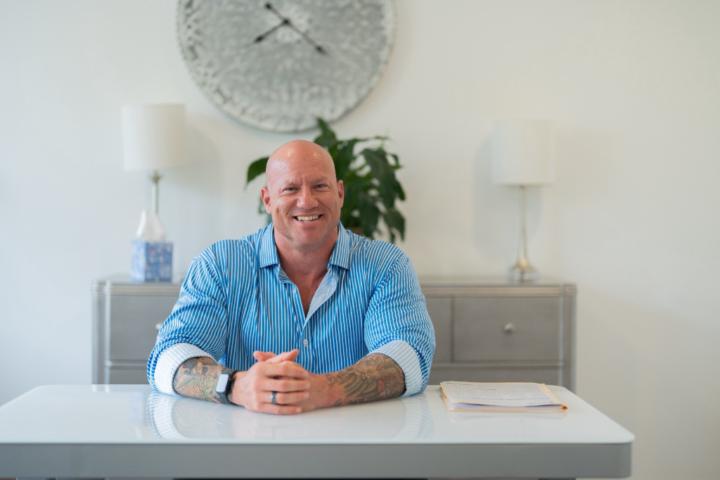
Ty Vincent M.D. has broad education and over 20 years experience in many integrative medicine therapies, informing you how to best manage your health.
Active 4h ago
Joined Oct 15, 2025
Kailua-Kona, Hawaii
Powered by