Activity
Mon
Wed
Fri
Sun
Jul
Aug
Sep
Oct
Nov
Dec
Jan
Feb
Mar
Apr
May
What is this?
Less
More
Memberships
NextGen AI
35.8k members • Free
AI Automation Society
386.6k members • Free
THE CHINGGIS CIRCLE
8.8k members • Free
9 contributions to AI Automation Society

7h •
The multi-agent structure that finally made my AI OS scale (steal it)
Everyone's building a "personal AI OS" right now. After months of trial and error, here's the structure that finally made mine actually scale 👇 My first version was one giant agent with a 2,000-word prompt trying to do everything. It was inconsistent and impossible to debug. What actually worked: treat it like a company, not a chatbot. 🧠 1 Orchestrator (the manager) Its only job is to route tasks and hold context. It never does the actual work — it decides WHO does it. 👥 Narrow sub-agents (the employees) One job each: Research, Writer, Data, Ops. A specialist with a 1-job prompt beats a generalist every time. 📋 Give every agent a "job description" Each sub-agent gets its own skill / system prompt — role, rules, output format. This is what makes the behavior consistent and repeatable. 🔗 Hand off with structured data, not chat Agents pass JSON between steps instead of free text. This one change killed ~80% of my handoff errors. 🔁 One verifier at the end A final agent whose only job is to check the work before it ships. Catches the hallucinations the others miss. The result: instead of one flaky mega-prompt, I now have a team that's debuggable, swappable, and actually reliable. If you're building your own AI OS — what's your orchestrator running on? n8n, Claude Code, or custom? 👇
0 likes • 4h
@Ka H Great question! Yeah, the newer Claude (Opus 4.8) is noticeably better at multi-step agent work — planning, tool use, and staying on track across longer tasks — so you'll iterate less to get something working. That said, the model is maybe 20% of it; the architecture is the other 80%. A clean structure (narrow sub-agents + JSON handoffs) on an older model still beats a messy setup on the newest one. Use 4.8 to move faster, but nail the structure and it'll scale no matter which model you're on 👍
1 like • 4h
@Nikkie Burns Yes exactly — it all stays under that one "My OS" project 🙌 In Claude Code your skills live in a .claude/skills/ folder right inside the project, and any sub-agents go in .claude/agents/. Your main Claude session in that project acts as the orchestrator and just pulls in whichever skill it needs for the task. So you're not making separate projects — you're giving your one OS specialized modules inside it. (Quick tip: if you ever want a skill available in every project, not just this one, drop it in your global ~/.claude/skills/ folder instead.) You've got this 💪

Mar 12 •
youtube channels import to obsidian
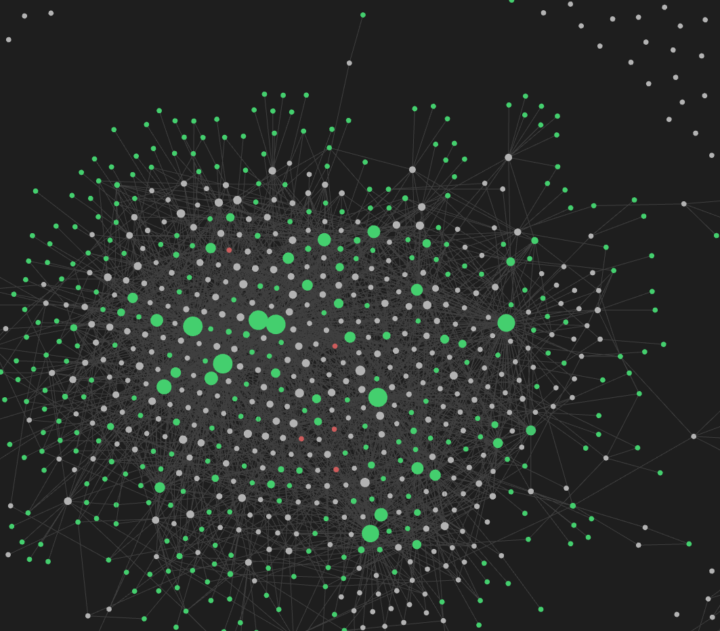
i build a obsidian extension that imports youtube videos into obsidian with a full transcript and time stamps for a quick search. obsidian is a must tool for anyone in 2026.
0 likes • 1d
This is genuinely useful — transcript + timestamps makes YouTube actually searchable, love it. One add I'd suggest: run each imported transcript through a quick Claude pass to auto-generate tags + a 3-bullet summary at the top, so your Obsidian graph links related videos automatically and you can skim before diving in. Is it open-source or private? Would love to try it 👀

23d •
Cost Efficient
I am building a SaaS, but the main issue I am facing is it's not cost efficient, and I might not be generating profit. Currently, the brain it's using is Claude. I want help on what options do I have to make it more cost efficient. It's an organization management SaaS, and will work on multiple-tenants. So, If any of them used it excessive it will ruin the cost. Can any body help me with this?
0 likes • 1d
A few levers that cut my Claude costs the most: 1) Prompt caching — cache your static system prompt + shared context so repeat calls only pay for the new tokens (often 5-10x cheaper on chatty workloads). 2) Model routing — don't send everything to Opus; use Haiku for classification/simple replies and only escalate when the task really needs it. 3) Per-tenant usage caps + usage-based billing, so the one heavy tenant pays instead of eating your margin. 4) Trim context — summarize old history instead of resending the whole thread. Caching + routing alone usually fixes most of it. Happy to dig in if you share roughly where the tokens are going 👍

3d •
How many client have you served so far?
Let’s see what is ground reality of building an AI business. I spent last 4 years on it and I won’t lie it is the most difficult thing to do. Share your experience in the comments .
Poll
46 members have voted
2 likes • 1d
Honestly still early for me — a handful, not dozens. The hardest part wasn't the tech, it was realizing clients don't buy "automation," they buy a specific outcome (hours saved, leads booked). Once I stopped pitching tools and started pitching one painful problem I could remove, the conversations got way easier. 4 years in is real dedication — respect 🙏 What's been your biggest lever for landing clients?

🔥
2d •
5 points of prompting
5 Claude prompting mistakes that are killing your output quality: 1. No role → Add "You are a [expert type]" at the start. Claude performs differently with context. 2. No format instructions → Tell it exactly how to structure the output. "Use headers", "bullet points max 5 words each", "write in conversational tone." 3. No examples → Show it one good example of what you want. One example beats 100 words of explanation. 4. Too many tasks in one prompt → Split complex requests. One prompt = one job. 5. No rules at the end → Add a "rules" section at the bottom. "Never use jargon. Always end with a question. Keep under 200 words." It follows rules better than instructions. Save this. Your Claude outputs will improve today. Which of these are missing from this points ??
3 likes • 1d
Great list — #4 (one prompt = one job) is the one most people skip. My #6 would be: ask Claude to think before it answers. A simple "before writing, list your assumptions and outline your approach, then proceed" cuts off-target answers a lot. And building on #3 — examples get even stronger if you also add a bad example labeled "not like this"; the contrast teaches it faster than a good example alone. Saving this 🔖
1-9 of 9
@tsogjavklann-tsogbayar-7830
AI Developer focused on agents & automation. Data analytics → AI workflows → real products. Building, shipping, automating every day.
Active 2h ago
Joined Mar 28, 2026
Powered by