Activity
Mon
Wed
Fri
Sun
Jul
Aug
Sep
Oct
Nov
Dec
Jan
Feb
Mar
Apr
May
Jun
What is this?
Less
More
Owned by Troy
Millions of people with great business ideas do nothing with them. Not because they can't. Because nobody showed them how. THAT CHANGES NOW!
Memberships
Skoolers
170.5k members • Free
15 contributions to Give'em The Business

May 28 •
Business 101: CAC
CAC is the Customer Acquisition Cost and it is what you spend to get a customer. Lifetime Value is what that customer is worth over time. The most important ratio in your business is making sure the second number is significantly larger than the first. If it costs you $500 to acquire a customer who spends $5,000 with you over their lifetime you have a healthy business. If it costs you $500 to acquire a customer who only spends $400 you are paying to lose money. Know both numbers. Build the gap between them as wide as possible. That gap is your business.
2
0
May 19 •
Business 101: Revenue vs Profit
A lot of new business owners celebrate hitting $100,000 in sales without asking the most important question. What did it cost you to make that $100,000? Revenue is the money coming in. Profit is what is left after you pay for everything it took to generate that revenue. Materials. Labor. Software. Marketing. Fees. Delivery. A business doing $100,000 a month with $95,000 in expenses is not a $100,000 business. It is a $5,000 business working very hard. Know both numbers. Always. What is your current profit margin? Drop it in the comments.
1
0
May 18 •
Business 101: Where good ideas actually come from.
The best business ideas do not come from brainstorming. They come from pain. Here is the simplest way to find your idea. Ask yourself what problem you are dealing with right now that is frustrating enough that you would pay someone to fix it. Now ask yourself one of two questions. Does a solution exist? If nobody is solving this problem yet you may have found a real gap in the market. That gap is your opportunity. Does a solution exist but you are not satisfied with it? This is actually the better scenario. If a competitor is already selling something and people are still not happy that tells you three things. The problem is real. People are already paying to solve it. And the current solution is not good enough. Your job is simply to solve it better. Faster. Cheaper. Or for a more specific customer than anyone else is currently serving. Most new founders are scared of competition. The smart ones understand that competition is proof the market exists. You do not need to invent something brand new. You need to solve something real in a way that makes every other option feel like a compromise.
1
0
May 13 •
Business 101: The Riches are in the Niches
Many business owners have to broad of a target market. The more specific you get the more your customers will be easy to find. The more specific you get the more your customers will find you. The more specific you get the more you can charge. Example: I service health and beauty businesses. vs. I service spas vs. I service med spas vs. I service med spas in the southeast region vs. I service med spas in Atlanta vs. I service med spas in Atlanta with more than one location and $5M in sales.
1
0
May 12 •
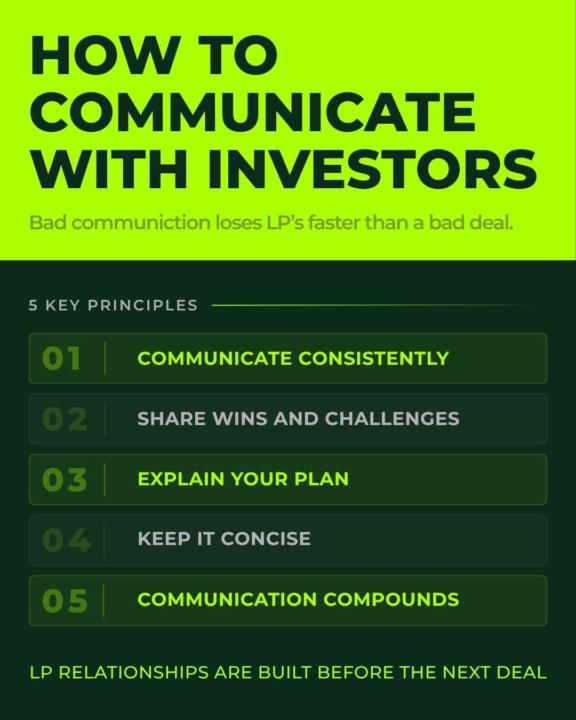
Business 101: Communicating With Investors
If you find yourself raising money for your business then you need to make sure you communicate frequently with them. Not just the good but the bad. Set up a regular cadence so they feel in the loop. if you do good news will attract more capital and bad news will be understood.
0
0
1-10 of 15

@troy-evans-7244
I help people with great ideas launch and grow their business with practical steps that avoid the trial-and-error pain of typical startups.
Active 20d ago
Joined Apr 22, 2026
Atlanta
Powered by