Activity
Mon
Wed
Fri
Sun
Nov
Dec
Jan
Feb
Mar
Apr
May
Jun
Jul
Aug
Sep
What is this?
Less
More
CSCS Accelerator Community
236
Free
44 contributions to CSCS Accelerator Community

Jan 20 •
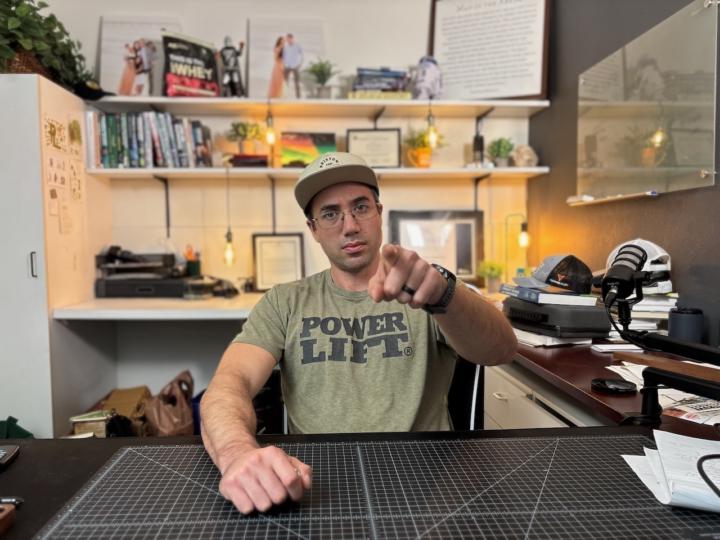
Welcome! Introduce yourself + share a pic of your training space
Glad you're here! This community is built for coaches, CSCS candidates, and performance-minded professionals who take their craft seriously. 👉 In your first post, tell us: - Who you are and what you do - Where you're at in your CSCS journey (or if you're already certified, what you're working on now) - A fun fact—either about your coaching, your training, or just something that makes you you - And post a photo of your training space—whether it’s a garage gym, college weight room, or the local fitness club. We want to see it! This is your space to level up, get real answers, and connect with others who are serious about performance—let’s raise the standard together.
0 likes • Jun 8
Hi Peter, great to have u in the community!
0 likes • Aug 3
@Conor Arthur I've recently looked into Olympic lifting and found some fun gyms in portland Oregon with my online search. I passed my CSCS with my active participation in the last cohort and you are in the right place. Good luck!
May 23 •
💻Claude Setup for CSCS Exam Prep
Hey Coaches, Here's a link to a video I made on the Claude setup some of you asked for. Just remember what Dr. Goodin said about using Claude. It may not get you all the way to an explanation, and there's potential for oversimplification. Pay attention to the sources Claude uses for clues to when it appears confident in a response that, in fact, might be misleading. https://riverside.com/shared/exported-clip/6b90bb27004c4e6c1823 Good luck! Chris
0 likes • May 28
This is a great habit you have here. Nice work coach! Thanks for the share!
May 24 •
Voilà !
Hi all I’m in ! based in France and currently living in Canada. I have a passion for sport and helping young athletes, i also been coaching youth athlete in s&c basketball, adult wheelchair basketball & wellness training in gym area as a personal trainer for 10 years now. I started coaching along my uni undergraduated degree in exercise science to gain experience & knowledge in a field and of course to live and stay within university as a student. I aim to be assistant s&c coach in the US college and university for basketball & football field in a few months because I want more for myself and more knowledge too. So, my main job today is to understand & memorized the lexical field in english to obtain my cscs and searching for a master degree in exercise science/ human performance or s&c. Exited to be a part of this group to learn and exchange from you guys !
0 likes • May 28
Wow, that is a lot of experience and it is great to have you in the community. No doubt you and the community will benefit from you joining!
May 15 •
No access to Canvas and advancing on Skool in classroom
I have had no access to Canvas since it went down. Everyday I check and nothing. On Skool I'm stuck with Level 1 (completed) and have no access to Level 2. Help please.
0 likes • May 15
There is a tentative ZOOM lecture on Friday May 16th. @Jacob Goodin What time?
May 7 •
Online CSCS Study Group
Studying Brainscape Flashcards Starting Thursday 05/07 11 AM MST Topic: CSCS Online Study Time: This is a recurring meeting Meet anytime Join Zoom Meeting https://slcc-edu.zoom.us/j/84475094533 Meeting ID: 844 7509 4533
2
0
1-10 of 44
Active 11d ago
Joined Feb 7, 2026
Powered by