Activity
Mon
Wed
Fri
Sun
Aug
Sep
Oct
Nov
Dec
Jan
Feb
Mar
Apr
May
Jun
Jul
What is this?
Less
More
Owned by Adam
Your Body. Your Code. The science is out. The code is yours to write. A place to share real peptide experiences and see what’s actually working.
Memberships
AI Creator Tools (ACT)
2.2k members • Free
182 contributions to Peptides: Out of the Shadows

34m •
🧪 GLOW / KLOW Blends — Convenience vs Control
Pre-mixed peptide blends are everywhere right now. GLOW: BPC-157 + TB-500 + GHK-Cu. KLOW: BPC-157 + TB-500 + GHK-Cu + KPV added in. The marketing is easy to understand: One vial. One draw. One simple routine. For a beginner, that sounds attractive. But there is a tradeoff most people do not think about. When you buy a pre-mixed blend, you are not just buying convenience. You are also giving up control. 🧪The Main Issue: Fixed Ratios Peptides are not multivitamins. They are signaling compounds. Each one has its own purpose, tolerance profile, timing considerations, and reason for being used. When several are locked together in one vial, you lose the ability to adjust one without adjusting all of them. That matters. Why? · Maybe one compound feels great. · Maybe one causes irritation. · Maybe one belongs in a shorter window. · Maybe another is being researched over a longer window. With a blend, you cannot separate those decisions. You either take the whole thing or stop the whole thing. 🧪Side Effects Become Harder to Read This is probably the biggest beginner problem. If someone uses a blend and gets: • redness • itching • injection-site soreness • fatigue • a weird reaction • unexpected sensitivity What caused it? BPC-157? TB-500? GHK-Cu? KPV? The blend itself? The concentration? The reconstitution? The injection site? Do I know each peptides concentration? Do I know the PH interactions? You do not know. That is the problem. When compounds are separate, you can pause, adjust, or evaluate one variable at a time. When everything is blended, the signal gets muddy. 🧪The Convenience Argument Is Real To be fair, there is a reason blends exist. Some people do better with one simple injection. They do not want multiple vials, multiple calculations or to manage several protocols. For those people, a properly made blend may feel easier and more realistic. And sometimes the protocol someone actually follows is better than the “perfect” protocol they abandon after three days.
0
0

1h •
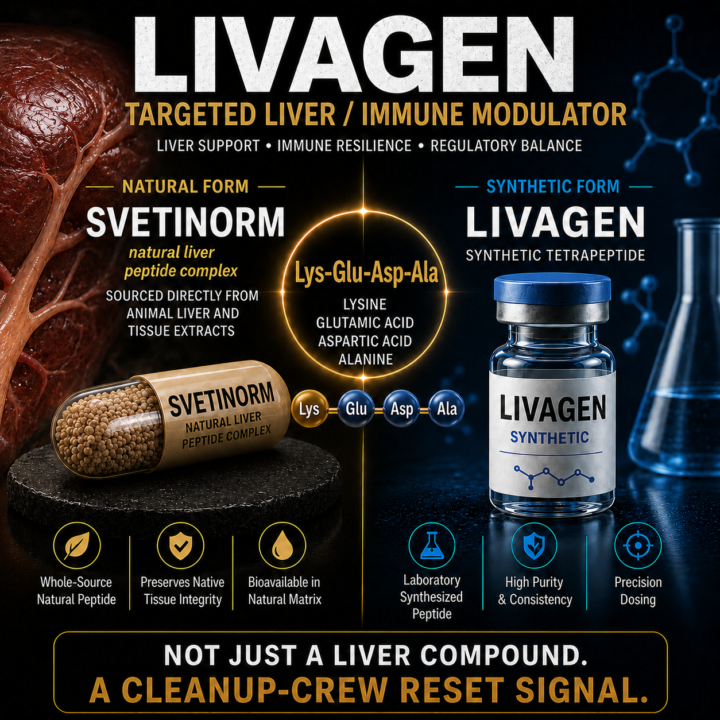
🧬 Livagen — The “Cleanup Crew Reset” for Liver & Immune Aging
Most people think of aging as wrinkles, joints, hormones, and energy. But behind the scenes, two systems are constantly cleaning up the mess: the liver and the immune system. The liver helps process, metabolize, neutralize, and clear what the body no longer needs. The immune system acts like the body’s internal defense and surveillance network. And as we age, both systems can become less efficient, less responsive, and slower to recover from stress. That is where Livagen enters the bioregulator conversation. Livagen is a short-chain synthetic peptide bioregulator associated with the amino acid sequence Lys-Glu-Asp-Ala. Like other Khavinson-style cytogens, the idea is not to force an artificial boost or push the body into overdrive. The research model is different. The concept is that short-chain peptide bioregulators may help aging or stressed tissues move back toward better cellular balance by influencing gene expression, protein synthesis, and cellular repair signaling. In simple terms: Livagen is researched as a liver-and-immune bioregulator — not as a detox product, not as an immune stimulant, and not as a quick-fix cleanse. 🛡️ Why Livagen Matters The liver and immune system take a beating over time. Modern life adds layers of stress: • metabolic load • medications • alcohol exposure • poor sleep • environmental toxins • chronic inflammation • age-related immune decline • slower cellular repair Elevated liver enzymes, hepatitis, fatty liver disease, autoimmune disease, active cancer, unexplained fatigue, or significant inflammatory conditions belong with a qualified medical professional. But from a bioregulator research standpoint, Livagen is interesting because it sits at the intersection of: liver function, immune resilience, cellular repair, and aging biology. 🔬 What Livagen Is Researched For 1. Liver Cell Support Livagen is commonly discussed in relation to hepatocytes, which are the main working cells of the liver. The liver is not just a filter. It is more like the body’s processing and cleanup center. It helps metabolize nutrients, process compounds, support detoxification pathways, and produce important proteins.
0
0
2h •
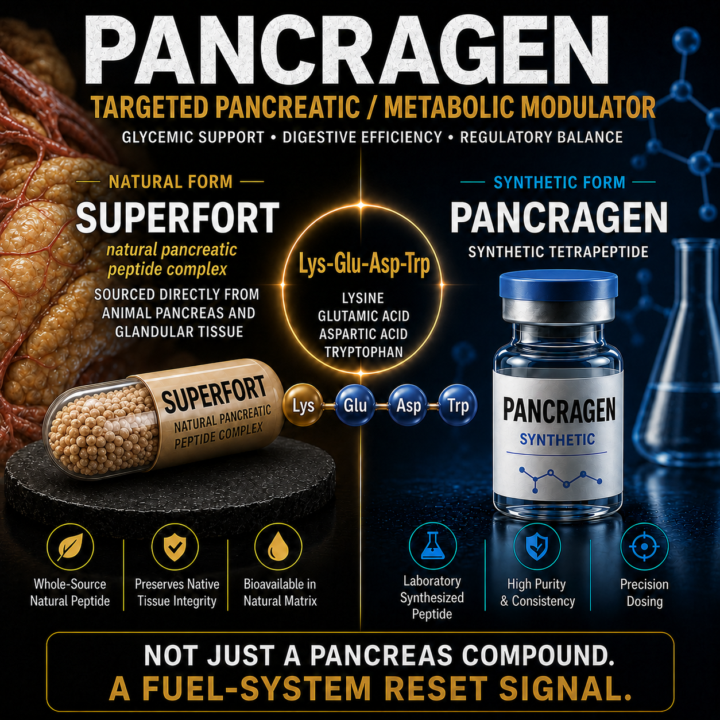
🧬 Pancragen — The “Fuel System Reset” for the Aging Pancreas
Most people only think about the pancreas when blood sugar enters the conversation. But the pancreas is bigger than that. It is part metabolic control center and part digestive engine. It helps regulate glucose through endocrine signaling, and it also produces digestive enzymes that help break down proteins, fats, and carbohydrates. That is why Pancragen is such an interesting bioregulator. Pancragen is a short-chain synthetic pancreatic peptide bioregulator associated with the amino acid sequence Lys-Glu-Asp-Trp, also written as KEDW. Like other Khavinson-style cytogens, the idea is not to force the pancreas into overdrive. The research model is different. The concept is that short-chain organ-specific peptides may help aging or stressed tissue move back toward better cellular balance by influencing tissue-specific gene expression and repair signaling. In simple terms: Pancragen is researched for pancreatic homeostasis —not as a quick metabolic hack. 🩸 Why the Pancreas Matters As we age, the pancreas can become less efficient. That may show up in different ways: • less resilient glucose handling • reduced insulin signaling efficiency • digestive heaviness after meals • bloating or sluggish digestion • less efficient fat and carbohydrate processing • age-related tissue stress inside the pancreas That does not mean every blood sugar issue or digestive issue belongs in a peptide conversation. Diabetes, pancreatitis, unexplained weight loss, persistent abdominal pain, major digestive symptoms, or abnormal labs belong with a qualified medical professional. But from a bioregulator research standpoint, Pancragen is interesting because it is aimed at the pancreatic tissue environment itself. 🔬 What Pancragen Is Researched For Pancragen is commonly discussed in relation to both sides of pancreatic function: 1. Endocrine Pancreas Support This is the blood sugar side. The endocrine pancreas includes the islets of Langerhans, where insulin and other glucose-regulating signals are produced.
0
0
2h •
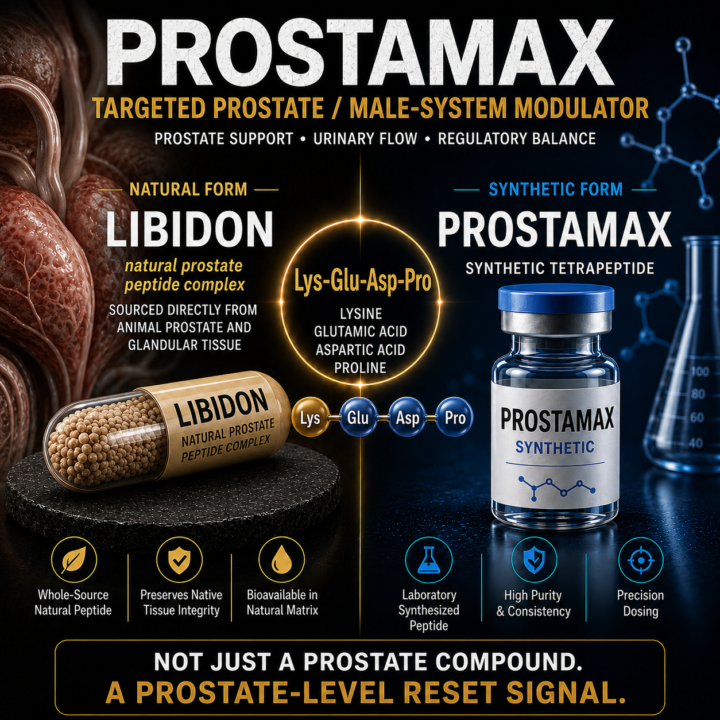
🧬Prostamax — The “Cialis Signal” for the Aging Prostate
Prostamax is a short-chain synthetic peptide bioregulator associated with prostate tissue support. It is commonly described by the amino acid sequence Lys-Glu-Asp-Pro, also written as KEDP. Like other Khavinson-style cytogens, the concept behind Prostamax is not to force a hormone-driven effect or act like a conventional drug. The research model is different. The idea is that short-chain peptide bioregulators may help aging or stressed tissue move back toward better cellular balance by influencing tissue-specific gene expression. In simple terms: Prostamax is researched for prostate cellular homeostasis — not as a hormone blocker, not as an anti-inflammatory drug, and not as a quick symptom mask. 🫘 Why the Prostate Matters As men age, prostate tissue can become more prone to: • structural changes • stiffness or sclerosis • low-grade non-bacterial inflammation • swelling • pressure around the urinary pathway • changes in urinary flow or nighttime frequency That does not mean every prostate issue is the same. It also does not mean every prostate issue belongs in a peptide conversation. Anything involving elevated PSA, suspected malignancy, infection, blood in urine, significant urinary retention, or sudden urinary changes belongs with a qualified medical professional. But from a bioregulator research standpoint, Prostamax is interesting because it is aimed at the tissue environment itself. 🔬 What Prostamax Is Researched For The available bioregulator literature commonly connects Prostamax with prostate tissue aging and localized cellular regulation. Key research areas include: 1. Prostate Tissue Structure Prostamax is associated with support for healthier prostate tissue morphology and may be relevant in research models involving age-related sclerotic or atrophic changes. In plain English: the interest is not just “shrinking” something. It is about whether the tissue environment can become more balanced and less degraded over time. 2. Localized Inflammatory Signaling
0
0
1d •
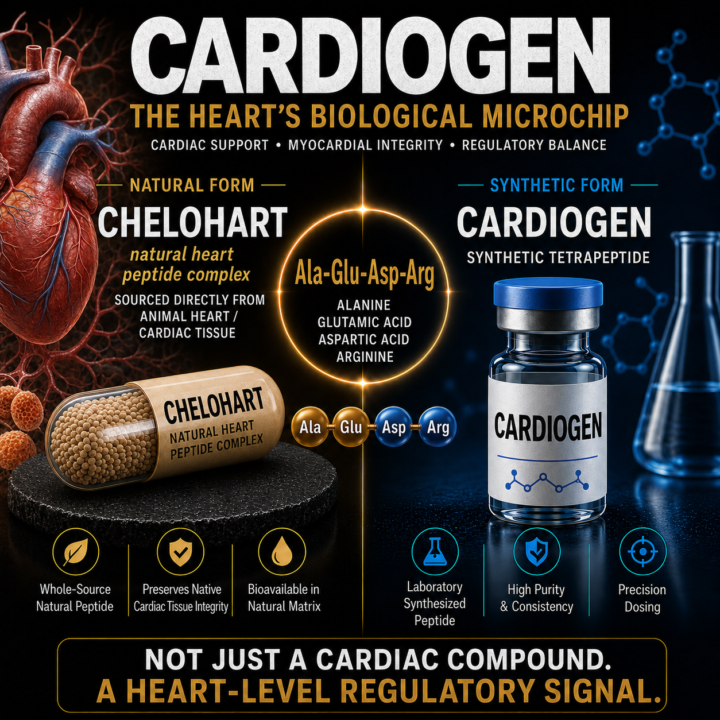
🧬 Cardiogen: The Biological Engine Of Your Heart
Cardiogen is a synthetic peptide bioregulator associated with the cardiovascular system. It is made from a short four–amino acid sequence: Ala-Glu-Asp-Arg --- Also written as AEDR Cardiogen belongs to the Khavinson-style short peptide bioregulator category and is generally discussed as a targeted synthetic peptide for heart and vascular tissue. It is better understood as a cardiovascular regulatory peptide that may influence cellular signaling, gene expression, tissue maintenance, and repair-related pathways within heart and vascular tissue. ❤️ What is the main focus behind Cardiogen? Cardiogen is cardiovascular regulation. That means it is studied for its potential role in helping heart and vascular cells maintain healthier function under stress, aging, low oxygen conditions, or metabolic strain. Cardiogen is often discussed in connection with: · Heart muscle resilience · Myocardial integrity · Cardiovascular aging · Vascular endothelial support · Oxidative stress · Hypoxia-related stress · Tissue remodeling research · Cellular repair signaling The key point is this: Cardiogen does not “push” the heart. It helps support the heart’s cellular regulation system. That is what makes it different from a conventional cardiac medication or stimulant-like compound. 🔬 How is Cardiogen believed or thought to work? Research around short-chain peptide bioregulators suggests they may influence tissue-specific gene expression, protein synthesis, and cellular repair signaling. Cardiogen is believed to work at the cellular level rather than by creating an immediate drug-like effect. For Cardiogen specifically, the main areas of interest include: 1. Heart muscle support- Cardiogen is commonly discussed in relation to cardiomyocytes, which are the muscle cells of the heart. 2. Tissue remodeling and fibrosis research - One major area of cardiovascular research involves tissue remodeling. When the heart is under chronic stress or injury, normal functional tissue can be replaced by stiff, less functional scar-like tissue. Cardiogen is studied for its possible influence on signaling pathways connected to fibrosis and tissue remodeling.
1 like • 19h
@Jennifer Sutton-Hause Jennifer — thank you for sharing that. If you don’t mind me asking, which version were you researching — synthetic Cardiogen, natural Chelohart, or both? I have not personally run a Heart Bioregulator cycle yet, but from the research I’ve reviewed, Chelohart appears to be discussed more often in terms of longer carryover after the intake period ends — helping support the system back toward homeostasis over time. Cardiogen seems to be discussed more as a direct, targeted synthetic signal focused on heart tissue and cellular regulation. I just haven’t seen nearly as much long-term follow-up discussion around the synthetic version. Your comment "I think it definitely was working in the background quietly", is exactly why I’m curious which one you used.
1-10 of 182

Active 16m ago
Joined Mar 29, 2026