Activity
Mon
Wed
Fri
Sun
Aug
Sep
Oct
Nov
Dec
Jan
Feb
Mar
Apr
May
Jun
What is this?
Less
More
Owned by Tiberius
Our vision is a world where trauma recovery and spiritual health are universal themes — Here we practice self-improvement as a community.
Memberships
Non-Profit Skool
147 members • Free
The Accidental Druid
131 members • Free
Tesla Renew
9 members • Free
Join Skool
173 members • Free
What Is Skool?
1.1k members • Free
Synthesizer: Free Skool Growth
44.4k members • Free
Skoolers
169.4k members • Free
Leadership Skool
1.6k members • Free
Self Publishers Unite!
537 members • Free
5 contributions to Royalty Guild. Amazon KDP

3d •
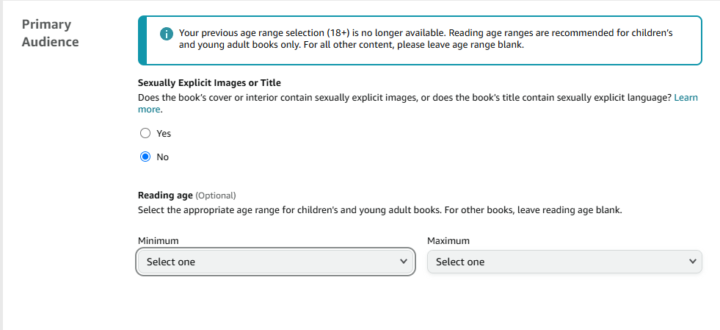
KDP age range issues
At some point Amazon did away with 18+ age range category. So now, by default, if you leave the age range blank, the listing shows 16-18 as the recommended age range for all adult fiction. I'm concerned that many shoppers may interpret this as "Young Adult" content rather than adult. Amazon has many reasons, I'm sure, for making this change but it has the potential to mis-categorize many books and cause potential readers to pass on the purchase. Especially because there previously was an 18+ category and there's very little chance that shoppers are widely aware of this internal change. Has anyone else noticed the change to their Adult titles being displayed as 16-18?
0 likes • 2d
@Latte Motte Wait, are you suggesting that AI is converting Amazon's internal upload forms with NO HUMAN oversight? I would lean more towards Lawyers are converting these upload forms to decrease liability. My interpretation is that the changes related to "Adult content" have little to do with streamlining the UI and everything to do with new legislation (worldwide) regarding the delivery of adult content to minors. That's just my hunch.
1 like • 2d
@Latte Motte yes, that is entirely my point. The UX has trained shoppers that age range specified titles LOOK like 'this' then when they change the UI and effectively alter how the product looks (age range display) then authors are unintentionally penalized because the shopper has a UX that historically says age range (16-18) is young adult. I agree that Amazon doesn't care about this unintended consequence, and they will likely not spend a dime bringing the UX up to speed so that expectations meet reality.
2d •
Amazon Ads some early statistics (Promising)
I wanted to share some observations from my first Amazon Sponsored Products campaign because the results have been different than I expected. I set a budget and simply let the campaign run. After 12 days, Amazon had permission to spend up to up to my set limit, but it spent only about 22% of that budget. That was one of the biggest surprises. Rather than spending my daily budget, Amazon appears to bid selectively, only entering auctions where its algorithm believes my book is a relevant match for the shopper's search. So far, the campaign has generated: - Over 10,000 impressions - 13 clicks - 2 attributed sales - Approximately 15.4% click-to-purchase conversion The search terms have also been encouraging. Amazon isn't matching my book to random searches—it has connected it with searches such as: - "getting over trauma" - "healing from trauma" - "books on betrayal trauma" - "how to heal trauma in the body" That has given me confidence that the algorithm is beginning to understand who the book is for. The most valuable lesson for me has been that a daily budget is simply a maximum, not a spending target. Amazon seems perfectly willing to leave budget unused if it doesn't believe there are enough high-quality opportunities to show the ad. This is a small sample and my ACOS (Advertising Cost of Sales) is running at about 43.85% when I deduct that cost from my Royalties, I'm basically breaking even. So, as an experiment I was willing to spend money on, it hasn't cost me a penny. That's encouraging. What is discouraging, isn't the behavior of Amazon Ads, I'm surprised at the restraint of spending that is occurring. My bottleneck on Amazon seems to be audience pool. There simply aren't enough shoppers searching terms that fit my niche for Amazon to justify spending my very modest budget. I'm planning to continue letting the campaign run without making changes and see what the data looks like over a larger sample size.
1
0

3d •
Delayed launch?
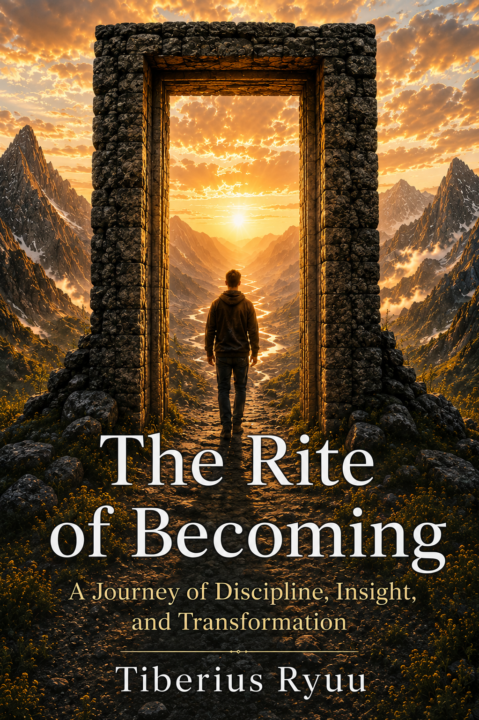
I'm publishing my 8th title next month and this is the first time doing a delayed release. The book is done, cover, interior and KDP upload, all done. Now I wait, do some subtle marketing, wait. On the up side, I ordered proofs, found minor mistakes and was able to fix those. But the wait... I am hoping that I am able to build a little anticipation and experience some reward on the launch date but that is yet to be seen. Does anyone else have experience with delayed gratification on KDP? It's just so easy to publish that I never tried building pre-release tension or promotional campaigns. I'm a little nervous and also excited.
1 like • 3d
@Latte Motte cover is AI. KDP is known to flag copyrights when using real artists (the irony). Delayed launch just means the book is ready but it's not being released until a later specified date. It allows for building up anticipation and pre-release interest.
Feb 3 •
Pseudonym or not?
I wanted to share my personal experience with using a pseudonym, so far. First of all, my written work is in the non-fiction genre, so why use a fictional name? At first I launched a podcast and was planning to talk about some personal trauma history. Using a pseudonym was my way of not drawing direct attention to people from my past that I might be telling stories about. Later, when I began writing books on the same topics, I wanted to have a cohesive flow back to the podcast content. So, I decided to use the pseudonym for the books and everything downstream from that (including my skool community). More importantly is what happened as a happy accident because of this choice. I was careful to select a pseudonym that was unique back then. The result is that if someone does a google search of my author name, a very cohesive and thorough response is returned (especially when using AI search engines). This has resulted in an online presence that is not distracted by my personal history, my other business presence or any other person with a similar name. The search yields results that include my book titles, book reviews and my social platforms that compliment the books. More importantly, it highlights my authority on the subject I write about (trauma healing and personal transformation) Just thought I would share this as it might help others to gain visibility.


Nov '25 •
👮🏻 $51,744 fine for paid review
Were you aware that you could face a fine of up to $51,744 for a paid review? - The Rule: The charge stems from the FTC's "Trade Regulation Rule on the Use of Consumer Reviews and Testimonials" (codified as 16 CFR Part 465). This rule, which was finalized in 2024, explicitly bans practices like writing, buying, selling, or disseminating fake reviews. - The Authority for Fines: This new rule gives the FTC the authority to seek civil penalties for violations. This authority is granted under Section 5 of the FTC Act. - The Fine Amount: The $51,744 is the maximum civil penalty the FTC can seek per violation. This specific amount is not permanent; it is adjusted annually for inflation, which is why it's such a precise number. The FTC may also take the position that each individual fake review constitutes a separate violation. The new FTC rule (16 CFR Part 465) prohibits fake reviews, which in turn allows the FTC to seek inflation-adjusted civil penalties under its existing authority from the FTC Act. The rule specifically prohibits several deceptive practices, including: - Buying or Selling Fake Reviews: This includes reviews from someone who does not exist (like an AI-generated review) or who has not actually used the product. - "Review Hijacking": Using or repurposing a review written for one product on a different product. - Insider Reviews: Company officers or managers writing reviews for their own products or services without clearly and conspicuously disclosing their relationship. - Review Suppression: Illegally suppressing negative reviews, such as by threatening the reviewer or misrepresenting that a site shows all reviews when it does not.

4 likes • Nov '25
This is good to know, thank you for citing the source also.
1-5 of 5

@tiberius-ryuu-5015
Tiberius Ryuu is a writer and spiritual guide helping others heal, grow, and live with integrity and purpose.
Active 15h ago
Joined Nov 9, 2025
Cape Cod, Massachusetts
Powered by