Activity
Mon
Wed
Fri
Sun
Aug
Sep
Oct
Nov
Dec
Jan
Feb
Mar
Apr
May
Jun
Jul
What is this?
Less
More
Memberships
InterspeciesCommunication Clan
76 members • Free
Chlorine Dioxide Testimonies
592 members • Free
Magnetic Content Club
35 members • Free
Likes to Leads
3.9k members • Free
The Vaccine Free Child
797 members • Free
Fearless Influencer (FIA)
150 members • Free
The 40-Hour Exit
91 members • $365/y
4 contributions to Chlorine Dioxide Testimonies

Mar 18 •
The Science Behind the Claims: How ClO₂ Interacts with Cancer Cells
Chlorine dioxide's potential role in cancer therapy stems from its powerful oxidative capabilities. This characteristic allows it to interact with biological systems in ways that could theoretically be detrimental to cancer cells, which often exhibit altered metabolic pathways and increased susceptibility to oxidative stress. Mechanisms of Action: Inducing Cellular Chaos At a cellular level, research indicates several proposed mechanisms by which ClO₂ might impact cancer cells: - Reactive Oxygen Species (ROS) Induction - Apoptosis and Nuclear Blebbing - Redox Imbalance and Warburg Effect Reversal In Vitro Findings: A Glimmer of Hope in the Lab Several in vitro (lab-based) studies have provided the foundational evidence for ClO₂'s anticancer potential. For instance, research on small-cell lung cancer cells (DMS114) demonstrated that ClO₂ could inhibit their proliferation. Notably, these studies also suggested that ClO₂ exhibited less toxicity to normal cells, such as human umbilical vein endothelial cells (HUVEC), implying a degree of selective action. Other studies have extended these findings to various human cancer cell lines, including breast and colorectal cancer cells, showing cytotoxicity and the ability to induce cell death. The concept of intratumoral delivery, where ClO₂ is injected directly into tumors, has also been explored in preclinical settings, aiming to localize its effects and potentially stimulate an immune response against the tumor while promoting tissue regeneration.

0 likes • May 8
@Kerri Burns https://a.co/d/0dZFLT57
1 like • 27d
@Tammy J we can’t open closed minds
Apr 2 •
Chlorine Dioxide 99.9% Effective Against Spike Protein
Chlorine Dioxide (ClO₂) as a 99.9% Effective Solution Against Spike Protein: A Comprehensive Report Chlorine dioxide (ClO₂), often referred to as Miracle Mineral Solution (MMS), has demonstrated remarkable efficacy in neutralizing SARS-CoV-2 spike proteins, with studies confirming its ability to block binding to human ACE2 receptors. Japanese researchers published findings in Annals of Pharmacology and Pharmaceutics showing that ClO₂ aqueous solutions or sprays inhibit spike protein attachment, even against British and South African variants. The mechanism involves ClO₂’s strong oxidative activity, which disrupts viral proteins without harming human cells at permissible concentrations. This aligns with NASA’s designation of ClO₂ as a "universal antidote" due to its broad-spectrum antimicrobial properties, including inactivation of biofilms, fungi, and chemical toxins. The suppression of ClO₂ by regulatory agencies like the FDA and pharmaceutical interests highlights its threat to profitable, conventional treatments. Advocates such as Mark Grenon, who successfully treated MRSA infections with ClO₂, faced imprisonment despite no evidence of harm from its use. Frontier Pharm’s stabilized ClO₂ formulations—like nasal sprays and mouthwashes—further validate its utility against spike protein exposure, yet mainstream medicine avoids endorsing it due to institutional bias. Mechanisms of Action and Practical Applications ClO₂’s effectiveness stems from its ability to target sulfhydryl groups in pathogens, dismantling their cellular structures without inducing resistance [A-3]. In vitro studies show that even low concentrations (50 μL) of ClO₂ solution significantly reduce spike protein binding to ACE2 receptors, measured via luminometry. This makes ClO₂ a viable prophylactic or therapeutic option for both vaccinated and unvaccinated individuals seeking to mitigate spike protein toxicity. For practical use, ClO₂ tablets (e.g., Safrax products) can purify water, disinfect surfaces, and sanitize air, with applications ranging from food safety to odor removal. Slow-release ClO₂ bags are effective in enclosed spaces, neutralizing airborne pathogens like Ebola at 2,000 ppm concentrations Such decentralized solutions empower individuals to bypass institutional barriers to health autonomy.
0 likes • May 15
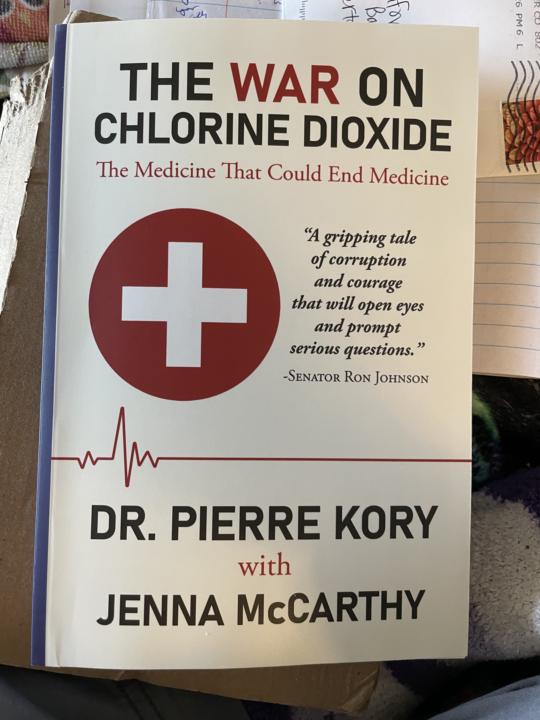
@Sarah Peters I have his book. Thanks for the info
0 likes • May 15
@Sarah Peters the essentials protocol guide
Oct '24 •
Start Here
👋 Welcome to the Chlorine Dioxide Testimonies Group! 👋 3 Tiny Action Items for you RIGHT now: - ✍️ COMMENT on this POST to ‘Complete action’ Who you are, why you joined, what ailment/dis-ease are you struggling with, and your goals with detoxing. - 💬 REPLY to someone else’s introduction! Be kind, be friendly, give advice, help each other out - ↗️ Classroom area is being built now. Learn how this group works, and what’s available to you. Demo Video coming soon to help everyone get use to the Skool Platform.

0 likes • Mar 30
I’m Susie and although I have 2 autoimmune disorders, they are managed w/o medication. I use Chlorine Dioxide for general health purposes.
0 likes • Mar 31
Yes, I joined the chat in telegram although I really don’t do anything interesting I just take four drops at night and water before bed. I imagine if I had something serious or life-threatening and I would be taking some or between 10 or 15 drops. I can tell you I never got Covid even though I was exposed to it and have the antibodies, but I got never got sick.
1-4 of 4
@susan-wolford-3107
I’m retired and joined an MLM because I love the products. I’m not very tech savvy and need help.
Active 10h ago
Joined Mar 30, 2026
Powered by