Activity
Mon
Wed
Fri
Sun
Aug
Sep
Oct
Nov
Dec
Jan
Feb
Mar
Apr
May
Jun
What is this?
Less
More
Owned by Suki
Balance hormones, Loose weight, Reduce inflammation, Reclaim Energy in 30 days. Peri & Post Menopause. Real Guidance from a Holistic Nutrition Coach.
Where faith is lived, not performed Where knowledge refines the soul Where light leads the way A sacred space rooted in the love of Ahlulbayt
Memberships
Break the chains from FOOD
49 members • Free
Advertise Business Club
203 members • Free
CS
Community Sparks
20 members • Free
Build Your Online Business
1.5k members • $9/month
INFLAMELESS LIVING
122 members • Free
the skool CLASSIFIEDS
1.9k members • Free
Leadership Skool
1.6k members • Free
RB
Rare Beauty Lab
7 members • Free
Holistically, Realistically!
139 members • Free
40 contributions to the skool CLASSIFIEDS
2h •
The Test That Changed Everything I Thought I Knew About Nutrition
As a nutrition coach, I genuinely believed I was doing everything right. I ate plenty of vegetables, chose whole foods, avoided processed foods, drank enough water, and made healthy lifestyle choices. I thought my body was "clean" and that my nutrition covered all the bases. Then I decided to test my Omega-3 Index. The results completely surprised me. My inflammatory fats (Omega-6) were much higher than they should have been, my Omega-3 levels were lower than optimal, and my Omega-6:3 balance was far from ideal. Despite eating well, my body wasn't getting enough of the essential fats it needed for healthy cells, brain function, heart health, and managing inflammation. It was a real wake-up call. I started taking a high-quality, scientifically tested omega-3 oil every day and made it part of my routine. A few months later, I repeated the blood test. The difference was incredible. My Omega-3 Index increased from 4.2% to 8.4%. My Omega-6:3 ratio improved from 15:1 to 3:1. My Balance Score moved from low risk to optimal. My Cell Membrane Fluidity Score improved, indicating healthier, more flexible cells. More importantly, I felt the difference. I had more consistent energy, better mental clarity, recovered faster after exercise, and simply felt healthier from the inside out. This experience taught me one of the biggest lessons in nutrition: You can't guess what's happening inside your body—you have to test, not assume. Eating healthy is incredibly important, but today's food simply doesn't always provide the omega-3 levels our bodies need. That's why measuring your levels and taking targeted action can make such a powerful difference. As a nutrition coach, I now encourage my clients to stop guessing and start testing. The numbers don't lie, and when you know your baseline, you can make informed decisions that truly support your long-term health. Sometimes the healthiest thing you can do isn't changing your diet—it's discovering what your body is still missing.
0
0
4d •
Would you say your health is important to you?
Most people know their blood pressure.Many know their cholesterol.But almost nobody knows their Omega-6 : Omega-3 Balance. Yet this balance plays an important role in your overall health and well-being. 🩸 With a simple at-home finger-prick test, you can discover your personal Omega-6 ratio and receive a detailed report on your fatty acid profile. The goal is generally to achieve a ratio around 3:1 or lower, while many people consuming a typical Western diet have much higher ratios.Watch this short video. https://www.zinzinoplay.com/en/video/1608. Comment "BALANCE" and I'll send you more information about the test and explain what your results mean. Whether you're focused on: ✔️ Better nutrition ✔️ Healthy aging ✔️ Heart & brain wellness ✔️ Reducing inflammation through lifestyle ✔️ Optimizing your health Knowing your numbers is the first step. If you're passionate about health, wellness, and helping others while building an income, I'd also love to show you how you can become part of my growing wellness team. 🔗 Learn more here: https://www.zinzino.com/2021290040
0
0

9d •
Moody Monday: We aren't Different from Monkeys.
Okay, maybe you don’t pick through your mate’s back hair for snacks. But much like our genetic cousins, we humans are social animals. So much so that it’s impossible to separate our physical and psychological health and wellbeing from our social life. The impact of poor relationships is so severe that some experts have argued physicians should screen for social isolation just as they screen for heart disease or diabetes. On the flipside… The impact of positive relationships is tremendous. One of the longest running studies on human wellbeing, the Harvard Study of Adult Development—which began tracking participants in 1938 and is still going—has shown that the best predictor for someone’s health, happiness, and longevity is the quality of their relationships. (In addition to positive relationships, other protective factors included engaging in regular physical activity, not smoking or drinking excessively, having mature mechanisms to cope with life’s ups and downs, and maintaining a healthy weight.) Additionally… Our social circle has a strong influence on our behavior. You’ve probably heard the advice: “If you want to be healthy, hang out with healthy people.” The advice is well-meaning, based on results from the Framingham Heart Study that revealed just how impactful our social context is. (One finding: You’re more likely to be happy, depressed, or obese if your closest friend is happy, depressed, or obese.) Despite this, we love our beer buddies, sloppy and loud as they are. And Grandma too, even though her incessant pie-pushing is borderline pathological. And you definitely don’t want to get rid of that fun-loving crew. But you can… Amplify and nurture relationships that are particularly positive. You know, the people who you feel bring out your “best self.” These people will often share your deeper values, whether that’s prioritizing connection, taking care of your health, or just creating a meaningful life. They might’ve already achieved something you aspire to do, or they’re on a similar path, or they’re just happy to be an encouraging and friendly face on the sidelines.
0
0

11d •
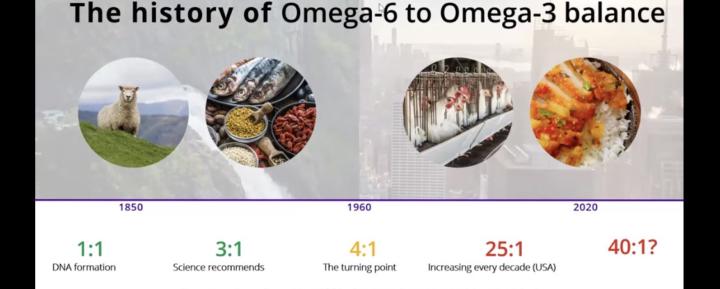
OMEGA
Most people focus on taking supplements... but very few know their actual Omega-3 levels. Here's why that matters: Your body needs both Omega-6 and Omega-3 fats, but the balance between them is critical. ✅ A healthy ratio supports:• Heart health ❤️• Brain function 🧠• Joint comfort 💪• Healthy inflammation response 🔥 ❌ The problem?Modern diets are overloaded with Omega-6 fats from processed foods, seed oils, and restaurant meals. This can push your ratio way out of balance. Many people have ratios of 15:1, 20:1, or even higher, when a healthier target is often much lower. 📊 Testing your Omega-3 levels gives you real data—not guesswork. You can finally answer: Am I getting enough Omega-3?• Is my supplement actually working?• What is my Omega-6 : Omega-3 ratio?• How can I optimize my health based on my results? 💬 Have you ever tested your Omega-3 levels? If yes, what was your ratio? Share below! Interested in finding out your Omega-3 levels and Omega-6 : Omega-3 ratio? Comment "TEST" below, and we'll help you get started. 🏠 The best part? The test can be done right from the comfort of your home and delivered directly to your doorstep. ✅ Simple✅ Convenient✅ No clinic visit required Get real insights into your health with a quick test that takes just minutes. Comment "TEST" below if you'd like more information!
0
0

⭐
🔥
18d •
🎤 I'm Looking for a Skool Community to Recommend to 5,400+ Members...
Tomorrow, I'll be sending an email to 5,400+ Pinterest Skool members. The main subject of that email could be YOUR Skool Community. 👀 But first... You need to convince me. Imagine you're sitting across from me and I ask one simple question: Why should I tell 5,400+ entrepreneurs, creators, coaches, and business owners about YOUR community? Sell me. Not with a link. Not with hype. Not with "join my Skool." Tell me: ✅ Who your community is for ✅ What transformation members get ✅ What makes your community different ✅ Why someone should join YOUR community instead of the thousands of others on Skool If your answer stands out, I may feature your community in tomorrow's email. 🚫The Rules ✅ Comment below and SELL ME YOUR SKOOL (no links here) ✅ You MUST participate in the Small Business Weekend inside Pinterest Skool (links allowed) The best communities don't just promote themselves... They show up. They engage. They support other business owners. I'm looking for community owners who do exactly that. Tomorrow morning, I'll be reviewing every submission and choosing one (or more) communities that deserve attention. One comment could put your community in front of 5,400+ members. 👇 Sell Me Your Skool.
Poll
27 members have voted

1 like • 17d
Thank you so much! I truly believe we need more holistic approaches to health and wellness. 😊
1 like • 17d
@Dusty Commons thank you
1-10 of 40
@suki-kermali-7796
Holistic Nutrition Coach
Founder of Dhow Wellness.
Support sustainable weight loss nutrition, guidance and results on consistency, no restriction.
Active 47m ago
Joined Apr 11, 2026
Canada
Powered by