Activity
Mon
Wed
Fri
Sun
May
Jun
Jul
Aug
Sep
Oct
Nov
Dec
Jan
Feb
Mar
What is this?
Less
More
Memberships
Shangriballa - Non Dual Group
113 members • Free
6 contributions to Shangriballa - Non Dual Group
Dec '25 •
5 Non-Dual Everyday Practises.
I've put together five practical ways you can start practicing non-duality today. It's about shifting your attention from the stories in your head to the raw, immediate experience. 1. Melt the Observer and the Observed (Chores as Practice). Think about doing the dishes or folding laundry. Usually, your mind says, "I am doing this boring thing." That's the split: I (the subject/doer) and dishes (the object/done). * The Shift: Try to drop the "I" label. Don't do the dishes; just let the experience of washing happen. Notice the warm water on your hands, the rough texture of the sponge, the squeak of clean glass. The sound, the sensation, the movement—it’s all just one unbroken experience. The washing is what you are right now. * The Payoff: When you really pay attention, the boring chore becomes vivid. You stop resisting the moment, and that’s a direct taste of non-duality. 2. Question Your Reactions (The 'Who is Annoyed?' Inquiry) Life throws curveballs, right? Maybe a driver cuts you off, or a coworker annoys you. The dualistic mind immediately yells, "They are bad, and I am right." * The Shift: When a strong emotion hits, don't follow the story. Just pause and ask, "Where is the center of this anger?" or "Who is feeling this annoyance?" Look for the solid, separate I that is getting upset. * The Payoff: You'll find that the "I" is elusive. It's not a thing you can grab, just a fleeting bundle of thoughts and sensations. The anger or annoyance is simply an event arising in a vast field of awareness, just like the sound of the car horn. See it as an event, not a personal attack. This process of self-inquiry is one of the quickest ways to see through the illusion of the separate self. 3. Drop the Judge (Accepting the Unacceptable) We're all walking, talking critics. We label everything: "This feeling is bad," "This weather is terrible," "That thought is stupid." This is the essence of duality: good/bad, right/wrong, self/other. * The Shift: Practice radical acceptance. Let everything be as it is. When a "bad" feeling like sadness or restlessness appears, don't try to fix it, judge it, or push it away. Just let it be. It's just energy moving.

0 likes • Feb 1
Thank you for finding the words to explain these practices 🙏🏼

Sep '25 •
Shangriballa Method - Non Dual Therapy
Hello, Shangriballa Family! I have a feeling many of you will be as excited about this as Patrick and I are. We've heard countless times how much the Trauma-Informed Non-Dual sessions at our retreats have helped you gain not only profound insights but also integrate them upon returning home. It's the critical link between the cushion and real life, right? Well, we took those deep-dive sessions and recorded them! We packaged them up so you can revisit the wisdom, or catch up on what you might have missed. Think of it as your ongoing integration support, available right here in our classroom. Here’s what you get: - Part 1: The Blueprint of Trauma. We explore what it means to be trauma-informed and understand the very foundations of how the separate self creates and holds trauma, - Part 2: Connecting the Threads. This is where the magic happens! We examine closely how trauma affects every aspect of your life and skillfully connect those threads to the core understanding of non-duality. - Part 3: Working with the Body. It's not enough to just know this stuff. This final piece shows you how to bring all this information together, embodying it and working with it actively in yourself to dissolve the mist. Who gets access? This entire three-part workshop is a gift for our retreat alumni. If you've joined us at a Shangriballa retreat, drop a comment below saying 'Access, please!' and I'll personally grant you entry. Don't let those amazing insights fade; keep the integration flowing! What part of the trauma work did you find most helpful at your retreat?" https://www.skool.com/shangriballa/classroom/a3ed6c1e?md=229b53aa895c48e08cebe9f0922c7d0a
1 like • Sep '25
Access, please!
Sep '25 •
The Genius Who Tuned In
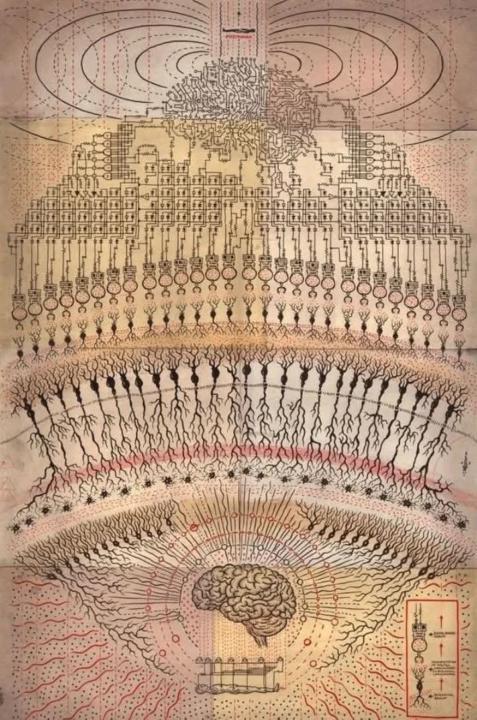
My brain is only a receiver, in the Universe there is a core from which we obtain knowledge, strength and inspiration. I have not penetrated into the secrets of this core, but I know that it exists" ~ Nikola Tesla Nikola Tesla, one of history's most brilliant inventors, saw his mind as more than just a thinking machine. He saw it as a receiver, an antenna picking up signals from a universal source. This wasn't just a quirky saying; it was how he genuinely felt his groundbreaking ideas came to him. He wasn't just inventing things; he was discovering them, pulling them out of a vast, unseen ocean of information. This idea of a universal "core" of knowledge sounds a lot like what philosophers call non-duality. Non-duality, or "not-two," is the idea that everything is fundamentally connected. There's no real separation between you and the universe, or between your mind and the source of your thoughts. Our individual minds are just small parts of a single, unified consciousness. Beyond the Light Bulb Moment We often think of creative breakthroughs as a sudden flash of brilliance, a "light bulb moment." But Tesla's quote suggests something deeper. He felt a direct connection to a source of pure knowledge, a wellspring of ideas that wasn't limited by his individual experience. He would get vivid visions and insights that seemed to come from outside himself, which he would then work to bring into reality. This isn't a new concept. Many great thinkers, artists, and innovators throughout history have described similar experiences. They've spoken of feeling like a conduit for a higher power or a universal creative force. Tesla simply put it into a framework that blended his scientific mind with a spiritual understanding of the universe. The Science of Oneness Tesla even hinted that future science would explore these non-physical connections. In fact, his fascination with these ideas was sparked after he met the Hindu monk Swami Vivekananda. He was so impressed by Vivekananda's explanation of Advaita Vedanta, a school of thought centered on the concept of a single, non-dual reality, that he began using Sanskrit terms like Akasha and Prana in his own work. He believed that if science could ever truly study these non-physical phenomena, we'd make more progress in a decade than in all the centuries before.
1 like • Sep '25
Thanks for sharing this! I love the connections between science and spirituality. Seems many use one to refute the other.

Jun '25 •
Books to Support Integration
Hi everyone, I thought we could use this thread as a space to share books or other helpful resources (podcasts, documentaries, articles etc) as we go through integration processes. I have two recommended to me by my mentor - a Buddhist therapist who has experienced non-dual states. I haven’t read these yet but am planning to. Would love to see your recommendations too. The Wakeful Body: Somatic Mindfulness as a Path to Freedom https://amzn.eu/d/6p8ODXQ In Touch: How to Tune In to the Inner Guidance of Your Body and Trust Yourself https://amzn.eu/d/cTI6c9x (Apologies for the Amazon links - I would search for these on Abebooks or Worldbooks instead)
2 likes • Jul '25
@Lisa Silva I’m reading this now and it’s helping me contextualize much of the teachings and mindset of non dual thinking. Highly recommended!
3 likes • Sep '25
https://www.amazon.com/Autobiography-Self-Realization-Fellowship-Paramahansa-Yogananda-ebook/dp/B00JW44IAI Just finished Autobiography of a yogi….. and immediately started reading it again. 😍 For me this was incredibly expanding and full of love and surprisingly funny 😆 my heart is just bursting. 🥰

Aug '25 •
Lucid Dreaming
Very occasionally, I have lucid dreams. I had one a couple of days ago (don't worry, I'm not going to bore you with lots of details 😉). It started in a busy bar, where I ordered a drink and just sat, listening to the conversations around me. The content isn't important, but what amazed me, being fully conscious and aware, was that it was identical to waking reality. Not similar, completely identical. It made me realise that our instinctive suspicion of the concept of Maya is unfounded - there is nothing about reality that can't be a dream. Anyway, I've bought a book about lucid dreaming because it's something I would like to do more. I would be interested in hearing if anyone else has had similar experiences. Peace. 🙏
0 likes • Aug '25
Hi Paul, I am glad this topic came up. I have lucid dreams often, including one last night. I love them and I am curious what if any distinction you might make or have experienced from Astral travel?
1-6 of 6