Activity
Mon
Wed
Fri
Sun
Nov
Dec
Jan
Feb
Mar
Apr
May
Jun
Jul
Aug
Sep
What is this?
Less
More
Redirect K9s
98
Free
The Detection Dog Lab
939
5.0
Free
3 contributions to Redirect K9s
9d •
Everyone Needs Help. Even Professionals.
I wanted to talk today about something that some people might struggle with and that is asking for help. Perhaps you have been doing this for a number of years, you are on your second, third or fourth dog, you have been part of a team for a while, copious amounts of operations and attend plenty of workshops in person and online. With dedication like that it can sometimes feel like you finally are starting to have a grip on this whole dog handling thing. Then it happens…either you have a new dog that makes you feel like you don’t know anything or your current dog shows a behavior that you have never seen them do. This is when it is important to reach out to a trusted person that you feel is the best fit not only for your concern but also this dog’s learning style. Preferably a trainer that can adapt to the dog in front of them over one that has the approach of “your dog is this breed so you must do this” or “your dog is this discipline so it has to do that”. Running into snags isn’t just for handlers but trainers too. It is through the difficult moments that learning occurs even for us humans. If we want our dogs to enjoy their work and be successful we figure out how to communicate that to them in the best way possible and tailor training to what that dog needs. Do they need steps broken down into smaller ones? Do they need a different direction? Do they need a whole different approach? These questions, and those like them, are why there are so many different ways to train a dog for the same job and it is important to keep an open mind while also having discernment. You may go to a workshop or seminar and hear something that you think is not helpful but a year or two down the line you remember it and it is exactly what you needed to troubleshoot. I had a similar experience recently and, while I cannot go into detail, I can say that it is a benefit to work with people who have many more years of experience than you. Not just quantity of years but quality and variety. Dog training has evolved tenfold in the past 20 years or so with what is accepted as mainstream. Welfare is huge compared to how it use to be and the types of dogs that have access to work has multiplied in ways that very few probably saw coming.
1 like • 8d
Don’t be afraid to share your experiences openly. While it can be tough to disclose issues there are many others who’ve had similar experiences and trust me they appreciate knowing they’re not alone and it should be ok to talk about it. We can’t learn by holding it all in.
Jan 30 •
Australian Cattle Dogs
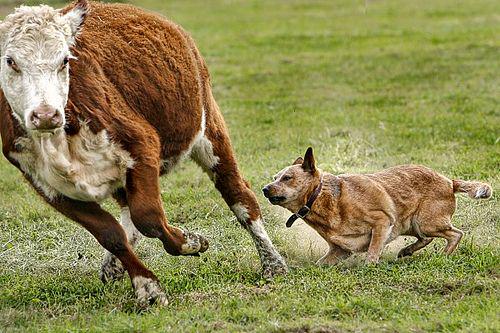
The Australian Cattle Dog aka Heelers have also been called Queensland Heeler, Halls Heeler, Blue Heeler and Red Heeler. The Australian Cattle Dog earned their other name, Heeler, due to moving cattle by nipping at their heels. This trait is present due to their dingo ancestry. What breeds were used to make up the Australian Cattle Dog is up for debate due to the records being disposed of but it is thought that some breeds include: Blue Collies, Kelpie, Bull Terrier and the Dalmatian (although the Dalmatian has been questioned). How a wild dog would breed with a domesticated dog is not entirely known but a popular theory is that a litter of Dingo puppies were abandoned and raised domestically and from there was able to breed with domesticated dogs. While the theory is a consideration it is in fact a man named Thomas Hall who is credited for developing the breed. It is said that Hall, a cattle rancher, imported dogs from the United Kingdom, such as the blue-speckled Highland Collie, other sources say bob-tailed drover dogs with a blue coat, and crossbred them with the wild Dingo. This crossbreeding created a dog that was sturdy, tough, robust, active and could handle the Australian Outback but also work alongside their human. It was in 1825 that Hall was first successful in breeding this new breed of cattle dog. Through continual and selective breeding, he had developed an extremely handy cattle dog by 1832. It wasn’t until after his death is 1870 that his dogs would become available to other people aside from friends and family. This is also where the breeding records of how the cattle dog came to be is lost to history due to the details of his breeding program being thrown away. Sometime between 1845 and 1855 another type of Heeler was developed. These were known as Timmins’ Biter and were leaner than Hall’s Heelers, were blue and had stumpy tails. Cattle dogs were also said to be mixed with Kelpie which helped further develop their herding abilities and changes to their markings.
0 likes • Jan 30
the CD’s in Australia are a different beast compared to the states. We’ve totally chilled them out and made them smaller. Where I lived over there they had restrictions on them in city limits.
Dec '25 •
Introduce yourself...
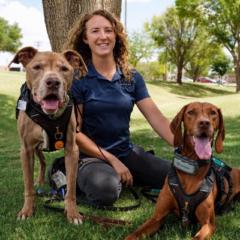
Hello my name is Christina Brewster and I am a professional dog trainer who has a passion on how dogs think and perceive the world. I am a training partner with Chiron K9 and I am a certified Predation Substitution Instructor. The type of dog training I do is off leash detection but a lot of what it takes to have a great and dependable off leash detection dog are skills every dog can benefit from knowing. A big concern for both working dogs and pet dogs is chasing wildlife. A dog that is interested in chasing wildlife can find themselves in dangerous situations. They could run into traffic, they can get their gear caught up in branches, they can become impaled by branches or the animal itself, they can find themselves lost for extended periods, etc. Instead of getting frustrated and suppressing the dog’s quality of life I want to help owners, handlers and other trainers understand what is happening in their dog and how to redirect it in a safe way. “Frustration begins where knowledge ends” - Clinton Anderson
1 like • Dec '25
Hey I’m Sam. I do wilderness search work with my dogs. I organize the All-Search training seminars and Burn Workshop. Love a good dive in predation, genetics and anything training. Thanks
1-3 of 3
@samantha-sheaffer-6698
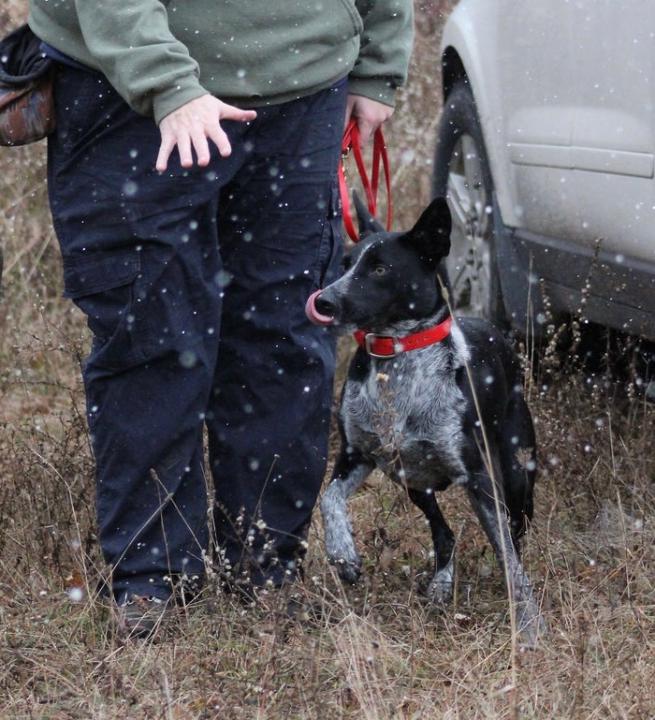
Search and Recovery K9s for 8 years. Live find, Human Remains, Evidence Search, etc.
Active 2d ago
Joined Dec 24, 2025
Pennsylvania, USA