Activity
Mon
Wed
Fri
Sun
May
Jun
Jul
Aug
Sep
Oct
Nov
Dec
Jan
Feb
Mar
Apr
What is this?
Less
More
Memberships
AI Certification Program
76 members • Free
AMZ Certification Program
6.1k members • Free
100M Money Models & AI Mastery
489 members • Free
Impact Network
175 members • Free
2 contributions to 100M Money Models & AI Mastery

Dec '25 •
1 small moment that compounds
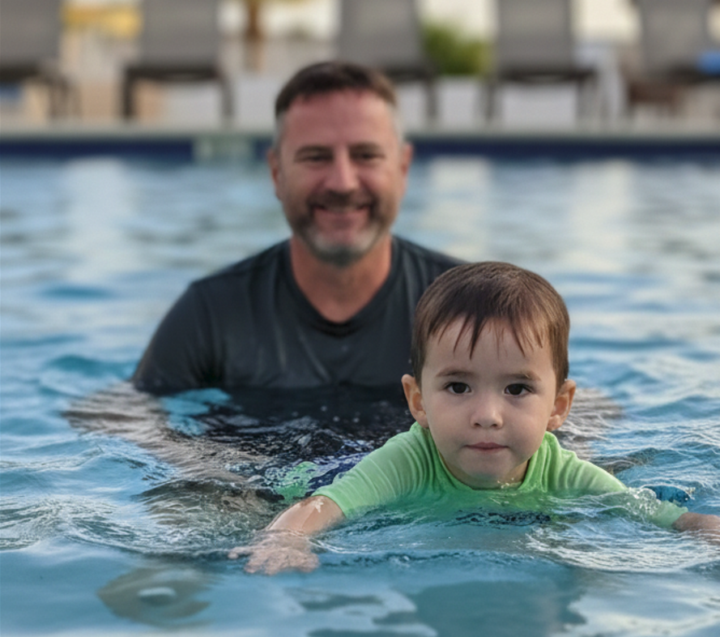
My seven-year-old slips into the pool like he belongs there. No hesitation. No noise. The water meets him and he relaxes into it, as if it’s always known his name. When I was twelve, my friends used to swim every summer in a freezing river near my home in Waterford, in the south of Ireland. They took lessons. They learned properly. I didn’t. I announced, loudly and proudly, that I’d teach myself. No classes. No help. Just bravado. The kind that sounds strong at twelve and looks stupid in hindsight. Fast forward four decades. I can swim. Technically. But I’m cautious. Awkward. Always aware of my limits. My son, on the other hand, started swimming at six months old. No ego. No declarations. Just repetition, guidance, and time in the water. At seven, he’s a better swimmer than I’ll probably ever be. And that’s the point. Talent didn’t beat me. Fear didn’t beat me. Time didn’t beat me. Pride did. I confused independence with strength. Avoidance with courage. Saying “I’ll figure it out” with actually doing the work. Watching him glide past me in the pool isn’t embarrassing. It’s clarifying. The lesson wasn’t about swimming. It never was. It’s about how many things we’re still bad at, not because we can’t learn, but because once upon a time we decided we wouldn’t. To this day, I still catch myself saying, “I can do it myself.” But now I hear it differently. Not as strength. As a choice. Because the real difference between me and him was never talent or timing. It was willingness. Willingness to be guided. Willingness to learn out loud. Willingness to let someone else into the water. And once you see that, you can’t unsee it. I’ve watched the same pattern play out in business. Founders say “I’ll figure it out myself,” and quietly pay for it in time, money, and momentum. You’re not stuck with what you can or can’t do. You’re standing in front of a choice. And suddenly the question changes. Not “Can I do it myself?” But “Why would I want to?”

1 like • Jan 2
1) This reminded me how pride can quietly limit us, even when we think we’re being strong Your story made me reflect on how often “I’ll figure it out myself” sounds like confidence, but is really a decision to stay where we are. It’s sobering to realise that some of our gaps don’t come from lack of ability, but from an old choice we made without questioning it. 2) Your son is a powerful mirror for what willingness looks like in real life Watching how early guidance, repetition, and openness shaped his confidence shows how much faster growth happens when ego isremoved from the process. It made me ask myself where I’m still trying to look capable instead of allowing myself to be taught. 3) This story lands far beyond swimming, especially for how we build and lead. The connection you made to business and leadership really hit home. Saying “I’ll do it myself” often costs us time, money, and momentum, not because help isn’t available, but because we don’t let it in. Your reflection reframed that question beautifully, not can I do it myself, but why would I want to. Thanks for sharing @Jerry J O Brien
Dec '25 •
Nothing kills momentum faster than starting from zero every morning.⬇️
Most founders don’t notice it happening. They just feel stuck. Leads feel inconsistent. Conversion feels random. Nothing seems to compound. So they tweak messaging. They change tools. They blame marketing or sales. But the real issue is simpler. Every day resets the work. --- Every day looks productive. Every day resets the work. New tabs. New tools. New docs. Same decisions. Same confusion. Same stall. It feels like progress. It’s actually friction. Restarting kills momentum. --- Here’s the real advantage no one talks about: Continuity beats intensity. Offers improve when you remember why the last version failed. Messaging sharpens when you build on what already worked. Decisions get faster when they don’t get re-litigated. AI only works when context persists. --- This is why one operating workspace matters. When everything happens in one place: Context accumulates. Outputs stack. Execution speeds up. You stop asking, “Where was I?” And start asking, “What’s next?” --- Operators don’t restart when things feel messy. They continue. A messy system that’s alive beats a clean one that keeps resetting. Every time. --- If growth feels slow, ask this: Where does your work live? That’s the constraint. --- 📘 Chapter 3 is live. Here here to interact https://www.skool.com/100mmastery-5227/classroom/f953b190?md=786c11a27d4b45e2bdd6223ad36678b2

1 like • Dec '25
Wooow, this mad e my day for sure, thanks for sharing @Jerry J O Brien
0 likes • Dec '25
@Jerry J O Brien That particular subject title resonated with me because, tha has happened to me on a number of occasions.
1-2 of 2

@saddy-kakubizi-3236
Just Graduated & Stuck? 😩 Design life your way 🌴Build freedom & income with online skills 💻 DM me to learn how!
Active 4h ago
Joined Dec 17, 2025