Activity
Mon
Wed
Fri
Sun
Aug
Sep
Oct
Nov
Dec
Jan
Feb
Mar
Apr
May
Jun
Jul
What is this?
Less
More
Memberships
Building in public by Daniel
16.1k members • Free
High Value Land Group
1.7k members • Free
AI Outbound Academy
2.6k members • Free
Agenturschmiede
519 members • Free
Claude Learning Skool
670 members • Free
Vibe Coding School
799 members • Free
The No Code AI Agency Startup
2.5k members • Free
Neural Architects
3.9k members • Free
Claude for Founders
10.6k members • Free
3 contributions to AI Implementation Alliance

Apr 17 •
Hey everyone,
I’m currently looking for a remote role and wanted to put myself out there. I’ve spent the last several years building backend systems and AI tools that companies actually use in production, from customer support automation to workflow agents and API integrations. My strength is taking ideas or messy systems and turning them into something reliable, scalable, and easy to maintain. If you’re hiring or building something interesting, feel free to reach out. Thank you.
Mar 31 •
Autonomous system engineer
A lot of AI discussions feel disconnected from real systems. Most of the hard parts aren’t the models — it’s everything around them. Lately I’ve been thinking more about: – keeping latency predictable under real-world constraints – handling messy inputs (not ideal conditions) – making systems degrade gracefully instead of just failing In one project, improving the pipeline around the model had more impact than changing the model itself. Curious how others here are dealing with this — especially in production environments. (Also always interested in hearing what people are building lately.)

Mar 31 •
Future roles within a business.
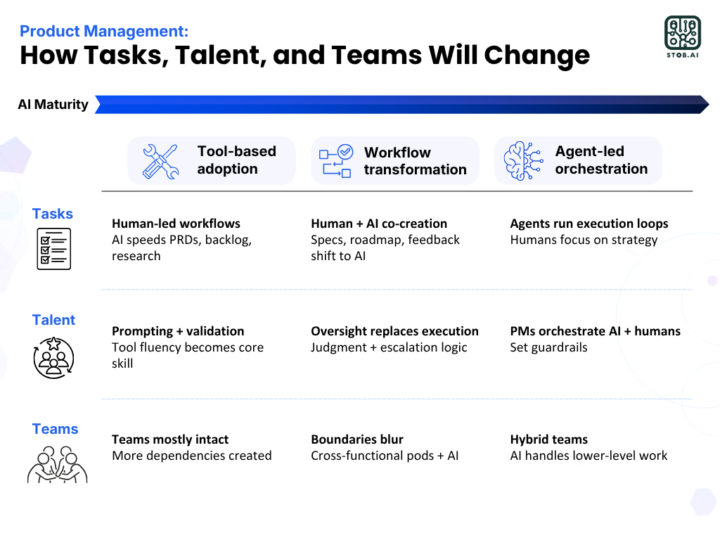
AI is moving faster than most workforce strategies. Most businesses already know AI matters. The real issue is whether the business is actually set up to use it properly. A lot of companies are still treating AI like a tool problem. They add tools, test isolated automations, and experiment at the edges, while the underlying workflows stay the same. That is where the gap starts. The real shift is operational. Businesses need to look carefully at how work gets done, where decisions happen, what should be automated, and where humans should stay in control. AI is already changing how companies operate. Roles are being redefined. Layers are being streamlined. Hiring strategies are shifting toward people who can work effectively with AI, not alongside it. In many cases, work is not disappearing. It is being redistributed. Teams are finding new ways to combine human judgment with AI execution, changing how value is created day to day. Most organizations are still in the early stage of AI maturity. That usually starts with tool-based adoption, where individuals use AI to move faster and cut repetitive work. The next stage is workflow transformation, where AI becomes part of how teams actually operate. After that comes agent-led orchestration, where AI handles larger parts of execution and people focus more on direction, judgment, and oversight. The question is not whether teams will evolve. It is how quickly and how deliberately leadership will guide that evolution. Without rethinking tasks, roles, and team structure, most businesses will limit the return they get from AI. The upside is significant, but it takes more than adopting tools. It takes redesigning the way the business works.
1 like • Mar 31
That is an excellent point. I have also experienced that in actual operating systems, bottlenecks lie not in the model itself, but in the workflow structured around the model. Simply adding tools makes it difficult to bring about significant change unless decision points and feedback loops are redesigned. The true benefits seem likely to come from teams that view AI not merely as an add-on, but as part of the system architecture.
1-3 of 3