Activity
Mon
Wed
Fri
Sun
Jun
Jul
Aug
Sep
Oct
Nov
Dec
Jan
Feb
Mar
Apr
May
What is this?
Less
More
Memberships
Pre-Vet Skool
16 members • Free
10 contributions to Pre-Vet Skool

8d •
Origin Story😊
What was the exact moment — or the animal — that made you say, 'This is what I want to do with my life'? I’ll start below😊

1 like • 8d
When i was 2 years old i saw tarzan for the first time and when i saw the poaching i couldnt help but try to attack the man poaching the apes. I swore to protect animals from that day forth and any time i saw an animal in trouble i couldnt help the instinct to save it. I believe animals are people too so i respect them as such
23d •
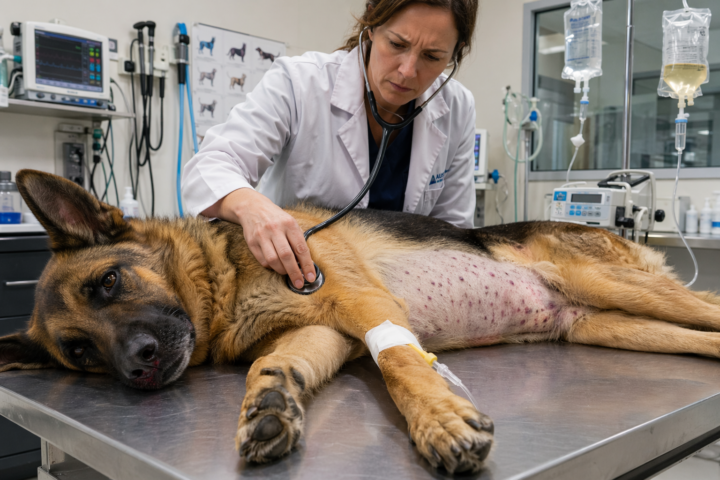
🐕 Case Study: Why Is Ranger Bleeding From His Nose?
Meet Ranger, a 4-year-old German Shepherd who comes in from rural Texas looking exhausted. His owner reports three days of fever, lost appetite, and now a nosebleed that will not stop. There are purple spots scattered across his belly. You notice his gums are pale and dotted with petechiae. Something is destroying his platelets. You run a CBC. Platelet count: 28,000 per microliter. Normal is above 200,000. You check the SNAP 4Dx test. Ehrlichia positive. This is canine monocytic ehrlichiosis, caused by Ehrlichia canis and transmitted by the brown dog tick, Rhipicephalus sanguineus. The bacteria invaded Ranger’s monocytes, triggering immune-mediated platelet destruction until his blood could barely clot. You start doxycycline immediately at 10 mg/kg twice daily for 28 days. Within 48 hours Ranger’s fever breaks and he is eager for food. German Shepherds like Ranger are especially vulnerable to the devastating chronic form of this disease. You caught this one early. 💡 The takeaway: Thrombocytopenia plus a dog from the South equals Ehrlichia until proven otherwise. For more information on this disease and other tick-borne diseases, head over to the classroom! https://www.skool.com/pre-vet-skool-9535/classroom/1f1964f8?md=9f4cee60096f4bd1abb8f3b0862d484a
1 like • 19d
@Nisana Miller so do these spots rupture when touched? And am i correct in assuming theyre very painful for the dog? What would be the best way of transporting him without hurting him further?
0 likes • 18d
I understand 👍🏼 thanks Ms.Miller 😊
22d •
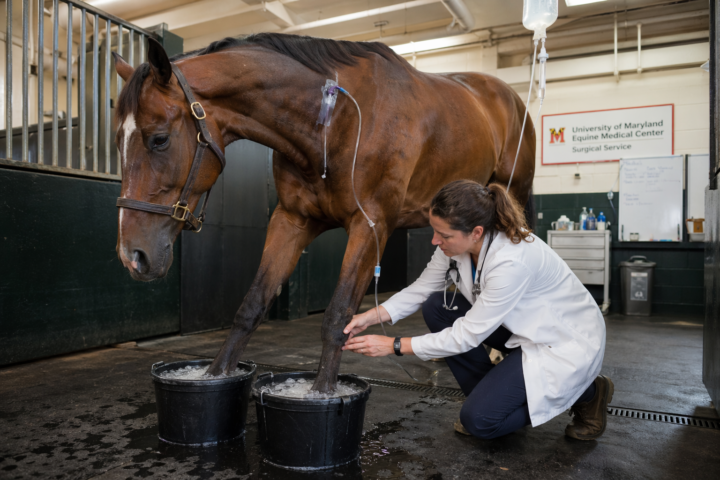
🐴 Case Study: Why Is River Suddenly Refusing to Move?
Meet River, a 7-year-old Warmblood gelding on a Maryland farm sitting along the Potomac River. It is August. His owner calls because River has been feverish and off his feed for two days. Now he has developed profuse watery diarrhea overnight and this morning she noticed he is standing with his front legs stretched forward, refusing to walk. You check his digital pulses. Both forefeet are bounding and hot. River has Potomac horse fever, caused by Neorickettsia risticii, a bacterium he ingested weeks ago inside a mayfly that landed in his water bucket on a warm summer night. Now he is fighting diarrhea, endotoxemia, and developing laminitis simultaneously. You immediately start oxytetracycline 6.6 mg/kg IV in saline, administered slowly over 45 minutes. You pack his feet in ice. You add low dose flunixin to fight the endotoxin before it destroys his laminae. By morning his fever is gone. But the feet remain the battle. 💡 The takeaway: In Potomac horse fever, winning the infection is only half the fight. Save the feet. To learn more about this disease and case, the course is in the classroom or just follow this link https://www.skool.com/pre-vet-skool-9535/classroom/eada0165?md=7e3a779ffde345f6b24741ee37e028e2
1 like • 19d
Is there a way to preventsomething like this from happening? Like a mayfly anti spray i suppose?
1 like • 18d
I would have never thought changing a lightbulb would help at all 😂 i saw you mentioned another fly a caddisflie does that cause a similar disease and reaction as the mayfly? Also if theyre aquatic insects that means they lay their eggs in water too correct? If that is true are the eggs harmful aswell to the horse?
28d •
Happy Sabbath! Prayer Requests & Sabbath Skool Animal Trivia 🙏
Good morning and Happy Sabbath, everyone! I pray you all had a smooth week, whether you were studying for exams, shadowing at a clinic, volunteering, or working on those veterinary school applications. Pre-vet life is no joke, and I see you putting in the work! Wherever you are, I hope you take a moment today to rest, recharge, and step outside for some fresh air and sunshine. 🌿 If you have any specific prayer requests, drop them in the comments below. Unspoken requests are welcome too, because God knows what they are. 🙏 Introducing Sabbath Skool Animal Trivia! I’m starting a fun new series just for this community! Each Sabbath, I’ll post a question about an animal mentioned in the Bible. As future veterinarians, you already have a love for animals, so let’s put that passion to work in a fun way! I’ll point you in the right direction and you’ll have all day to answer. Drop your answer in the comments and let’s see who knows their Bible animals! 😊 This Week’s Question: I don’t know what the weather looked like where you are, but we had some wild weather this week, so our very first question comes straight from the flood story! As animal lovers and future vets, you might have some thoughts on this one. What animal is sent out of the ark first? Hint: Start in chapter 6 of Genesis. Fun Extra: After naming the animal, share a fun trivia fact about it! 😊

2 likes • 25d
A raven. Ravens are excelents mimics able to copy everyday sounds,other animal sounds,and even human speech.
Apr 15 •
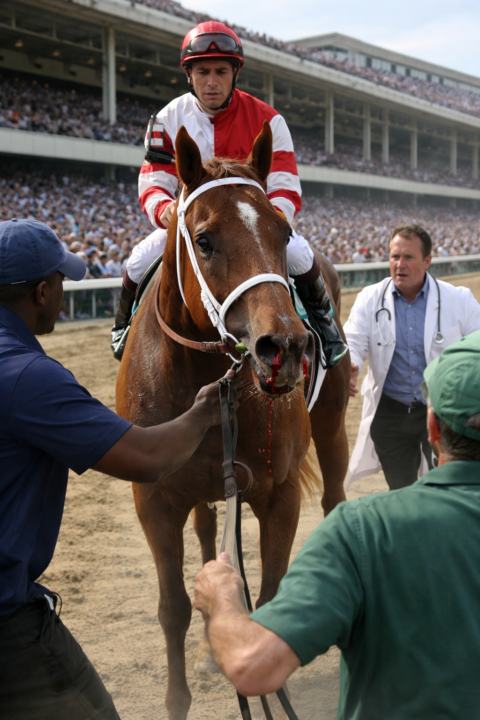
🐴 Case Study: What Is Wrong With Blaze After the Race?
Meet Blaze, a 5-year-old Thoroughbred racehorse who crosses the finish line and pulls up sluggishly. His jockey notices something alarming: blood streaming from both nostrils. His trainer assumes a nosebleed. You know better. Bilateral epistaxis after maximal exertion points directly to exercise-induced pulmonary hemorrhage (EIPH). During Blaze’s full gallop, his pulmonary capillary pressure surged to nearly 100 mmHg, physically rupturing the thinnest membrane in his body. Blood flooded his alveoli, migrated through his airways, and exited through both nostrils. You perform post-exercise endoscopy at 45 minutes and find continuous blood streams covering over one-third of his trachea. That is a Grade 4. Blaze needs 30 days rest, a full upper airway evaluation, and furosemide before his next race. 💡 The takeaway: Bilateral epistaxis after exercise is EIPH until proven otherwise. One nostril tells a different story entirely.
0 likes • 25d
I would actually love that! Could i post my results?
0 likes • 25d
@Nisana Miller i have already found new information a lot actually 😅 however I'm going to research more tommorrow then write a small research paper and post it sometime whether it be tomorrow or later this week
1-10 of 10

@rosalie-kirkpatrick-1738
My name is rosalie and im a aspiring wildlife rehabilitator. My goal is to get a degree in biology,rehabilitation,and conservation at OSU.
Active 8d ago
Joined Apr 20, 2026
Oklahoma