Activity
Mon
Wed
Fri
Sun
Aug
Sep
Oct
Nov
Dec
Jan
Feb
Mar
Apr
May
Jun
What is this?
Less
More
Owned by Robin
Join Commerce Crew: Scale your e-commerce business, get expert guidance, and earn up to $10,000/month. Start building your success today!
Memberships
Shopify Accelerator
128 members • Free
Wealth University
3.3k members • Free
Million a Month Method
1.7k members • Free
Ecommerce Skool
586 members • Free
Army Leadership and Fitness
8 members • Free
ETSY Print-On-Demand
1.1k members • Free
Let's Be Better For Ourselves
68 members • Free
Daily Sales Club
76 members • Free
STARTER E-COM GROUP
14.8k members • Free
19 contributions to Business Ownership Academy

1d •
Why now is the best time to buy franchise using SBA financing?
The current 2026 market presents a unique window for acquiring a franchise due to a massive corporate exodus that is fueling a new wealth class through what is described as a $920 billion business ownership opportunity. Despite a shifting economic landscape, several factors make this an ideal time to leverage SBA financing to exit the traditional workforce. 1. High-Leverage Financing Options One of the primary reasons to act now is the ability to secure up to 90% financing for franchise startups, allowing you to preserve your personal liquidity. In the context of SBA 7(a) lending, you can often acquire a business with only 10% down, and through creative "deal architecture" like seller standby notes, your personal cash injection can sometimes be reduced to as low as 5% [18, 31, Conversation History]. Furthermore, lenders are increasingly willing to approve deals based on future financial projections, which is essential for launching new franchise units or taking over locations with incomplete financial histories. 2. Strategic "Gateway" Opportunities For those currently in 9-5 roles, 2026 is a prime time to start a "gateway business"—a model that allows for a gradual transition into full-time ownership. These models are designed to replace a professional's salary without the high risk of starting a brand-new concept from scratch, utilizing the proven systems inherent in franchising to ensure a faster "win" for new entrepreneurs. 3. Growth in Recession-Proof Sectors Specific industries are currently seeing a "boom" that makes them highly attractive to SBA lenders: - Medical Staffing: This sector is currently experiencing significant growth. - Senior-Focused Models: Due to demographic shifts, these models are making significant sense for SBA buyers in the current market. - Exterior Remodeling: Described as a highly recession-proof franchise opportunity that often flies under the radar. 4. Long-Term Wealth and Tax Advantages Smart investors are currently using a 7(a) to 504 strategy, where they use an SBA 7(a) loan for the initial acquisition and then leverage an SBA 504 or 504 Green loan to purchase the commercial real estate the business occupies. This allows owners to build real estate wealth while locking in long-term fixed rates. Additionally, current tax incentives like Section 179 allow owners to write off the full cost of equipment in the first year, which can be a massive cash-flow booster for new franchise owners.

0 likes • 1d
@Brenda Williams Hello Brebda What's good? How long have you been in this community? What's your goal for joining this community?
2d •
Ground-up Construction Projects in 2026
For ground-up construction projects in 2026, the choice between an SBA 7(a) and an SBA 504 loan depends on your long-term financial goals, the size of the project, and your need for fixed versus variable interest rates. Beau Eckstein, a construction financing specialist with over 25 years of experience, emphasizes that both programs offer high-leverage opportunities, often allowing for 10% down on commercial projects. SBA 504: The Top Choice for Real Estate & Construction The SBA 504 loan is generally considered the superior product for ground-up construction and major fixed assets. - Long-Term Fixed Rates: The 504 program offers long-term, predictable fixed interest rates, which are highly advantageous for multi-million dollar construction projects. - SBA 504 Green Advantage: For projects incorporating energy-efficient upgrades, the SBA 504 Green loan allows borrowers to access up to $5.5 million per project, which is a powerful tool for building real estate wealth. - Collateral Focus: This loan is specifically designed for land, buildings, and long-term machinery, making it the standard "architecture" for large-scale developments, such as a $6.2M deal recently highlighted by Beau. SBA 7(a): Flexibility with "Soft Costs" While the SBA 7(a) can be used for construction, it is more commonly associated with business acquisitions and franchise startups. - Inclusive Funding: The 7(a) is more flexible and can include "soft costs" such as working capital, inventory, and initial marketing alongside construction costs. - Variable Rates: Unlike the 504, 7(a) loans typically feature variable interest rates, which may be less attractive during periods of market volatility. - Tightening Standards: In 2026, SBA 7(a) lending standards are tightening, particularly for acquisitions, making the underwriting process more rigorous than in previous years. The "Certainty of Close" Strategy Regardless of the loan type, Beau stresses that the most important factor is the "certainty of close".
0 likes • 1d
@Miren Karmele Alvarez Hey Miren What's good? How long have you been in this and what's your goal for joining this community?
Feb 27 •
Real Estate & Business Expo 2026: Build Wealth, Create Freedom
Unlock new income streams in 2026. Learn proven strategies to grow your business, invest smarter, & build real wealth. Real Estate & Business Expo 2026 📅 Saturday, March 14th, 2026 ⏰ 9:00 AM – 12:00 PM Pacific 📍 Live Virtual Event (Zoom) 🎯 For Entrepreneurs, Investors & Ambitious W-2 Professionals Reserve your spot now! https://www.eventbrite.com/e/real-estate-business-expo-2026-build-wealth-create-freedom-tickets-1975249243660?utm-campaign=social&utm-content=attendeeshare&utm-medium=discovery&utm-term=listing&utm-source=cp&aff=ebdsshcopyurl No fluff. No theory.Just real strategies you can use to level up in 2026.

0 likes • 6d
@Linda Barbara Fleishman ???
0 likes • 1d
@Linda Barbara Fleishman I'm not interested thanks
17d •
The "Gateway" Strategy
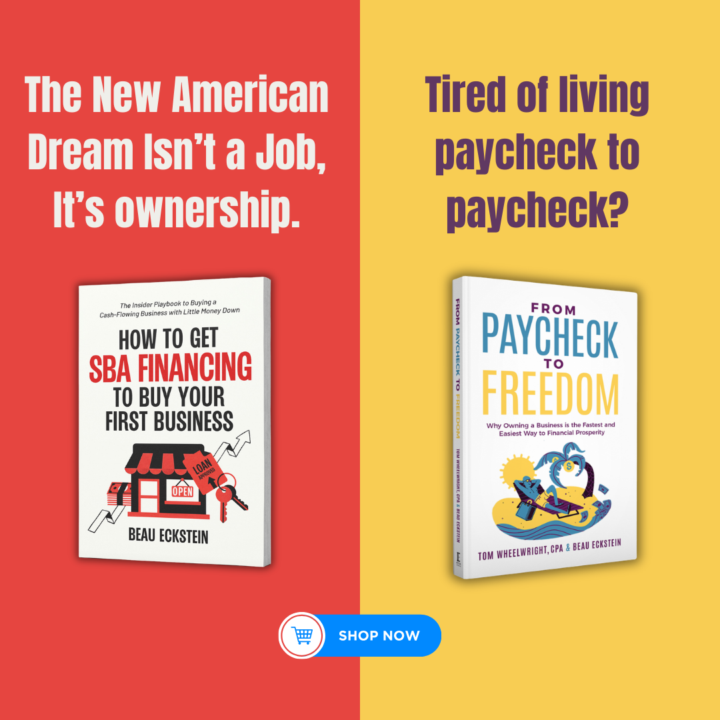
1. Start Small - Use a "gateway business" to transition into ownership without immediately leaving your current job. 2. Semi-Passive - Models Explore niche opportunities like AI vending or textile recycling for a more passive income stream. 3. Low Entry - Focus on business models that allow you to move into ownership with manageable startup costs. Build your exit strategy while you’re still employed. Find your ideal gateway business at bookwithbeau.com. Buy now: 👇 How to Get SBA Financing to Buy Your First Business From Paycheck to Freedom
0 likes • 16d
@James Simmons What's good?
Apr 29 •
Funding Case Studies: Real SBA Deals Broken Down
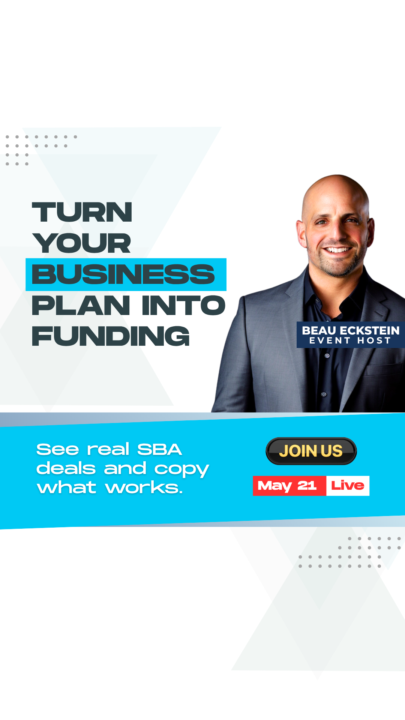
See how loans get approved, structured, and funded using real-world case studies. How actual loans got approved (and why) Walk through real-world SBA loan structures and learn lender secrets. Date & Time: Thursday, May 214:00 PM – 5:00 PM (PT)Zoom Ever wonder how SBA loans actually get approved? Not theory… not generic advice… but real deals. In this live session, Beau Eckstein (SBA Loan Advisor & Business Ownership Coach®) will break down real SBA loan case studies and show you exactly how deals are structured, what lenders look for, and why some get approved while others don’t. You’ll get a behind-the-scenes look at: - Real SBA 7(a) loan structures used to acquire and start businesses - How buyers are getting in with as little as 10% down - The role of seller financing (and how it can strengthen approvals) - Common deal killers and how to avoid them - What lenders actually care about (hint: it’s not just credit score) This is not a pitch-heavy webinar, it’s a practical, real-world breakdown designed to give you clarity before you pursue funding. Register here 👇 https://www.eventbrite.com/e/funding-case-studies-real-sba-deals-broken-down-tickets-1985666418711?utm-campaign=social&utm-content=attendeeshare&utm-medium=discovery&utm-term=listing&utm-source=cp&aff=ebdsshcopyurl
1 like • May 17
@Paul Hubrig Hey Paul What's good?
1 like • 21d
@Oluwasogo Olamilekan Thanks man I'll reach out to you when I'm ready
1-10 of 19

Active 56m ago
Joined Mar 18, 2026