Activity
Mon
Wed
Fri
Sun
Aug
Sep
Oct
Nov
Dec
Jan
Feb
Mar
Apr
May
Jun
Jul
What is this?
Less
More
Owned by Robert
Don't let your purpose go unfulfilled. Live significantly — "free to the first 250 members!"
Memberships
AI Video Bootcamp
25.5k members • $9/month
Jered McKenna Music
28 members • Free
Skoolers
162.5k members • Free
100 contributions to Kingdom Key Point

22h •
Kingdom Key Point 99
I Am Sent to Make Disciples Matthew 28:19 (KJV) “Go ye therefore, and teach all nations, baptizing them in the name of the Father, and of the Son, and of the Holy Ghost.” Kingdom Lesson Not long ago I came across a post from a respected evangelist that stopped me cold. He wrote that “ministry without a call from God is like law enforcement without a badge.” What troubled me was not the post itself—it was the response. Hundreds of Christians agreed. They liked it. They shared it. They nodded along as though he had finally said what they had always believed: that witnessing, discipleship, and the work of the Great Commission belong to a credentialed class of believers—the called, the ordained, the specially equipped. I want to say this as clearly and as lovingly as I know how: that idea is one of the most dangerous lies the enemy has ever successfully planted inside the Church of Jesus Christ. Jesus did not stand on a Galilean hillside and say, “Go ye therefore—some of you.” He did not add an asterisk directing the rest to wait for ecclesiastical approval. He looked at ordinary fishermen, tax collectors, former skeptics, and redeemed sinners and issued the same command to every one of them: Go. Every believer who has received the grace of God has simultaneously received the commission of God. You cannot separate the two. The cross that saved you also sent you. You were not saved simply to be saved. You were saved to go. The Great Commission is not a suggestion offered to the spiritually ambitious. It is the standing order of the King of kings to every member of His body—regardless of title, platform, gift, education, or season of life. It is the assignment that never expires, never gets reassigned to someone more qualified, and never waits for more favorable circumstances. The moment you became a follower of Jesus Christ, you became His ambassador to a world desperately in need of hope. Consider what Scripture actually says. Matthew 28:19 commands us to teach all nations. First Peter 3:15 instructs every believer to be ready always to give an answer to every man that asketh a reason of the hope that is within us. Jesus declared, “Lift up your eyes, and look on the fields; for they are white already to harvest” (John 4:35). The harvest is not waiting on ordination papers. The harvest is waiting on believers who are willing to obey.
2
0

2d •
Kingdom Key Point 98
I Live for Eternal Rewards Matthew 6:20–21 (KJV) “But lay up for yourselves treasures in heaven, where neither moth nor rust doth corrupt, and where thieves do not break through nor steal: For where your treasure is, there will your heart be also.” Kingdom Lesson Jesus understood something about the human heart that every leader, entrepreneur, pastor, parent, and believer must eventually discover: every life is invested somewhere. We are all building something. We are all pursuing something. We are all laying up treasure. The question has never been whether we will invest our lives; the question has always been where we will invest them. That is why Jesus spoke these unforgettable words in the Sermon on the Mount. He did not condemn success, productivity, wealth, or influence. Instead, He redirected them. He challenged His followers to lift their eyes beyond the temporary and begin living for what would outlast this world. Earthly treasures can disappear in a moment. Markets fluctuate, businesses fail, possessions wear out, reputations fade, and even our physical bodies eventually return to the dust. Yet Jesus points us toward a treasury that cannot be touched by decay, recession, theft, inflation, or time itself. Heaven is the only investment that never declines in value. One of the greatest misconceptions among Christians is that salvation and rewards are the same thing. They are not. Salvation is the free gift of God’s grace received through faith in Jesus Christ. Eternal rewards, however, are the result of faithful stewardship after we have been saved. We do not work for salvation, but because we have been saved, we now labor to honor the One who redeemed us. Every act of obedience, every sacrifice, every generous gift, every faithful sermon, every disciple made, every hidden prayer, every temptation resisted, and every opportunity seized for God’s glory becomes an eternal investment. Moses understood this truth centuries before Christ spoke these words. Hebrews tells us that Moses refused the treasures of Egypt because “he had respect unto the recompence of the reward.” He willingly exchanged the wealth, comfort, and prestige of Pharaoh’s palace for the privilege of obeying God. Human reasoning would have called his decision foolish. Heaven calls it wisdom. Egypt’s treasures have long since disappeared, but Moses’ faithfulness continues to inspire God’s people thousands of years later. One investment lasted for a season. The other continues into eternity.
2
0

3d •
((( Urgent July Challenge )))
🚀July Kingdom Challenge: Each One, Reach One Family and Friends, Over the past several months, we have been laying a strong foundation for something I believe is going to impact lives for years to come. Every day we’re growing together through biblical teaching, practical wisdom, and Kingdom principles designed to help people discover, pursue, and fulfill God’s purpose for their lives. Now I have one simple challenge for every member of our community. 🔑 Each One, Reach One I’m asking every member to personally invite ONE person to join our Kingdom Keypoint community this month. That’s it. One friend. One family member. One coworker. One business owner. One ministry leader. One person who wants more out of life. You never know how one invitation could change the trajectory of someone’s future. Why now? Because August is going to be our biggest month yet! We are preparing to launch incredible new resources that will help every member grow spiritually, personally, professionally, and as a leader. Here’s what’s coming: 📖 Kingdom KeyPoints – Volume 1 My first Kingdom KeyPoints book will be released, bringing together practical biblical principles for extraordinary living. 🎓 Kingdom Keypoint Coaching Program We’re launching a transformational coaching program designed to help individuals discover their God-given purpose, maximize their potential, develop biblical leadership, and build lives of lasting significance. Identify, Overcome fear, Take action, Conquer hindrances, etc. 📚 New E-books We’ll be adding new digital resources regularly to help you continue growing in every area of life. 🎥 The Daily Kingdom KeyPoint Fresh video teachings every day with practical Kingdom principles you can immediately apply to your life, family, business, and ministry. 📖 Brand New Bible Teaching Series We’ll begin an exciting journey studying the lives, characters, and characteristics of men and women throughout the Bible—discovering timeless lessons we can apply today.
3d •
Kingdom Key Point 97
I Faithfully Occupy Until Christ Returns Luke 19:13 (KJV) “And he called his ten servants, and delivered them ten pounds, and said unto them, Occupy till I come.” Kingdom Lesson One word. Two syllables. Yet within it is one of the greatest assignments ever given to a follower of Jesus Christ: Occupy. When Jesus spoke these words in Luke 19:13, He was not instructing His followers to merely wait for His return. He was giving them a divine commission. The word occupy carries the idea of doing business, investing, trading, increasing, and faithfully managing what has been entrusted to us. It is the picture of a servant who is actively engaged in the Master’s business until the Master returns. Far too many believers have misunderstood the Christian life. Some spend their lives waiting instead of working. Others become so focused on trying to determine when Christ will return that they neglect what Christ told them to do before He returns. Jesus never instructed His servants to become spectators. He commanded them to become faithful stewards. Everything we possess has been entrusted to us by God. Our time, talents, treasures, spiritual gifts, influence, opportunities, relationships, careers, businesses, ministries, and even our families ultimately belong to Him. We are not owners; we are managers. One day we will stand before our Master and give an account of how faithfully we used what He placed in our hands. James reminds us of another truth that should shape every decision we make: “For what is your life? It is even a vapour, that appeareth for a little time, and then vanisheth away.” (James 4:14, KJV) Life passes more quickly than most of us realize. That reality is not meant to produce fear but wisdom. Every sunrise is another opportunity to glorify God. Every conversation becomes significant. Every act of kindness matters. Every opportunity to serve, give, teach, encourage, disciple, or lead carries eternal value. The brevity of life should move us away from procrastination and toward purpose. Too many people postpone obedience, believing there will always be another season to get serious about God’s calling. Yet none of us knows how many days remain. The sooner we discover God’s purpose for our lives, the sooner we begin living intentionally. Purpose gives direction to our efforts, while stewardship gives eternal value to every opportunity.
2
0

3d •
Kingdom Key Point 96
I Am Connected to Build the Body of Christ “For the body is not one member, but many.” — 1 Corinthians 12:14 (KJV) Kingdom Lesson One of the greatest tragedies in the modern Church is that many believers have discovered their gifts but never discovered where those gifts belong. We celebrate individual success, personal platforms, and personal accomplishments, yet God never intended His people to function independently. From the beginning, His design has always been a Body—many members united under one Head, each contributing something essential to the whole. The Kingdom of God advances not through isolated individuals but through believers who understand that they have been connected together by divine design. The Apostle Paul reminds us, “For the body is not one member, but many.” This is not merely an observation; it is God’s blueprint for His Church. Every believer has been intentionally placed within the Body of Christ to make a unique contribution. No one possesses every gift, every ability, or every answer. God designed His people to depend upon Him and upon one another. Our strength is found in our unity, and our effectiveness is multiplied when each member faithfully fulfills their God-given role. This truth is especially important for leaders. Whether we lead in our homes, our churches, our businesses, or our communities, leadership should never become a pursuit of personal recognition. Leadership in the Kingdom is stewardship. It is using the influence God has entrusted to us to strengthen others and advance His purposes. The greatest leaders understand that their gifts were never given for self-promotion but for service. They measure success not only by what they accomplish personally but by how many others they encourage, equip, and empower to fulfill God’s calling on their lives. Paul continues this teaching by reminding us that the eye cannot say to the hand, “I have no need of thee,” nor can the head dismiss the feet. Every member has value because every member has purpose. Some gifts are highly visible, while others quietly support the work behind the scenes. Heaven, however, places equal value on faithful obedience regardless of public recognition. God sees the unseen labor, the quiet prayer warrior, the faithful volunteer, the generous giver, the encouraging friend, the diligent teacher, and the servant who faithfully works without applause. In God’s Kingdom, significance is measured by faithfulness rather than visibility.
2
0

1-10 of 100
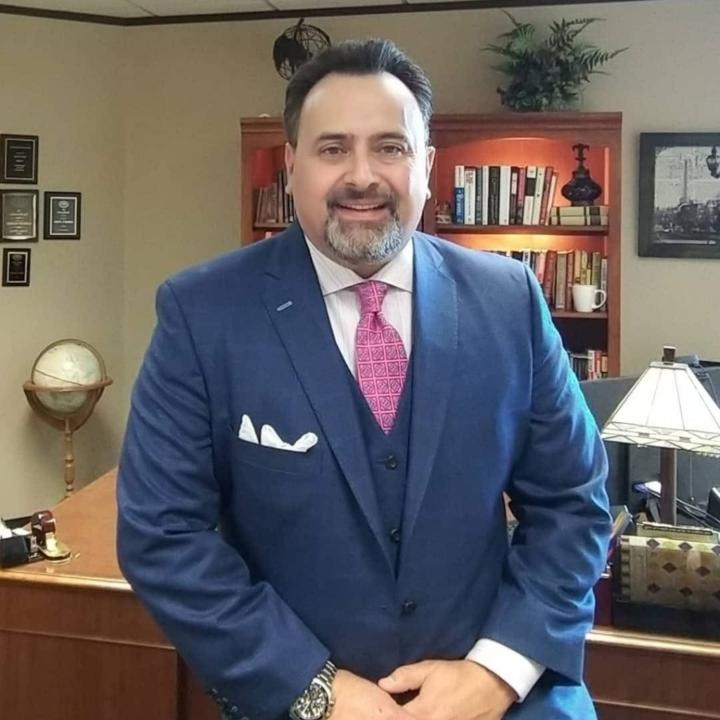
@robert-hardy-9942
Minister | Entrepreneur | Business Coach | Author | Helping faith-based leaders build lives and legacies that honor God.
Active 11h ago
Joined Mar 30, 2026