Activity
Mon
Wed
Fri
Sun
Nov
Dec
Jan
Feb
Mar
Apr
May
Jun
Jul
Aug
Sep
Oct
What is this?
Less
More
Owned by Rina
Free, grace-led community for Christians who want freedom from alcohol. Faith and neuroscience tools, honest support, and no labels or shame.
Grow With Evelyn
3.4k
5.0
$29/m
🇦🇺 Sydney IRL
303
Free
Skool Growth Free Training Hub
9.4k
5.0
Free
Community Builders - Free
12.8k
Free
Skoolers
151.2k
Free
6 contributions to Outdoor Kids (Ont. 🇨🇦)
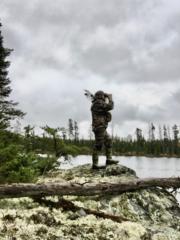
May 30 •
Turkey Season Wrap-Up (No Bird… Still a Win) 🌲🦃
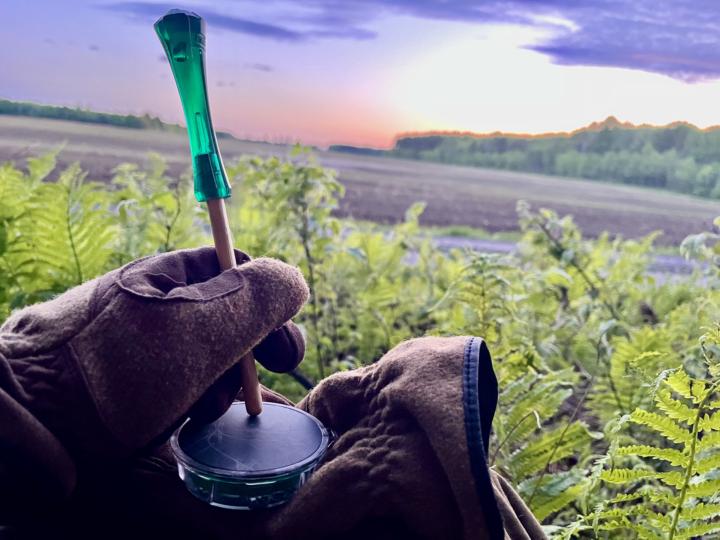
Turkey season’s officially done for me — and I’m walking out of it with no harvest. But honestly…It was still a successful season and here’s why. 1) “No harvest” doesn’t mean “no progress” Spring turkey hunting has a funny way of teaching you that the win isn’t always what you carry out — sometimes it’s what you learn, what you notice, and what you bank for later. Frustrating at times, as the least intelligent animal I hunt gets the best of me hunting wise. Their instinctive survival awareness is simple something to admire. On the bright side, this season, I put in the time, got the reps, and sharpened the kind of awareness that pays off long-term and got reminded why I love being in the bush so much. 2) The real surprise: deer sign I can use this fall 🦌 While I was out chasing turkeys, I stumbled onto something that immediately flipped a switch in my brain for fall: Deer rubs on a tree, in fact a whole trail worth of der rubs. That’s not just “cool to see” — that’s information. That rub tells a story: A buck was here He was active in that area He was leaving sign that can help me map movement and patterns Deer rubs are when a buck marks his territory using his handlers and visually marks trees and leaves scent from his orbital glands around. So even though turkey season didn’t end with a bird, it absolutely gave me intel for deer season — and I’ll be coming back to that spot with a different plan when the time’s right. 3) First season using a slate call… and I loved it 🎶 This was also my first season running a slate call, and I’ve gotta say… I really enjoyed it. There’s something about it that feels more hands-on and “in the moment” — like you’re actually part of the woods instead of just passing through it. Even without sealing the deal, I learned a ton just from practicing: cadence tone when to call vs when to shut up how the woods “responds” (or doesn’t) That’s experience I didn’t have before this spring. 4) Biggest win of all: turkey season got me out in the bush.
1 like • Jun 1
Love that you saw so many wins, even with no turkey. So good! And such awesome photos!
May 22 •
Apple trees in prime bloom.
Apple trees are quiet little ecosystems — and when they bloom, they don’t just look beautiful… they kick off a whole pollination chain reaction that helps a ton of life around us. Apple Trees = A Spring Pollinator Magnet When an apple tree flowers, it’s basically putting up a big sign that says: “Nectar + pollen available!” That pulls in: Honeybees Bumblebees Native solitary bees (often the unsung heroes) Hoverflies (great pollinators too) Sometimes even butterflies on warm days And here’s the cool part: those visitors don’t just help the apple tree — they also end up pollinating other spring flowers and fruit plants nearby as they move around. Why Pollination Matters (In Real-Life Terms) Pollination is what turns blossoms into fruit. For apple trees, that means: Better pollination = more apples Better pollination = bigger, healthier apples Better pollination = more seeds, which is part of how the tree “does its thing” in nature Most apple varieties also need a buddy: another apple tree nearby (a different variety) so bees can cross-pollinate between them. The Ripple Effect: More Than Just Apples When apple blossoms bring in pollinators, it supports the whole local food web: Pollinators feed on nectar/pollen Birds feed on insects Healthy insect life supports healthier soil and plant diversity Later in the season, apples (and dropped fruit) can feed wildlife too So even one blooming apple tree can be a mini springtime hub for your yard or your local green space. Try This With Your Kids (2-Minute Backyard Mission) Next time you pass an apple tree in bloom: Stand still for 30 seconds Count how many pollinators you see visiting flowers Listen — you can often hear the buzzing before you spot them Bonus: see if you can spot different types (big bumblebee vs tiny native bee) If you want, comment with a photo of an apple tree near you (or one you’ve spotted on a walk) and tell us: did you see bees working it?

0 likes • May 24
So beautiful!!
May 13 •
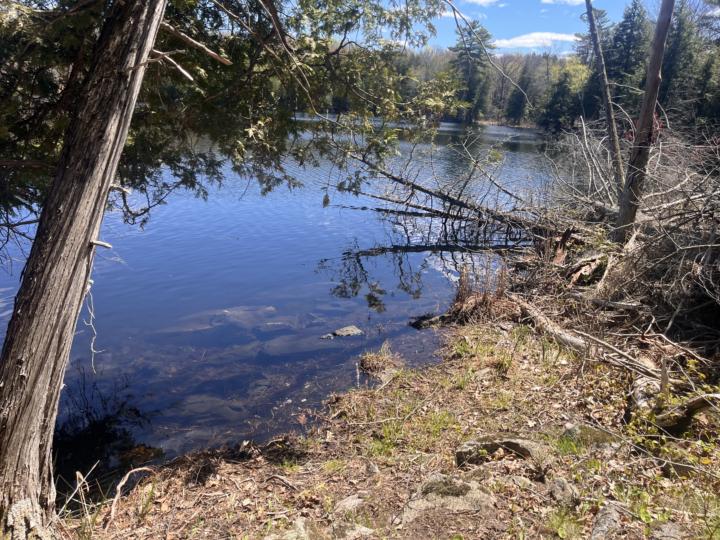
Our camp water access spot
There’s a spot we use at camp that’s become one of my favourite “reset buttons.” It’s where we slow down. Where we go for a swim, refill bottles, cool off, and let the kids explore the shoreline. And I want to be clear: it’s not a perfect sandy beach. It’s not a foolproof, “set it and forget it” water access area. It’s a spot that commands respect. And once you give it, it gives back. What makes it special It’s quiet, secluded, and easy to find peace there. If you sit long enough, you start to notice how alive the place is: Birds chirping constantly overhead Fish coming right up to the rocks Snakes using the warm stone to sunbathe Turkeys wandering through, picking at bugs and vegetation Deer coming in for water on the far side of that fallen tree Honestly, if you could sit there quietly for a full day, you’d probably see most of the wildlife that lives in the area. The real lesson: it forces us to slow down The biggest thing this spot teaches isn’t “how to swim” or “how to refill a bottle.” It teaches presence. If you rush, if you’re distracted, if you’re not mindful of what’s around you: you’ll slip you’ll trip you’ll bump a shin or twist an ankle you’ll miss the hazards that were obvious when you were calm In a weird way, it feels like nature engineered it that way — not to punish us, but to remind us: slow down, pay attention, be here. And when families do slow down, something changes. A cup of coffee there. A glass of wine there. A few deep breaths while the kids toss pebbles and look for minnows… and people start to regenerate. You can almost see the nervous system unclench. Our 3 quick water checks (especially with kids) Whenever we bring kids to the water, we do three quick checks before anyone goes in. Nothing fancy — just simple habits that prevent most problems. 1) Clear the entry/exit + name the hazards We pick the safest “in and out” spot we can find and we say out loud what the hazards are (slippery rocks, sharp edges, sudden drop-offs, weeds, current, etc.).
0 likes • May 13
So good.. 'not raising kids to be afraid of it', but who respect it'. also love how when we slow down we notice the birds, the air, the wildlife.. thank you!
0 likes • May 14
@Patrick Beriault Oh wow.. i hadn't even heard of them before - had to Google. It looks amazing! You're giving me some ideas :)
May 6 •
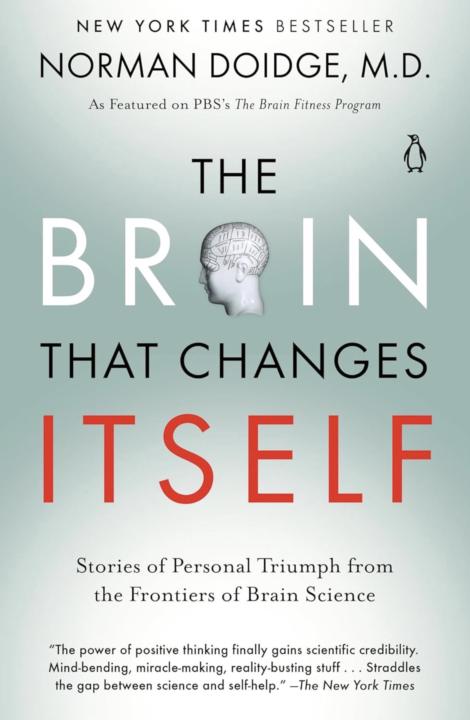
Follow up on brain plasticity
Ok so the topic of brain plasticity is interesting to many of you. I’ve received more PMs asking about it since there seems to be some level of anxiety about posting directly in this community. So I will try to fix that so that everyone is comfortable. This is the whole point of Skool. Community building. But back to brain plasticity. Which I am more than happy to talk about. So here goes …. Let’s start with a reference text book I used when teaching at Ottawa U. The Brain that Changes itself by Norm Doidge. In a nutshell we used to think that once at “maturity”… approximate age mid 20s, our brains were “hard wired”. We now know that our kid’s brain is not “fixed” — it’s *trainable* (brain plasticity, in plain language). And so is a the adult brain, but we need to created the right conditions. One of the most hopeful ideas I’ve ever learned as a parent (and outdoor educator) is this: The brain can change. Not just in little ways… in real, measurable ways. This is called neuroplasticity (or brain plasticity). So what is “brain plasticity”? It means your brain is constantly adapting based on what you do repeatedly. What you practice, you strengthen What you avoid, you weaken What you experience (especially emotionally) gets wired in deeper And yes — new pathways can form at any age The old adage; if you don’t use it you lose it very much applies. But you can also create an environment where you can do the opposite and optimize brain function. This matters a lot for kids… because childhood is basically a “high-growth” season for the nervous system and also applies to adults. Why this matters for parents (especially when you’re worried). Sometimes we look at our kids and think: “They’re anxious.” “They’re not confident.” “They melt down fast.” “They quit when it gets hard.” “They can’t focus.” “They’re behind.” Brain plasticity doesn’t magically erase challenges — but it gives us a better frame: Instead of “this is who my kid is,” we can think “this is what their brain has practiced so far.”
0 likes • May 6
So good!!
May 4 •
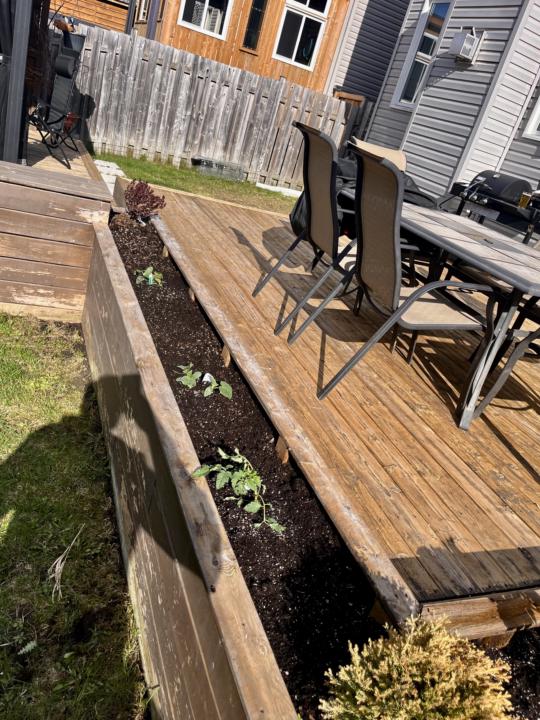
The small and manageable garden
I’m generally a perennial garden person — native flowers, evergreens, the kind of plants that come back every year and support the local ecosystem. But I’ve always loved with having a small herb + veggie patch. Having moved to the suburbs last year, I lucked out with the previous owners having had built a deck with raised garden beds. I find it gets me outside for 2 minutes a day (and somehow that matters more than I realize). It gets me to include the kids in the gardening tasks. It turns meals into something personal (fresh herbs = instant upgrade). It’s hands-on learning for kids — patience, care, and “we grew this!” pride It keeps you connected to the season in a way nothing else does. My ideal setup is still: mostly perennials + native flowers + evergreens…and then a small spot for food. A little patch of “we can grow things here.” 🌱 Because it’s not just about food — it’s about rhythm: step outside check what’s growing water if needed pick a little something feel like a human again Even a few plants can change the vibe of a home. And for kids? It’s one of the easiest ways to build confidence and curiosity and maybe even try a veggie if you have picky eaters. This year, I have basil, rosemary, lavender, parsley tomatoes and cucumbers.
0 likes • May 5
Thank you! This is inspiring me to get our little veggie garden going!
0 likes • May 5
@Patrick Beriault Will do! 😄
1-6 of 6
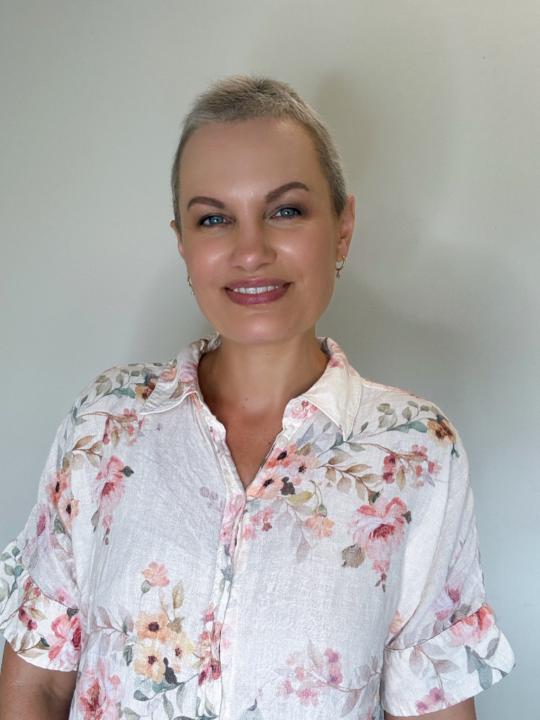
@rina-bowring-3673
This Naked Mind Alcohol Recovery Coach blending Christian faith & behavioural science to help people gently change their relationship with alcohol. 💚
Active 2h ago
Joined Apr 10, 2026
Sydney, Australia